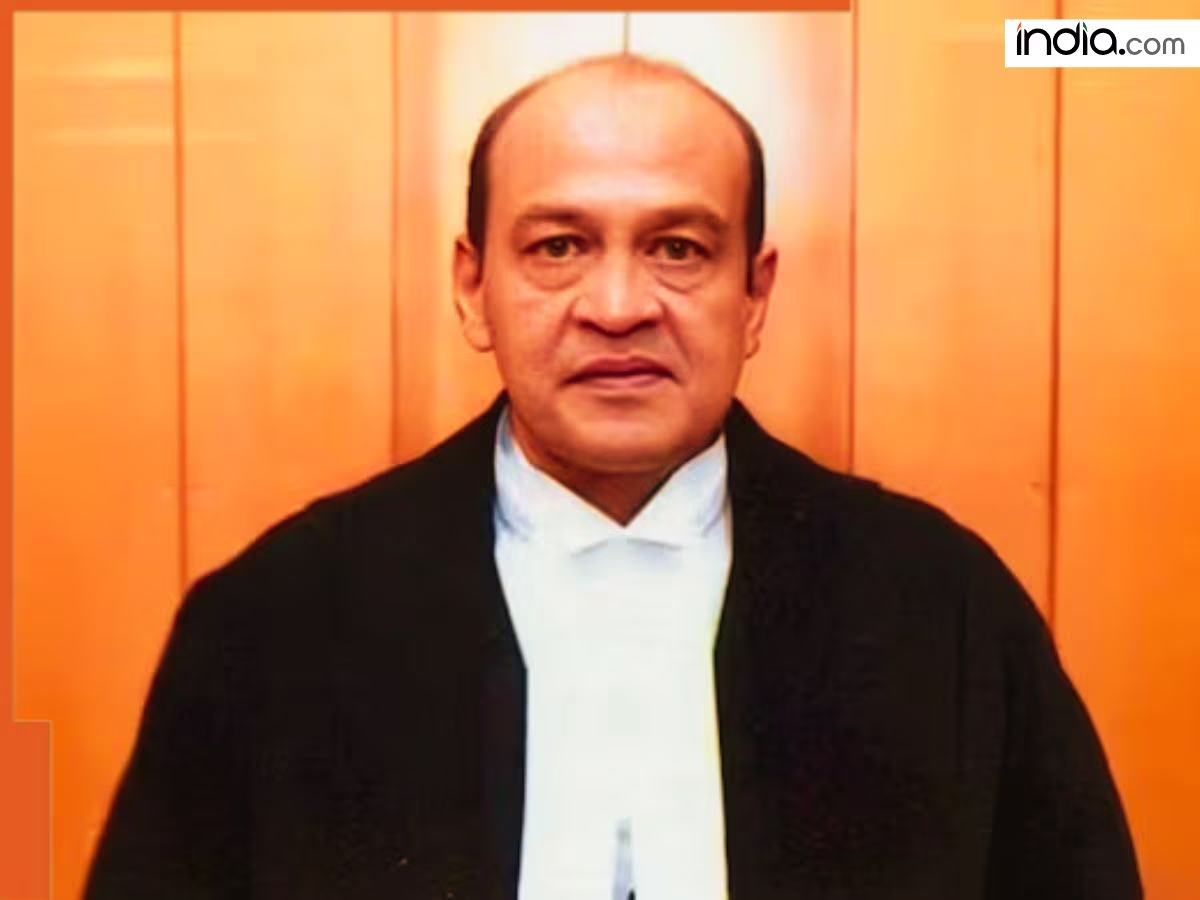
Justice Yashwant Varma’s resignation on April 10 raises many questions. This was the day he was to present his defense against the charges against him.

Published: April 10, 2026 4:03 PM IST
Justice Yashwant Varma’s resignation wasn’t just a formal resignation. It was a decision made on the day he was to defend himself against serious allegations. The question naturally arises: is this a mere coincidence or a deliberate strategy? When a judge is facing corruption charges, impeachment proceedings are underway in Parliament, and he has to appear before an inquiry committee, resigning on the same day raises significant questions. This issue is not just about an individual, but also touches upon the credibility and accountability of the judiciary.
NDTV reports that sources said that April 10th was the day Justice Yashwant Varma was to present his defense before the inquiry committee. But just before that, he submitted his resignation to the President. This not only changed his personal legal position but also the direction of the entire case.
Timeline of the entire case
On March 14, 2025, bundles of 500 rupee notes were found burned during a fire at his official residence in Delhi. Following this, Justice Varma was transferred from the Delhi High Court to the Allahabad High Court. He took oath in Allahabad on April 5, 2025, but was not assigned any judicial duties. Meanwhile, impeachment proceedings began in Parliament, and Om Birla formed a three-member panel to investigate. He submitted his resignation on April 9, and it became public on April 10.

Nine key witnesses had been presented before the inquiry committee, and the prosecution had completed its arguments. Justice Varma was scheduled to present his case between April 10 and 14. But before that, he abruptly halted the entire process by resigning. His resignation did not cite any reason, simply stating that he was leaving his post with “deep regret.”
The biggest impact of the resignation was that the impeachment process in Parliament ended automatically. According to the rules, impeachment proceedings against a judge who resigns do not proceed. This is why this move is also being considered a strategic decision.
What is the real reason behind the resignation?
According to legal experts, by resigning, Justice Varma has saved himself from the potential harsh action of impeachment. Had Parliament removed him from office, he would no longer be eligible for pension and other benefits. However, after resigning, he will remain entitled to these benefits. This is why the timing of April 10th is considered crucial.
Why is the date April 10 so important?
April 10th was the day Justice Varma was to present his defense before the inquiry committee. This could have been a crucial moment for him. If he presented his argument and it fell short, the impeachment process could have been accelerated. Therefore, by resigning, he chose to avoid a situation where the verdict could have gone against him.
What did he gain from resigning?
The impeachment process ends with his resignation. This means that Parliament can no longer formally remove him from office. Furthermore, he will remain entitled to his pension and other retirement benefits. If he were removed through impeachment, these benefits would be lost. Therefore, this is considered a legally safe move.
What could happen next in this case?
Although the resignation concludes the impeachment process, it does not completely end the allegations. Investigations and other legal proceedings can continue at a different stage. Furthermore, this case could further intensify the debate about the transparency and accountability of the judiciary.