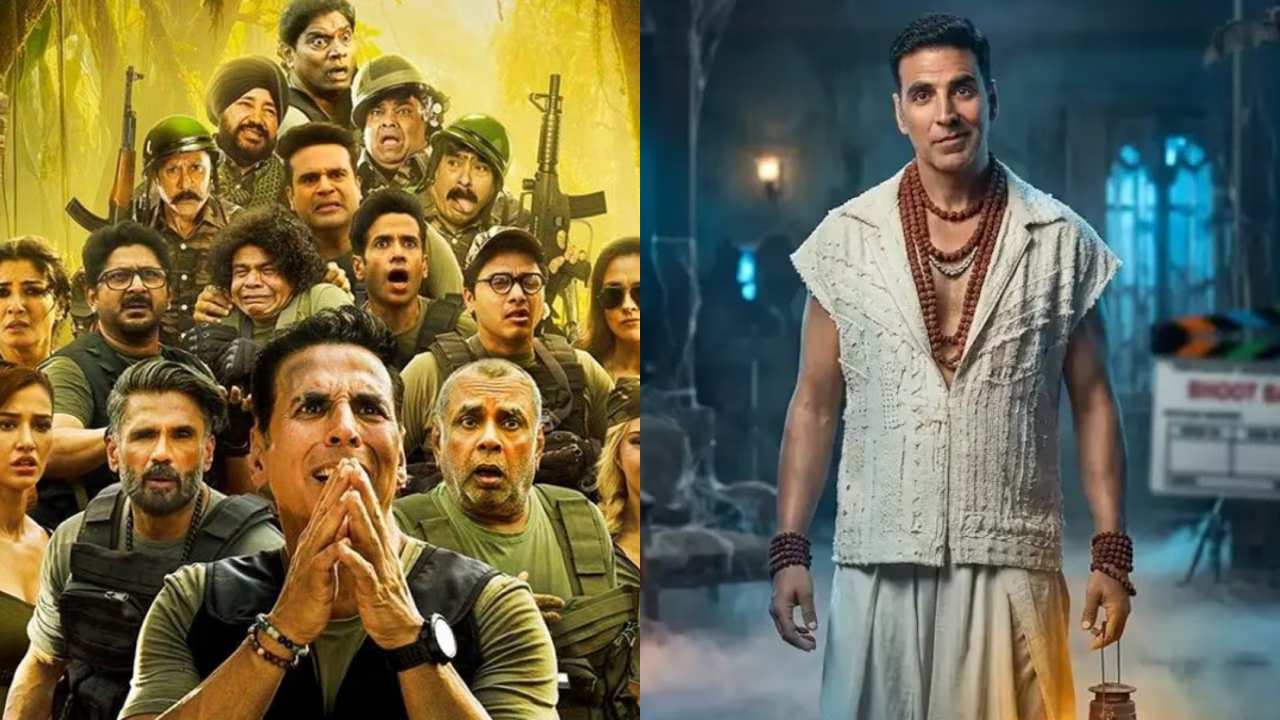
Following its theatrical release, Christopher Nolan’s The Odyssey has left audiences talking about its emotional climax.
Share Article
https://www.india.com/entertainment/why-are-people-comparing-the-climax-of-christopher-nolans-the-odyssey-to-great-indian-epic-ramayana-8478149/
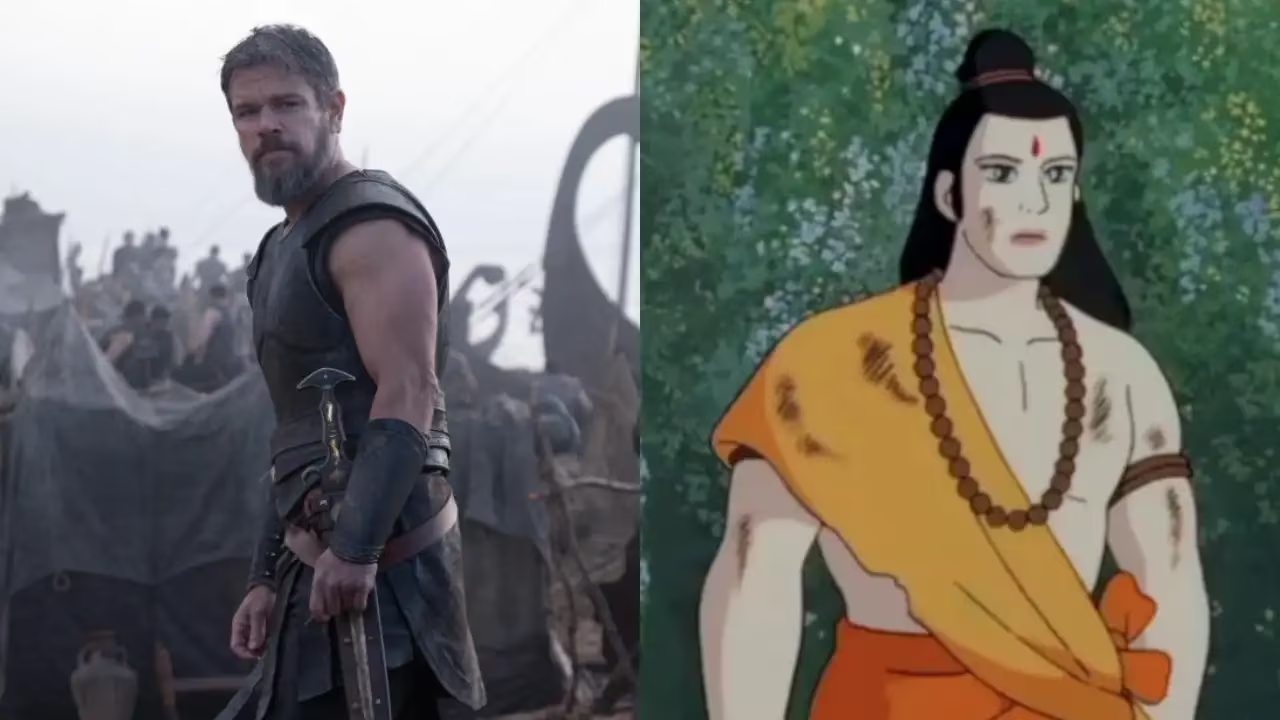
What makes Christopher Nolan’s The Odyssey and the Ramayana similar (PC: Twitter)
Sir Christopher Nolan‘s The Odyssey has emerged as one of the biggest cinematic talking points of the year. Since its theatrical release, audiences across the world have praised its scale, emotional storytelling and breathtaking visuals. In India, however, conversations have taken a different turn. Many moviegoers have noticed striking similarities between the film’s climax and a key episode from the Ramayana. The discussion has quickly gained momentum on social media, with fans debating whether the parallels are merely coincidental or a reflection of how timeless epics often share universal storytelling themes.
The scene that sparked the comparison
Note: Spoilers ahead
The biggest talking point is the film’s climactic bow-and-arrow contest. In The Odyssey, Penelope, played by Anne Hathaway, announces that she will marry the man who can string Odysseus’ legendary bow and shoot an arrow through the sockets of twelve aligned axe heads. None of the suitors succeeds.
Disguised as a beggar, Odysseus, played by Matt Damon, steps forward, strings the bow with ease and completes the impossible challenge. The feat reveals his true identity and immediately leads to the dramatic battle in which he defeats the suitors and reclaims his home.
Meanwhile, in Christopher Nolan’s adaptation, the sequence serves as the emotional turning point of the story, although the filmmaker gives the ending a different twist by showing Odysseus stepping away from the throne due to the guilt of the violence, unlike Homer’s original epic where he remains king.
Why Indian audiences are connecting it with the Ramayana
For many Indian viewers, the bow challenge instantly brought back memories of Goddess Sita‘s swayamvar in the Ramayana. In the Indian epic, Lord Ram wins Sita’s hand in marriage by lifting and stringing Lord Shiva‘s mighty bow, a feat no other prince could accomplish.
While the events and characters are different, audiences have pointed out that both stories feature an extraordinary bow challenge that highlights the hero’s unmatched strength and rightful place in the narrative. These similarities have led many fans to compare the emotional impact of Nolan’s climax with what they expect to see in Namit Malhotra and Nitesh Tiwari‘s upcoming Ramayana.
Fans are divided over the comparisons between classics
Social media has been flooded with discussions ever since the film hit theatres. Some viewers believe Ramayana could deliver an equally grand cinematic experience if it matches the scale, visual effects and emotional intensity seen in The Odyssey. Others, however, feel that comparing the two films is premature because Ramayana has not yet been released.
Several users also pointed out that while both stories include a bow-and-arrow challenge, the purpose behind each sequence is very different. In The Odyssey, the contest helps Odysseus reclaim his kingdom and reveal his identity. In the Ramayana, the bow challenge is part of Sita’s swayamvar and marks the beginning of Ram and Sita’s journey together. Despite these differences, many believe both epics celebrate heroism, destiny, courage and the triumph of righteousness.
See reactions of fans over comparison between The Odyssey and Ramayana here
People comparing #Ramayana & #TheOdyssey are missing the whole point
Yes, both have the iconic Bow-Arrow scene. Yes, both have a “Swayamwar-like” test.
But the ‘why’ behind them is completely different.The Difference:
1. #Ramayana – Shri Ram & Sita
The Swayamwar was… pic.twitter.com/3kLrycYjus— Ashwani kumar (@BorntobeAshwani) July 17, 2026
The bow contest:
In Valmiki’s Ramayana, Rama lifts and snaps Lord Shiva’s bow to marry Sita.
In Holmer’s Odyssey, Odysseus returns home in disguise strings his own bow to win back Penelope.
Ancient Greek mythology and Indian mythology sharing the same trope is fascinating. pic.twitter.com/gTS8vYiBXM
— ಮರುಳ ಸಿದ್ದೇಶ್ | Marula Siddesh (@ThisIsSiddesh) July 14, 2026
Proof that the Odyssey is an exact copy of the Ramayana
– In 1800s, a French scholar stated that Homer who wrote the Odyssey was inspired by Ramayan
– He had read Ramayana manuscripts
– Shri Ram spends 14 years in exile in the forest, while Odysseus is away from home for 20… pic.twitter.com/VFgMO7HnTQ— ` (@worshipVK) July 19, 2026
Two legendary stories from different cultures
Although The Odyssey is based on Homer‘s ancient Greek epic and the Ramayana originates from the Indian epic by Maharishi Valmiki, both have inspired generations through their timeless themes. Their heroes face extraordinary challenges, remain committed to duty and ultimately overcome adversity.
As conversations continue online, many fans see the similarities not as competition but as proof that great stories often share universal ideas that connect cultures across the world.