

The International Trade & Delegation Federation of Chambers (ITDFC), under the leadership of MrBency George, will lead a business delegation from India to the Second Russian Indian Business Forum, “TIME: Tatarstan Initiative Mutual Efficiency 2026,” scheduled for October 15 and 16 in Kazan, Republic of Tatarstan, RussiaAround 15 companies have confirmed their participation so far, and ITDFC is inviting more companies, investors and industry representatives to join the delegationThe initiative follows a formal invitation from the Government of the Republic of Tatarstan to MrBency George, Chief Operating Officer, ITDFC, to attend the forum.
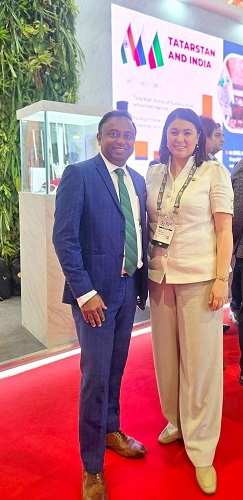 |
MrBency George & Chief Operating Officer, ITDFC and MRSTALIYA MINULLINA, Chief Executive of the Tatarstan Investment Development Agency, is seen in the picture
YouTube Link: www.youtube.com/watch?v=z1MXTU8l-cw
MrBency George is a well-known trade diplomat in India, with extensive experience in organising international trade summits, business delegations and bilateral trade initiativesHe has played a key role in facilitating business and trade delegations from India to several countries, fostering international business partnerships and strengthening cross-border trade relationsKazan, the capital of the Republic of Tatarstan in European Russia, lies approximately 720 kilometres east of Moscow and is situated at the confluence of the Volga and Kazanka riversThe city is an important industrial, educational and cultural centreFor businesses exploring the Russian market, its relevance extends to Tatarstan’s wider industrial base and opportunities for cooperation in manufacturing, technology and services.
Highlighting the scope for regional cooperation, MRSTALIYA MINULLINA, Member of the Government of the Republic of Tatarstan, Chief Executive of the Tatarstan Investment Development Agency said, “Tatarstan is rich in oil and gas, with developed industries including machinery, helicopter and aircraft production, robotics, agriculture, IT and pharmaceuticalsWe need to get acquainted with the different Indian states, just as Indian businesses need to know Russia’s regionsWithout these exchanges, trade cannot grow.”
The ITDFC delegation will seek to build on this need for closer business engagement by bringing together companies with clear sectoral interests and business objectives.
MrBency George, Chief Operating Officer, ITDFC, said, “This is a very good opportunity for Indian companies, especially SMEs, MSMEs, startups and IT companiesNew-generation businesspeople are looking for collaboration, investment and expansion opportunitiesWe will reach out to businesses and state governments across Southern India to bring together a delegation to Tatarstan.”
Reflecting this scope, the programme covers oil and gas and petrochemicals; investment and innovation; logistics and transportation; healthcare and pharmaceuticals; labour market and human resources; education and science; IT and startups; agriculture and agri-business; textile production and manufacturing; creative industries; and film production and media.
Plenary discussions, sector-focused business sessions, B2B meetings, exhibitions and industrial visits will provide different settings for delegates to engage with Russian companies and regional stakeholders.
Southern India already has a connection with the forum, with Andhra Pradesh and Telangana represented at its 2025 editionTatarstan has also expressed interest in expanding cooperation with Indian businesses in electronics, pharmaceuticals, light industry, IT and high technology, providing a relevant backdrop for the proposed delegation’s discussions.
The 2026 edition follows an inaugural forum that brought together 3,500 participants from Russia and India, featured 93 experts across 15 thematic sessions and saw 19 strategic cooperation agreements signedITDFC is inviting interested enterprises to share their sectoral priorities and business requirements as it coordinates participation in the forthcoming edition.