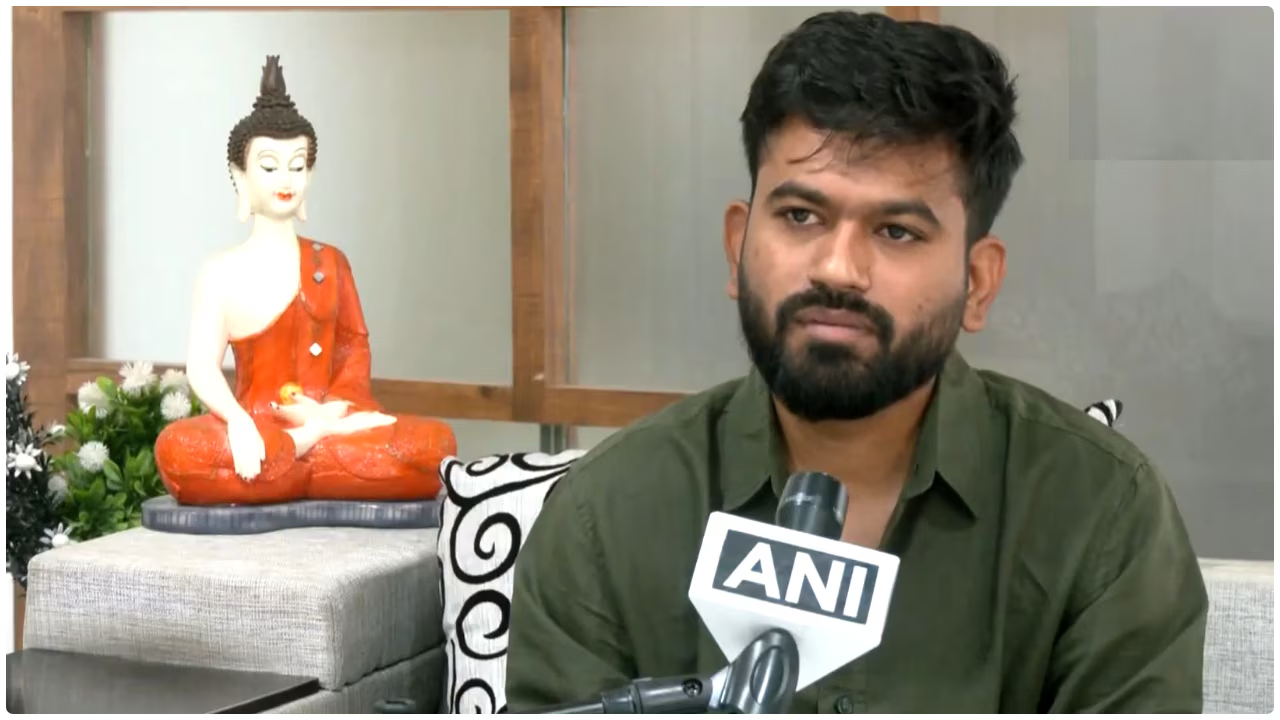

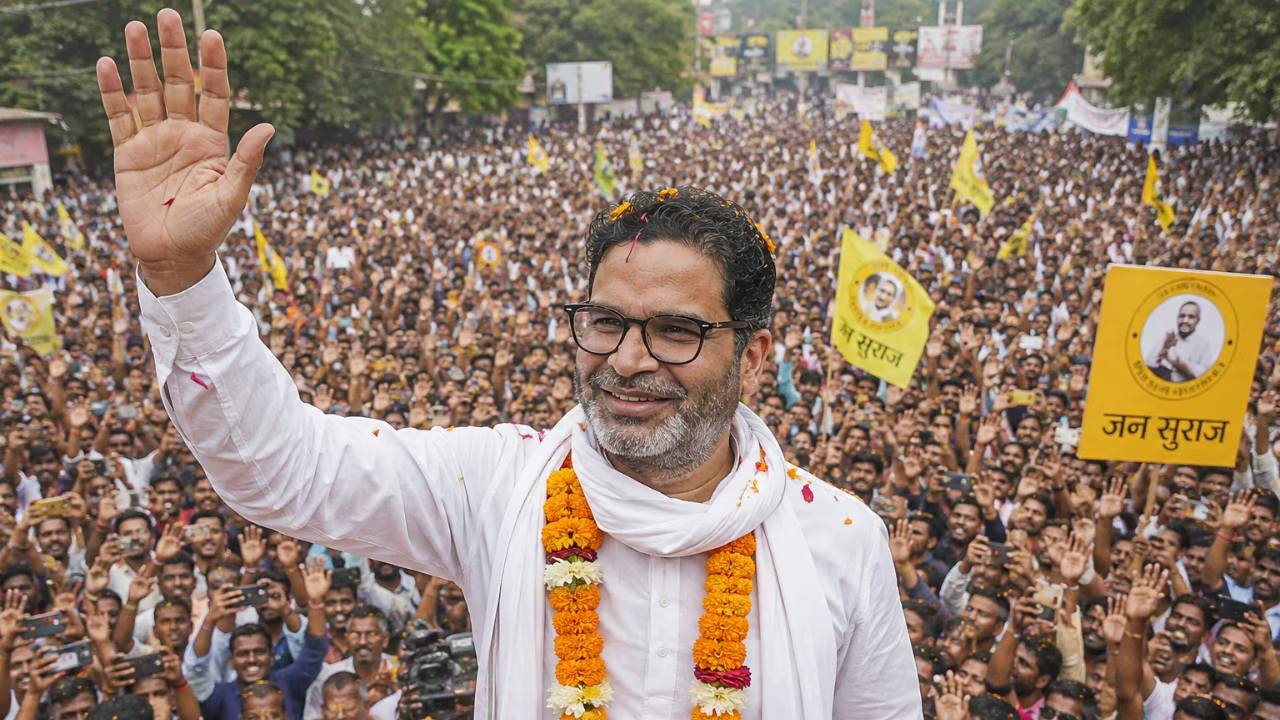
Prashant Kishor worked as the head of social policy and planning at UNICEF in Chad, heading a UN aid mission, when he prepared a paper documenting economic prosperity and malnutrition in India.
Published: August 3, 2026, 3:12 PM IST
Share Article
https://www.india.com/news/india/prashant-kishor-jan-suraaj-party-jsp-bjp-bankipur-seat-nitin-nabin-rjd-ipac-tejaswi-yadav-united-nations-unicef-narendra-modi-amit-shah-nitish-kumar-samrat-chaudhury-chirag-paswan-8491822/
New Delhi: Prashant Kishor, the Indian political strategist and public policy advisor, is a prominent figure known for election management, campaign design, and data-driven political consultingHe launched the Jan Suraaj Party a few years ago and is contesting his first election from the Bankipur Assembly constituency in the Bihar bypollIt is important to note that the Bankipur seat has long been considered a BJP strongholdThe saffron party has not lost this Assembly constituency since 1995, when it was known as Patna West.
Earlier in his career, Kishor worked in public health programmes funded by the United Nations for eight years till 2011He worked as the head of social policy and planning at UNICEF in Chad, heading a UN aid mission, when he prepared a paper documenting economic prosperity and malnutrition in India.
Here are some of the interesting facts about Prashant Kishor
- Prashant Kishor started his career as a public-health activist, serving stints in Andhra Pradesh and Bihar.
- Prashant Kishor is married to Jahnavi Das, who is a medical doctor from Guwahati and a son too.
- Public health expert by training and had formerly worked with the United Nations for eight years.
- Prashant became a household name when Citizens for Accountable Governance (CAG), an election-campaign group he conceptualized, helped the Narendra Modi-led Bharatiya Janata Party (BJP) win an absolute majority in the 2014 Lok Sabha election.
- Prashant was roped in as a policy advisor.
- He later quickly went on to work on Modi’s victorious campaign for the 2012 Gujarat assembly election.
- His father, who retired as a doctor in Bihar, reportedly didn’t speak to him for six months after Prashant told him he was leaving his well-paying job at the United Nations to explore his skills as an election strategist and planner.
- He formed IPAC – Indian People’s Action Committee an election management consultancy firm which was hired by Narendra Modi.
- His team consists of about 300 graduates from the premier institutes like IIT, IIM, NLUs etc.
- Not only in India, even in Tanzania, where elections just got over, IPAC provided consultancy services to the Chama-Cha Manpinduzi (CCM) party.
- He was the mind behind Modi’s Successful campaign in 2014 “Chai Pe Charcha “.
- In Punjab, Prashant ran a campaign called “Punjab DCaptain, Captainin Da Punjab” for then Congress CM candidate Amrinder Singh.
- Prashant Kishor’s iPAC worked with Mamata Banerjee. Kishor reportedly advised Trinamool on virtually everythingFrom candidate selection, campaign plan, launch of schemes, strategy planning, connecting the schemes with the election to designing of the slogans — he was consulted at every step.
Jan Suraaj Party founder Prashant Kishor has secured more than 35,000 votes so far and is leading BJP candidate Neeraj Kumar by over 10,000 votes in Bihar’s Bankipur Assembly bypoll at the time of filing this copy.