

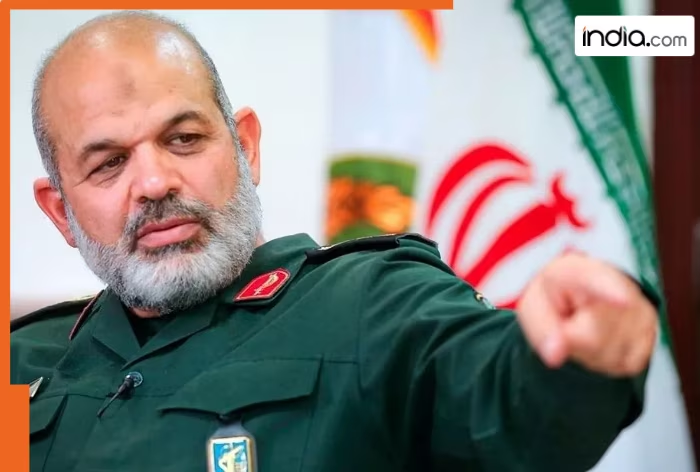
Ahmad Vahidi is known as a trusted loyalist to the late Supreme Leader Ali Khamenei.

Published: March 7, 2026 8:08 PM IST
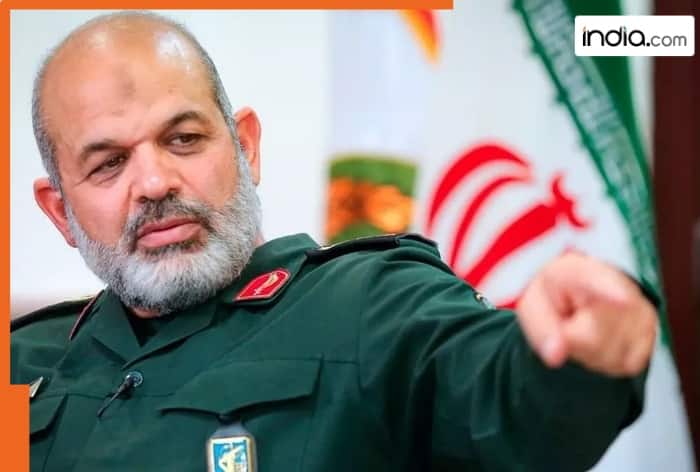
Who is Ahmad Vahidi? His early life and education
Vahid Shahcheraghi, better known as Brigadier General Ahmad Vahidi in Iran, has been appointed as the new commander-in-chief of Iran’s elite Islamic Revolutionary Guard Corps (IRGC) force. This came into effect on 1 March 2026. Before this, he was the deputy commander of the IRGC from December 2025 until the death of Mohammad Pakpour, who was the commander of the Islamic Revolutionary Guard Corps (IRGC) from 2025 until his death on 28 February 2026 in US-Israeli air strikes on Iran. Vahidi was also part of the government, serving as the Minister of the Interior from 2021 to 2024.Add India.com as a Preferred Source
He was born on 27 June 1958 in Shiraz, the fifth-most-populous city of Iran and the capital of Fars province. He is highly educated. He has a bachelor’s degree in electronics and a master’s degree in industrial engineering. He acquired a doctorate in strategic studies from Imam Sadiq University in Tehran, Iran. When and how he joined the IRGC
Brigadier General Ahmad Vahidi has taken charge of the IRGC, which means he belongs to the new, different school of thought of his ilk. His vision would perhaps be entirely different from the previous generation of officers of the Armed Forces and the IRGC. Although he is not new to the elite force, as he joined the Islamic Revolutionary Guard Corps in 1979, just after the Islamic Revolution led by Ruhollah Khomeini, Imam and the first Supreme Leader of Iran.He spent a good time with the IRGC as he rose through the ranks during the 1980s, holding key intelligence and military roles.Ahmad Vahidi’s role during the Iran-Iraq War
Following the toppling of the Shah of Iran and the establishment of the Islamic Republic of Iran, the country’s eastern neighbour, Iraq, invaded Iran in September 1980, and the Iran–Iraq War began. During the high-intensity war, Ahmad Vahidi was a key intelligence and security operative in the Islamic Revolutionary Guard Corps. He served as an intelligence deputy to Mohsen Rezaee and commanded the Balaal base. His skills proved to be very effective and useful, and the war came to an in August 1988.During the Iran-Iraq War, Ahmad Vahidi was involved with the establishment of the Quds Force (IRGC’s external arm) in 1983. Reportedly, he served as the IRGC Intelligence chief until the end of the war.It was during and after the war that Vahidi’s expertise and experience in intelligence and unconventional warfare laid the groundwork for his later positions as Iran’s Minister of Defense.Becoming the first commander of the Quds Force
From 1988 to 1997, Vahidi led the Quds Force. The Quds Force is one of five branches of the IRGC. Quds Force specializes in unconventional warfare and military intelligence operations. It is said to be providing support to Hezbollah, Hamas, Palestinian Islamic Jihad, the Houthis, and Shia militias in Iraq, Syria, and Afghanistan. Vahidi was in charge of foreign operations.Ahmad Vahidi’s role in shaping Iran’s regional military strategy
Ahmad Vahidi is a foundational figure in Iran’s regional military strategy. He spent nine years, from 1988 to 1997, as the first commander of the Quds Force. It is believed that among the notable Iranian officers, he played a distinguished part in shaping Iran’s asymmetric warfare doctrine, proxy network development, and ballistic missile initiatives, emphasizing regional influence and hardline, ideological defense strategies.Vahidi, as the inaugural commander of the Quds Force, established the operational foundations for managing proxy militias and expanding influence across Iraq, Syria, Yemen, Lebanon, and Palestine-based Hamas.Vahidi is a veteran strategist and planner with a focus on building unconventional warfare capabilities and strengthening Iran’s regional military networks to challenge powerful adversaries like the US and Israel.Iran’s Defence Minister
Ahmad Vahidi served as the Defence Minister of Iran from 2009 to 2013. During this time, he oversaw weapons programmes. He further deepened the integration of military, political, and strategic planning. Vahidi has been a consistent presence in security committees and deeply involved in shaping Iran’s long-term military doctrine and foreign security policy.Interior Minister and influence in Iranian politics
Ahmad Vahidi was appointed as Iran’s Interior Minister under President Ebrahim Raisi, a post he held from 2021 to 2024. Then too, he had significant influence as he controlled internal security, policing, and managing domestic dissent. His role bridged military and civilian leadership, enforcing strict ideological control.Vahidi took charge of Iran’s security apparatus, leading the state’s response to internal, political, and social unrest, reinforcing the Ibrahim Raisi government’s crackdown on dissent.Vahidi served as Iran’s Defense Minister under President Mahmoud Ahmadinejad from 3 September 2009 to 15 August 2013, and later as Interior Minister, bridging the gap between the Revolutionary Guards and the cabinet.Why is he considered a hardline security strategist
Ahmad Vahidi is known as a trusted loyalist to the late Supreme Leader Ali Khamenei and the ideology that led to the Islamic Revolution. Vahidi has been described as a “hardened field commander” who prioritizes guarding the Islamic Revolution’s principles.His career, spanning from the Iran-Iraq war to holding key cabinet positions and leading the IRGC, highlights his critical role in maintaining the Islamic Republic’s stability through security-focused, hardline policies.Interpol notice linked to the 1994 AMIA bombing
Ahmad Vahidi, the new commander-in-chief of the Islamic Revolutionary Guard Corps (IRGC), is currently subject to an active Interpol Red Notice for his alleged role in the 1994 bombing of Asociación Mutual Israelita Argentina (AMIA), a Jewish community center in Buenos Aires, Argentina. The AMIA was attacked on 18 July 1994. It has been described as a suicide attack that killed 85 people and injured over 300.Argentina has since sought Vahidi’s arrest for alleged aggravated murder and damages in the 1994 bombing of the AMIA. The Red Notice, first issued in 2007, has been consistently renewed, receiving renewed international attention.The courts in Argentina have attributed the AMIA attack to Iran and Hezbollah, leading to calls for Vahidi’s arrest during travel.In fact, as late as March 2026, his appointment as the chief of the IRGC sparked further condemnation regarding his fugitive status.Source link








Leave a Reply