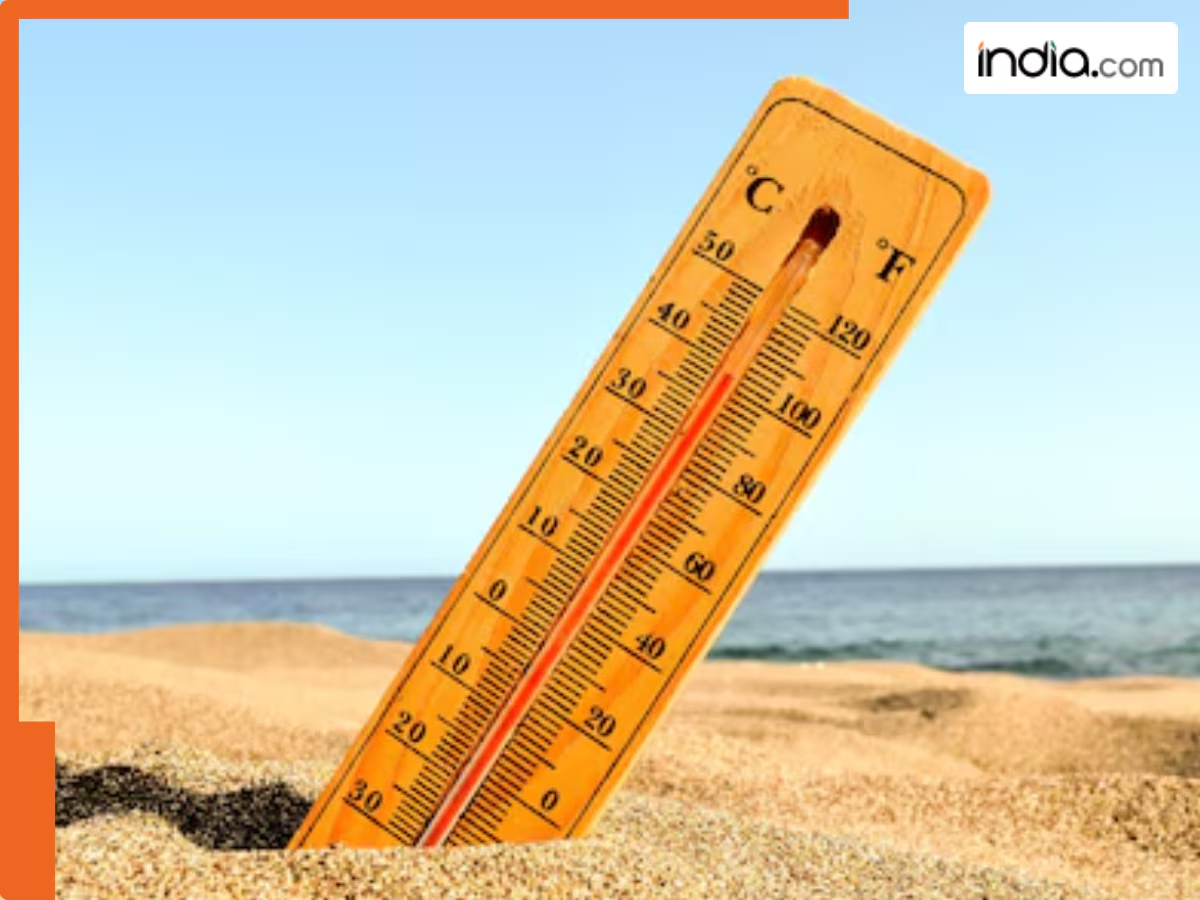
El Niño is likely to raise the temperature across the globe this year, with meteorologists expecting more droughts and intense heatwaves. Heatwaves are likely to begin from May this year

Published: April 25, 2026 7:15 PM IST
The weather conditions have been taking a turn for the worse, especially in India, with temperatures soaring to 45 degrees Celsius already. Now, scientists have been keeping a close eye on conditions brewing in the Pacific Ocean that could spike temperatures and smash global heat records. Some officials state that the extreme rise in heat can be due to a super El Niño developing this year, supercharging the weather events around the world.
The World Meteorological Organization (WMO) has warned that El Niño could develop earlier this year, between May and July, which will impact the temperature and rainfall patterns. While it was previously expected to arrive in August-September, the signs of its early arrival have increased the concerns among meteorologists.
Less rainfall expected this year
There is a looming uncertainty about the arrival of the monsoon in India this year due to the threat of El Niño. The India Meteorological Department (IMD) has already forecast “below normal” rainfall. Experts say that if El Niño strengthens, it could have a profound impact on agriculture, water storage, and the rural economy. There are also chances of drought-like conditions developing in rain-fed agricultural areas.
Excessive heat expected across the world
According to the latest WMO report, ground temperatures worldwide are likely to be higher than usual through May, June, and July. This increases the risk of severe heatwaves in India, which will increase the electricity demand, water consumption, and pressure on healthcare services in the coming months.

The rapidly declining snow cover in the Himalayan region has also got geologists concerned. The Himalayan mountain range has recorded 27.8 per cent less snow than normal this year, which is the lowest in 20 years. Also, the sea surface temperatures in the equatorial Pacific Ocean are rapidly rising. According to the WMO, climate models now nearly unanimously predict that El Niño conditions will strengthen in the coming months.
Droughts also expected
Scientists are also predicting droughts in several places in India, Australia, and Indonesia, while heavy rainfall can be seen in South America, parts of the United States, and areas of Africa. Experts have advised governments to plan ahead, strengthen water management, and modify agricultural strategies to tackle possible crises.
Delhi weather
Delhi witnessed intense heatwave conditions on Friday as the mercury continued to rise every day. The daytime temperature touched 41.9 degrees Celsius, 0.2 degrees higher than on Thursday. The Ridge station recorded the highest reading at 43.1 degrees Celsius. According to the India Meteorological Department (IMD), the capital city is likely to witness isolated heatwave conditions.
According to the weather department, heatwave conditions are expected today in isolated parts of the capital city. A yellow alert has been issued for today for heatwave conditions.