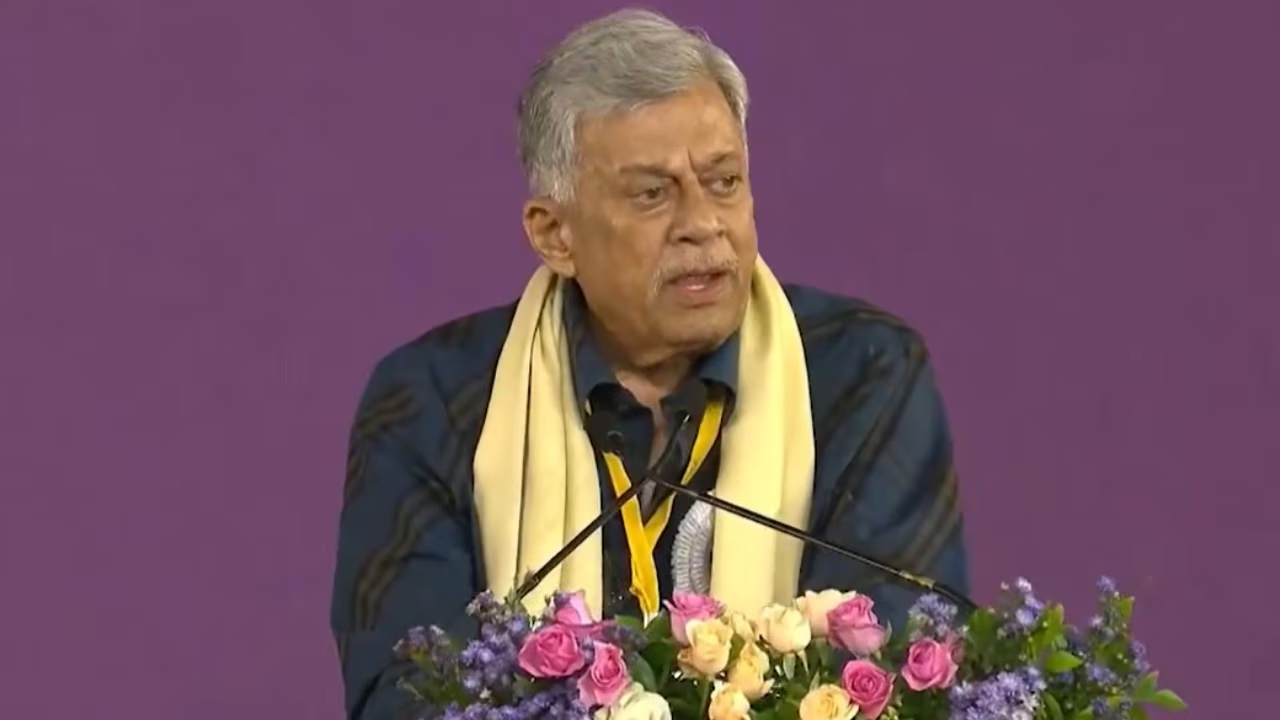
Veteran actor Anant Nag received the Dadasaheb Phalke Award at the 72nd National Film Awards in Kevadia, Gujarat, on TuesdayExpressing his gratitude, the Malgudi Days fame actor said he felt “very, very lucky” to receive the honour and dedicated it to the filmmakers, technicians, colleagues and audiences who supported him throughout his five-decade-long career.
Published: September 22, 2026, 7:17 PM IST
Share Article
https://www.india.com/entertainment/regional/anant-nags-dadasaheb-phalke-award-speech-veteran-actor-thanks-industry-and-fans-for-50-year-journey-watch-8528982/
Anant Nag’s speech after receiving Dadasaheb Phalke Award (PC- Twitter)
Veteran actor Anant Nag was honoured with the Dadasaheb Phalke Award at the 72nd National Film Awards ceremony in Kevadia, Gujarat, on Tuesday, September 22The 78-year-old actor, known for his work across Kannada cinema and for his appearance in Malgudi Days, received India’s highest honour in the field of cinema for his contribution to Indian cinema. A special short film was screened at the ceremony to celebrate Anant Nag’s career and his contribution to films and televisionThe tribute highlighted some of the important milestones of his journey as an actor.
Veteran actor Anant Nag receives the #DadasahebPhalkeAward at the 72nd National Film Awards, recognising his remarkable contribution to Indian cinema#IndiaCelebratesCinema #FilmsThatUnite pic.twitter.com/4MDY4LNqcP
— PIB India (@PIB_India) September 22, 2026
After receiving the award, Anant Nag addressed the audience and spoke about his early years, his journey into acting and the people who supported him throughout his career. “It’s a great honour to be here with you and I’m trying to digest the majesty of this functionI have not attended many such gatherings, but I’m very happy to be with you all todayAs an actor, you have seen me perform, and you have seen some of the snippetsI grew up in an ashram and a mutt in my childhood, up to the age of 12Thereafter, I was sent to Mumbai, where I got a chance to act in a play, Chaitanya Mahaprabhu, the same poet of Bengal, and that’s how my career started.”
Talking about his theatre journey and entry into films, he said, “In about five years, I acted in around 50 plays, which became my training ground for actingThereafter, I was called to play some roles in cinema – first in Kannada, then in Hindi with Shyam Benegal, M.SSatyu and many othersAlthough I did act in several Hindi films, the atmosphere for new wave films, art films and commercial films was differentMy opportunities in Karnataka were great, so I said, let me go to Bangalore and settle down there, which became my Karma Bhumi.”
Reflecting on his work across languages, the veteran actor said, “In the last 50 years, I was invited to do many films in other languages alsoI went there as an ambassador of Karnataka, because those people had great regard for my acting talentAs you have seen, I did many films in other languages too, but I had the greatest opportunities and performances in Karnataka, in my Kannada filmsLast year, I had the good fortune of receiving the Padma Bhushan Award at the hands of our dear President, SmtMurmujiAnd this time again, I feel very, very lucky and fortunate to have received this – the highest award in films, the Dadasaheb Phalke Award.”
Anant Nag also dedicated the honour to the people he has worked with and audiences who have followed his career over the decades. “I am very grateful at this pointI would like to remember all the people who have been with me throughout these 50-55 years of being an actorThis award does not belong to me aloneIt also belongs to every producer, director, dialogue writer, songwriter, cinematographer, costume designer, makeup artist, production manager, assistants and associates who have worked with me tirelesslyThe award belongs to millions of people who have opened their hearts and minds to my characters over the last five and a half decades,” added the veteran actor.
VIDEO | Ekta Nagar, Kevadia: After receiving Dadasaheb Phalke Award at the 72nd National Film Awards, veteran actor Anant Nag says, “In about five years, I acted in around 50 plays, different plays, which served as my training ground for acting…Over the last 50 years, I was… pic.twitter.com/GFQro05h6b
— Press Trust of India (@PTI_News) September 22, 2026
Anant Nag’s career
Born Anant Nagarkatte on September 4, 1948, Anant Nag is one of the prominent names in Kannada cinemaHe has worked in more than 300 films, including over 250 Kannada movies, and has also appeared in Hindi, Telugu, Tamil, Marathi, Malayalam and English films. He is also known for his television work, particularly his appearance in the popular Doordarshan series Malgudi Days, based on the stories of author R.KNarayan.
Over the course of his career, Anant Nag has won five Karnataka State Film AwardsIn 2025, he was honoured with the Padma Bhushan, India’s third-highest civilian award.
The Dadasaheb Phalke Award is given for an individual’s outstanding contribution to the growth and development of Indian cinema.