Picture Health’s new AI radiology tool analyzes tumor blood vessel patterns, enabling an earlier and more accurate prediction of treatment success than current methods. CLEVELAND, March 10, 2026 /PRNewswire/ — Oncologists currently have limited tools to predict which lung cancer patients will benefit from immunotherapy. The publication of a multi-institutional study in the Journal for ImmunoTherapy of Cancer might change this.
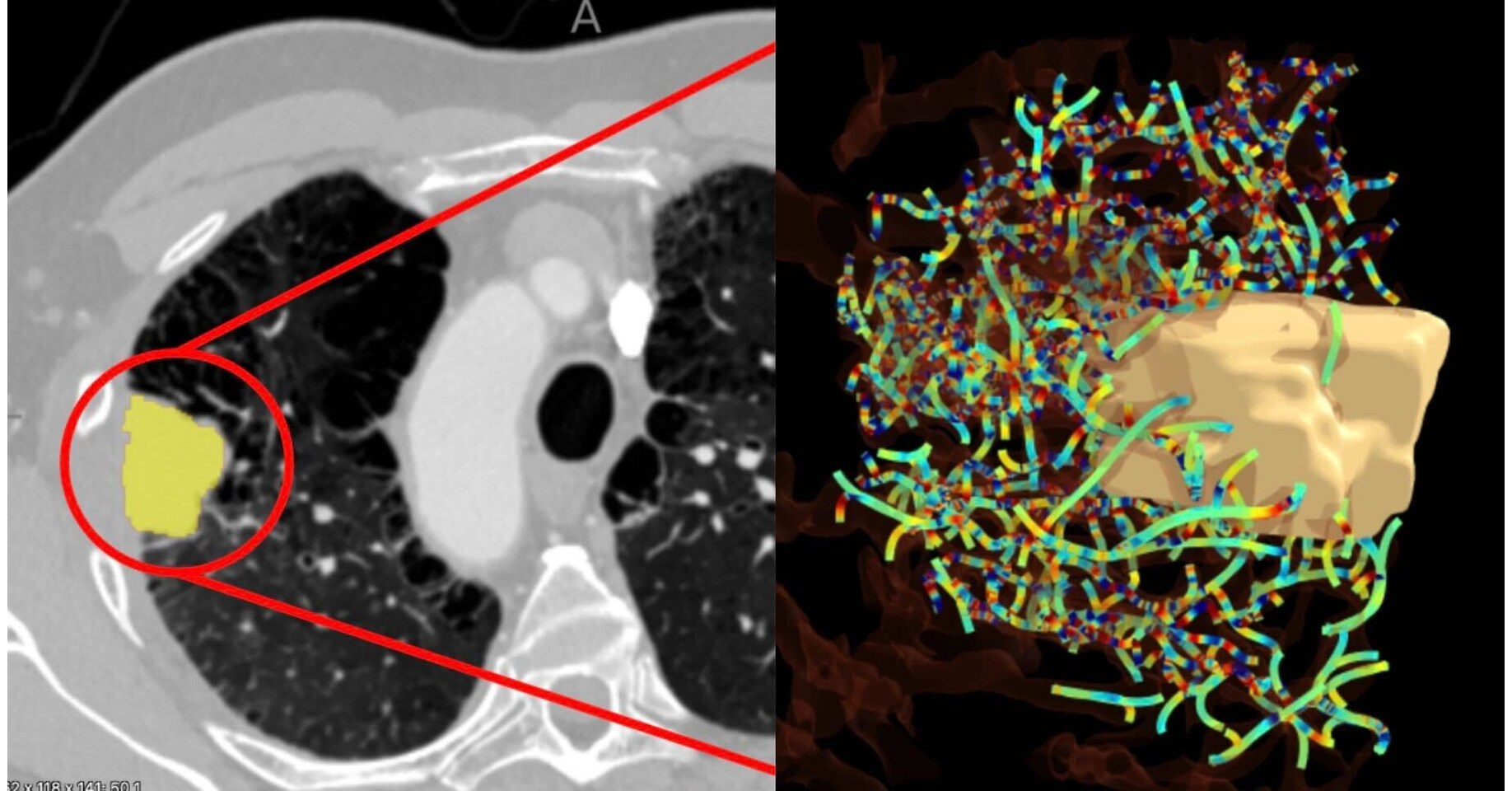
A routine CT scan of a lung tumor (left) is analyzed using Picture Health’s QVT™ score to map and quantify the complex network of blood vessels surrounding the tumor (right).
Conducted by Picture Health, the study evaluated more than 1,300 CT scans from 682 patients with non-small cell lung cancer treated at six medical centers. Researchers found that a new AI imaging biomarker called Quantitative Vessel Tortuosity (QVTTM) score can predict patient outcomes and detect early signs of treatment response — potentially sooner than traditional measurements can. The QVT score analyzes the structure and complexity of the blood vessel networks that tumors create to sustain themselves. The score is created using over 900 measurements of these blood vessels from CT scans patients already receive as part of routine care.
“Immunotherapy has been a breakthrough for lung cancer, but the reality is it does not work for every patient,” said Dr. Young Kwang Chae, the study’s lead author and a Professor of Medicine at Northwestern University. “We’ve known for decades that the blood vessels feeding a tumor contain important information about whether a patient is likely to benefit from treatment. What’s exciting is that we can now measure their structure using just a CT scan. This can allow us to personalize patient treatment, directing patients to their best care.”
Beyond Existing Biomarkers Current tests used to guide immunotherapy decisions, such as PD-L1 testing, focus mainly on immune markers unique to tumor cells. However, they overlook another important factor: the network of blood vessels supplying the tumor. Tumors often develop abnormal, disorganized blood vessel systems, which can limit the immune system’s ability to reach the tumor and a treatment’s ability to reach cancer cells.
QVT analyzes CT scans to measure this vascular complexity and convert it into a single score that reflects how abnormal a tumor’s blood vessels are. Researchers found that patients’ QVT scores at the start of treatment independently predicted survival outcomes. They also observed that early decreases in QVT scores during treatment, indicating tumor blood vessels were becoming more normalized, appeared earlier than the traditional measures used to track tumor response.
“AI is allowing us to uncover hidden biological signals from medical images that were previously invisible to the human eye,” said Anant Madabhushi, PhD, Chief Scientific Officer at Picture Health. “By quantifying the architecture of tumor blood vessels from routine CT scans, QVT provides a new way to understand how a tumor is responding to treatment. This could help oncologists and drug developers make better decisions earlier in the treatment process.”
Supporting the Next Generation of Cancer Therapies The findings come as pharmaceutical companies increasingly focus on combining immunotherapy with treatments that target tumor blood vessels. When used as a biomarker in clinical trials, researchers say QVT could help identify which patients are most likely to benefit from certain treatment approaches.
While the recent study focused on predicting whether certain treatments will be effective for lung cancer, abnormal tumor blood vessels are common across many cancer types. Imaging tools like QVT could eventually help guide treatment decisions in multiple cancers.
About Picture Health: Picture Health develops and deploys AI imaging biomarkers that analyze tumor biology from routine clinical scans to support precision oncology and drug development. For more information, visit www.picturehealth.com.
Media contact: [email protected]
SOURCE Picture Health















Leave a Reply