Who is Manpreet Kaur? Meet the Indian shot putter who won bronze at Asian Games 2026 and has seven national titles to her nameHere’s everything you need to know.
Share Article
https://www.india.com/sports/others/meet-manpreet-kaur-indias-seven-time-national-champion-who-won-shot-put-bronze-at-asian-games-2026-8530012/
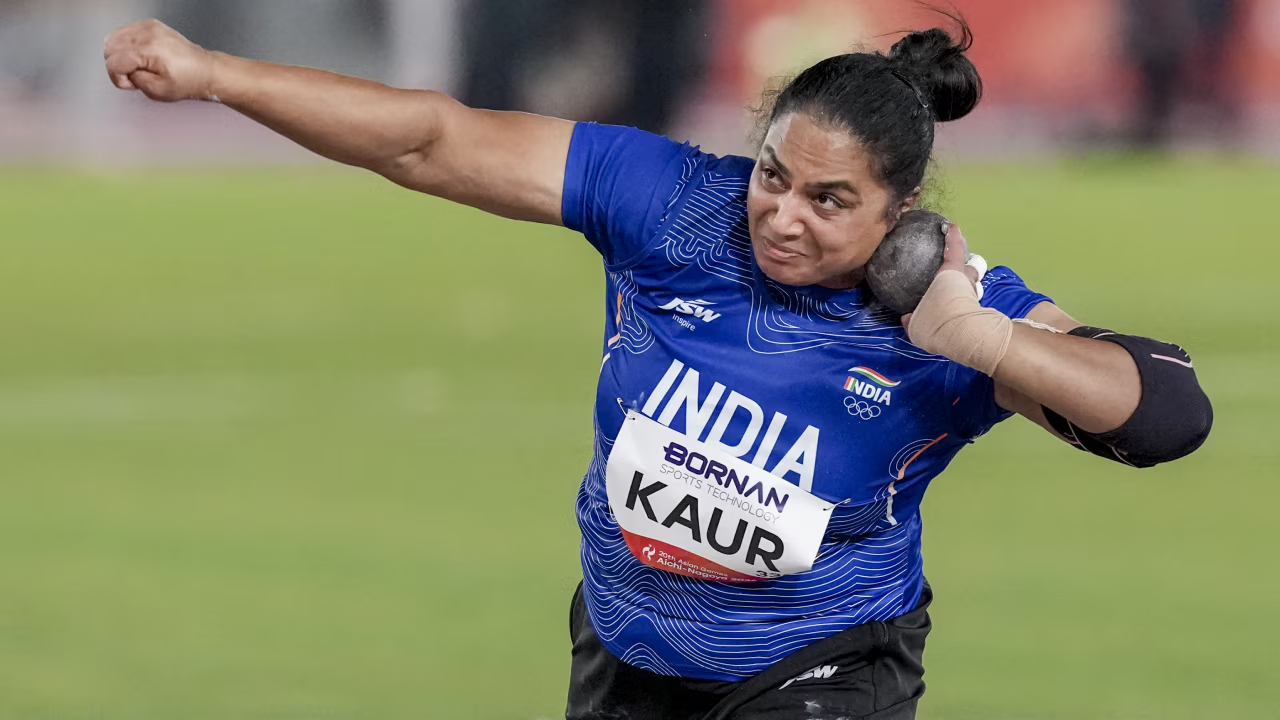
India’s Manpreet Kaur competes in the women’s shot put competition during the Asian Games 2026(Photo: PTI)
India’s Manpreet Kaur won the bronze medal in the women’s shot put at the Asian Games 2026 on FridayThe experienced Indian athlete produced a best throw of 17.17m to finish third in the competition.
China dominated the event as Song Jiayuan took the gold medal with a throw of 19.40m, while her compatriot Zhang Linru finished second with 18.14m.
Manpreet’s medal adds another podium finish to her long career in Indian athletics and comes after she narrowly missed out on a medal at the 2026 Commonwealth Games in Glasgow.
Manpreet secures Asian Games Bronze
The 36-year-old produced a steady performance to finish among the top threeHer 17.17m effort was enough to put her on the podium, while the two Chinese athletes finished comfortably ahead of the field.
Manpreet had previously finished fifth at the 2023 Asian GamesHer latest performance therefore marks an improvement on her result from the previous edition.
She also came close to a medal at the Commonwealth Games in Glasgow last month, where she finished fourth with a best throw of 17.49m.
Her personal best remains 18.06m, which she recorded in 2022World Athletics lists that mark as her career best.
Manpreet’s strong 2026 season continues
Manpreet entered the Asian Games after showing good form in domestic competitionEarlier this year, she won the National Inter-State Championships with a throw of 17.75m.
That effort was well above the Asian Games qualification mark of 16.25m and helped her secure a place in India’s athletics squad for the competition.
She had also finished third at the 2023 Asian Athletics Championships with a throw of 17.00mThat remains one of her notable international performances in recent years.
Manpreet was part of the Indian athletics contingent that trained at the University of Tsukuba near Tokyo before the Asian Games.
Who is Manpreet Kaur?
Manpreet Kaur is one of India’s most experienced women’s shot put athletesShe has won the national title seven times and has competed at major events including the Olympic Games, Asian Games and Commonwealth Games.
She has spent more than a decade competing at the top level and has built a strong record in domestic and international competitions.
Her bronze at the 2023 Asian Athletics Championships came before another fifth-place finish at the 2023 Asian Games.
At the 2026 Commonwealth Games, Manpreet finished fourth after throwing 17.49mShe had moved into medal contention during the competition but could not hold on to a podium place.
Her Asian Games bronze in 2026 now gives her another major international medal and adds to her long list of achievements in Indian athletics.