

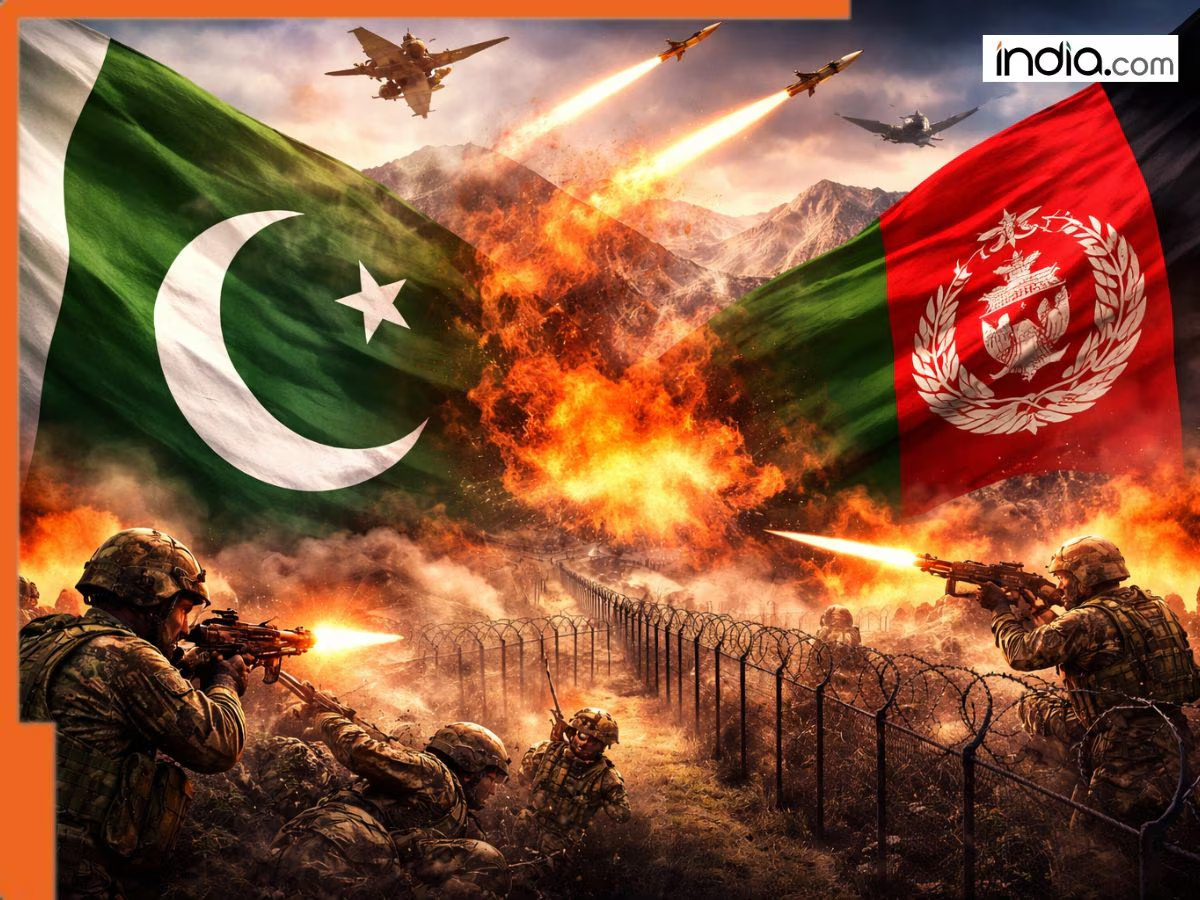
Pakistan’s airstrikes in Afghanistan have reignited tensions driven by militant threats, border disputes and historic mistrust, pushing both nations closer to a dangerous and escalating regional conflict.

Published: March 17, 2026 10:46 AM IST
Pakistan Launches Airstrikes in Afghanistan
The recent escalation between Pakistan and Afghanistan was sparked after Pakistan launched airstrikes along the Afghan border, with several of the attacks reportedly taking place in Kabul Pakistan claimed the strikes targeted militant hideouts, while Afghanistan alleged the strikes hit civilian areas killing hundreds of civilians. Pakistan has continued to claim its strikes will target terrorism that threatens the security of Pakistan, while Kabul has refuted those claims.Meanwhile, tensions between the countries continue to intensify with reports of new strikes being launched in Afghanistan.Also read: ‘Act of brutality,’ says Afghanistan after Pakistan’s airstrike on Kabul Hospital leaves 400 dead, Shehbaz government denies chargesAdd India.com as a Preferred Source
Tensions Over the Tehreek-e-Taliban Pakistan (TTP)
Perhaps the biggest driver of this conflict is Pakistan’s Taliban – officially known as the Tehreek-e-Taliban Pakistan or TTP. The group has claimed responsibility for dozens of attacks within Pakistan and is mostly based within Afghanistan. Pakistan has long accused Afghanistan of granting shelter to TTP militants and operating out of Afghanistan.The Taliban have been blamed for a recent series of attacks in Pakistan. Last week Pakistan claimed it conducted “retaliatory strikes” against militant groups inside Afghanistan. Afghanistan has denied housing militants groups inside its borders and claims Pakistan is using it as an excuse to attack.Friendships Turned Sour
Pakistan was one of the main backers of the Taliban during their rule in the 1990s. They also maintained relationships with the group when they returned to power in 2021. The Afghanistan-Taliban relationship with Pakistan has taken a turn for the worse in recent years.Pakistan has become increasingly angered by the Taliban’s refusal to take action against anti-Pakistan militant groups.Enemies Instead of Allies
The Durand Line is the 2,600 kilometer border that divides Pakistan and Afghanistan. Afghanistan has refused to recognize the Durand Line as an official border with Pakistan. Cross-border conflicts and skirmishes are a common occurrence. Militants have easy access to both sides of the border. Facilitating attacks like the one we’ve seen recently.“A Staged War” Between Pakistan and Afghanistan
Pakistan has stated the airstrikes were acting upon “terrorist safe havens” within Afghanistan. Afghanistan claims Pakistan has entered an “open war” with their latest strikes. Pakistan launched a new strike over the weekend killing at least 9 militants.India has condemned Pakistan’s strikes in Afghanistan and called for all parties to respect Afghanistan’s sovereignty. Other countries have called for both nations to de-escalate the situation and find a peaceful solution.Will Pakistan and Afghanistan Go to War?
It’s difficult to see how both Pakistan and Afghanistan will deescalate the situation any time soon. Tensions between both countries date back decades, and there are seemingly multiple flashpoints ready to ignite.Source link








Leave a Reply