

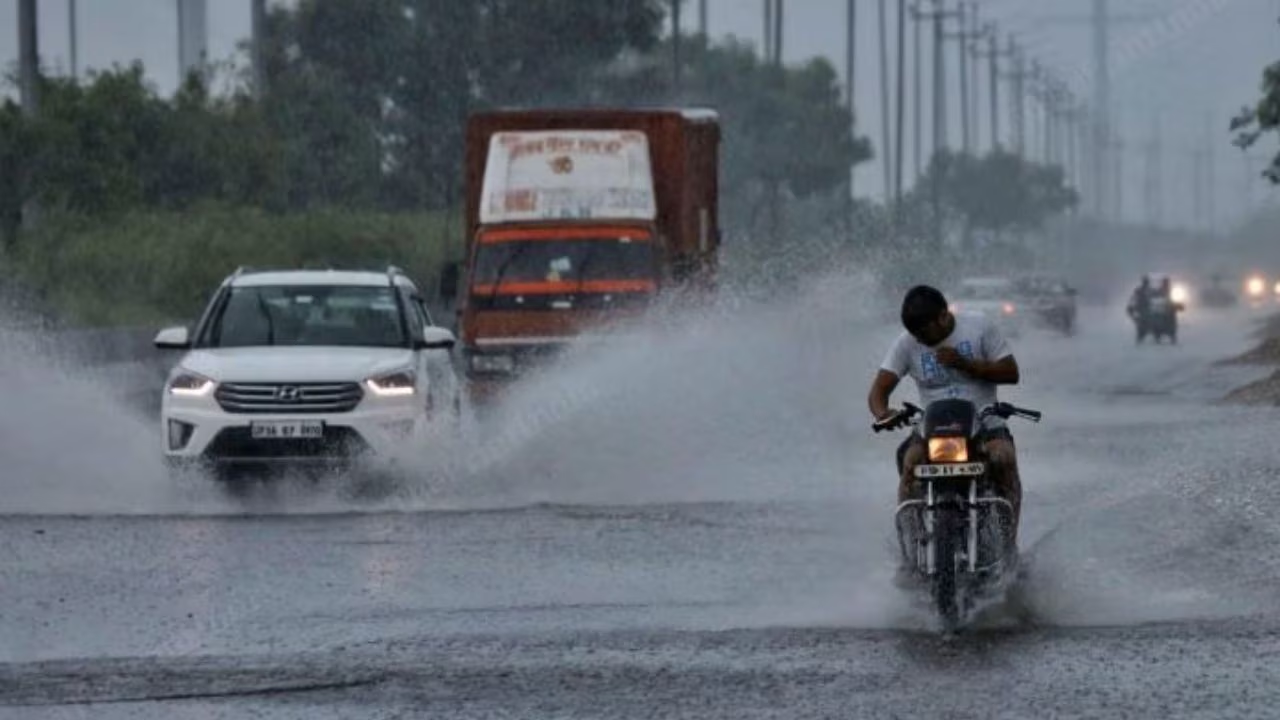
The southwest monsoon has wrapped up 12.6 per cent short of its average, making it the fourth-driest since 2001, according to the IMDMore of the same is on the way: the weather office expects below-average rain in October, and most regions are likely to stay below normal across October to December.
Published: September 30, 2026, 7:06 PM IST
Share Article
https://www.india.com/news/india/india-witnesses-weakest-monsoon-in-over-a-decade-rainfall-season-ends-12-per-cent-short-imd-october-likely-to-be-receive-dry-spell-8531655/
India’s Monsoon season ended at a rainfall deficit of 12.8 per centFile image
This year’s southwest monsoon has ended on a dry noteThe IMD said on Wednesday that India received 759 mm of rain against the normal 868.6 mm, a shortfall of 12.6 per cent and the fourth-lowest total since 2001.
According to the weather office, rainfall across India is likely to fall short of average in OctoberMost parts of the country are also expected to receive below-normal rainfall over the October-December period as a whole.
Read more:
Swine flu cases rising in Delhi; what are the symptoms? Doctors issue warning and advise caution
The below-normal forecast follows a deficient June-September southwest monsoon, a season vital to India’s farming and water resources.
According to the IMD, the monsoon season normally brings 868.6 mm of rainfall to India, but this year’s total stood at 759 mm.
The weather department official said most parts of India are likely to receive below-normal rainfall during the October-December period, indicating that the rainfall deficit could persist beyond the southwest monsoon season.
What does the data show?
East India recorded the highest rainfall deficit at 25 per cent below the LPA, followed by South India at 24 per centNorthwest India and Central India recorded relatively smaller deficits of 6 per cent and 2 per cent, respectivelyOf the 36 meteorological subdivisions, 17 received deficient rainfall, 18 recorded normal rainfall, and one reported excess rainfall.
Between September 1 and 28, all-India rainfall was 5 per cent below the LPAHowever, a recent improvement in rainfall has helped narrow the overall deficitThe report noted that the IOD index has entered the positive zone at 0.76, which could partly offset the adverse impact of El Niño in the coming days.
The rainfall deficit has also coincided with lower kharif sowing compared with last yearAs of September 25, 2026, around 110.8 million hectares had been sown, down 1.2 per cent from 112.1 million hectares during the corresponding period last yearHowever, the area sown stood at 100.3 per cent of the normal level.
The decline in kharif acreage was mainly driven by rice, with sowing falling 3.6 per cent year-on-year to 43.1 million hectaresIn contrast, pulses acreage increased 2 per cent from a year earlier, supported by a 12.4 per cent rise in urad sowing and a 2.8 per cent increase in arhar acreageMoong acreage, however, declined 3.7 per cent year-on-year, the report said.