

ICC has introduced major rule changes in cricket, including a new ODI ball rule, Test stop clock, boundary catch changes, DRS updates and more.
Share Article
https://www.india.com/sports/cricket/icc-announces-major-cricket-rule-changes-sourav-ganguly-led-committees-full-list-of-changes-explained-8531928/

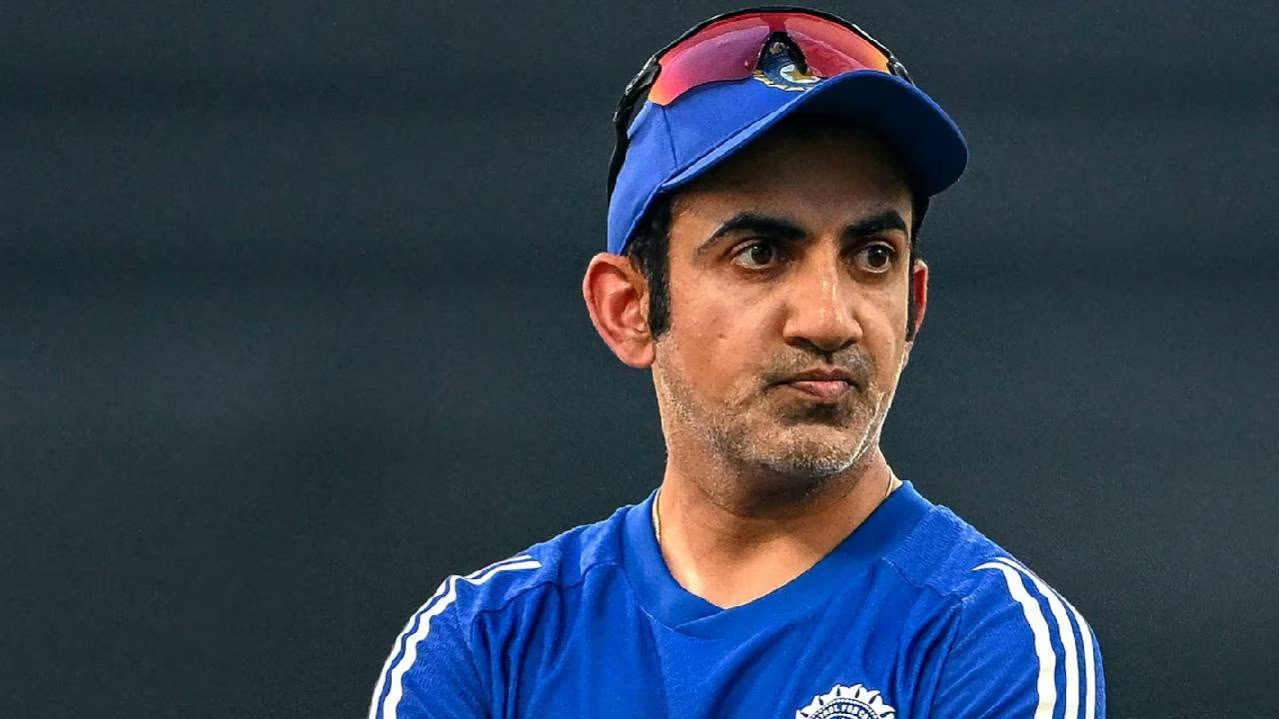
Sourav Ganguly-led ICC committee introduces major changes to cricket’s playing conditions(Photo: PTI)
The International Cricket Council (ICC) has introduced a fresh set of changes to the Playing Conditions across international cricketThe new rules cover Tests, ODIs and T20Is and include stricter action against time-wasting, new ball specifications, changes to fielding rules and a trial for pink balls in daytime Test matches.
The new rules will be retroactive to international series on or after October 1, 2026Existing matches and series will remain under the existing rules.
Read more:
Live Updates ODI World Cup 2027 Schedule Announcement: Marquee event returns to SA after 24 years
Batters can face penalty for time-wasting
One of the major changes concerns batters taking too much time before facing the next delivery.
Under the new rule, a batter will receive a warning for the first offence and a final warning for the secondIf the batter commits another offence, the fielding team will be awarded five penalty runsThe same penalty will apply to every further offence, while repeated violations can also lead to Code of Conduct action.
New ball specifications for women’s cricket
The ICC has also tightened the size and weight limits for cricket balls used in women’s and junior cricket.
Previously, manufacturers could use one ball specification for both categoriesThe updated rules now create separate specifications for men’s, women’s and junior cricket.
ICC clarifies overthrows and run-outs
The new Playing Conditions also provide greater clarity around fielding situations.
An overthrow will now specifically mean an attempt to direct the ball towards the stumps to stop runs or complete a run-outA normal misfield will not be treated as an overthrow.
The ICC has also changed the wording around a ball being “finally settled”The ball does not necessarily have to be in the bowler’s or wicketkeeper’s hands for an umpire to consider it settled.
For run-outs and stumpings, the fielder must have complete control of the ballSimply touching the ball while breaking the stumps will not be enough.
Pink ball trial introduced in daytime Tests
Test cricket could also see a major changeTeams can now mutually agree to use a pink ball in a daytime Test as a trial, mainly to reduce the amount of play lost because of bad light.
However, the decision must be made before the Test beginsOnce the match starts, teams cannot switch from a red ball to a pink ball or change the decision.
Last wicket will not always end the day
Another Test-specific change means the fall of a wicket during the final over of the day will not automatically bring play to an end.
If the over is incomplete and weather and playing conditions are suitable, the remaining deliveries can still be bowledThe ICC said the change is aimed at avoiding unnecessary loss of playing time while also rewarding the fielding side.
Changes in ODI and T20I cricket
T20I matches will now have a fixed 15-minute innings interval, although it can be reduced to at least 10 minutes if playing time has been lost.
The rules also allow the head coach or a designated member of the coaching staff to enter the field during drinks breaks in ODIs and T20Is.
Meanwhile, the trialled leg-side wide rule has now been permanently included in the ODI and T20I Playing ConditionsThe batter’s leg position at the moment of delivery will be used as the reference point when judging a wide.
What Sourav Ganguly said
ICC Men’s Cricket Committee chairman Sourav Ganguly said the changes cover cricket-ball specifications, fielding clarity and efforts to improve the pace of the game.
“There are some important changes to the Playing Conditions,” Ganguly saidHe also stressed that the changes were carefully considered to suit modern cricket while maintaining the integrity and consistency of the game.
Ganguly thanked the committee members for their time, expertise and contributions during the processHe also praised the discussions and constructive approach that helped the committee finalise the new Playing Conditions.