

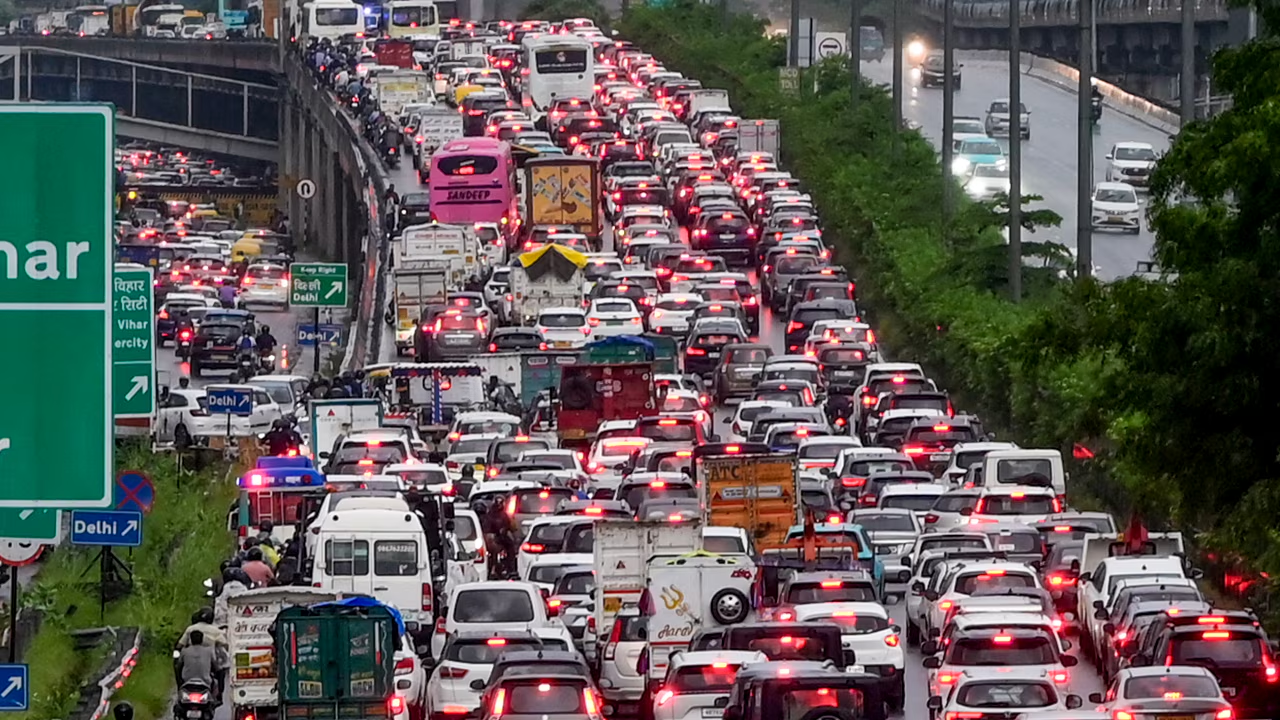
Delhi’s newly opened Barapullah Phase-III flyover has triggered major traffic jams, with commuters facing long delays near Sarai Kale KhanA drone survey found sharp turns and a lane-capacity mismatch at the Sundial merging point
Share Article
https://www.india.com/news/india/barapullah-phase-iii-flyover-faces-severe-congestion-after-grand-opening-sharp-turn-at-sundial-creates-bottleneck-sarai-kale-khan-lane-crunch-90-degree-angle-exposed-in-survey-8532095/
Barapullah flyover faces severe traffic congestion after grand opening: Sharp turn at Sundial creates bottleneck, lane crunch exposed in survey (Image: PTI)
Delhi’s newly opened Barapullah Phase-III flyover has faced heavy traffic congestion within a day of opening to the public, leaving commuters stuck in long queuesThe worst traffic was reported near the Sundial junction at Sarai Kale Khan, where vehicles coming from different roads merge into the existing Barapullah corridor.
The congestion also affected the stretch between Mayur Vihar and Sarai Kale KhanDuring peak hours, traffic police had to temporarily close part of the route and divert vehicles to reduce the pressure on the road.
The situation became worse on Thursday, just before the long weekend, as traffic slowed down across several parts of the national capital.
According to Google Maps estimates on Thursday evening, travelling around 8 km between Safdarjung Hospital and Sarai Kale Khan was taking more than an hourThe journey on a 5-km stretch of the Outer Ring Road between Panchsheel Park and Munirka was taking over 35 minutesEven the signal-free route from the AIIMS flyover to Sarai Kale Khan via Barapullah was taking more than 45 minutes.
Heavy traffic was reported on the Ring Road, Outer Ring Road, Mathura Road, DND Flyway, Bhairon Marg, India Gate and ITO routesAn event at IIT Delhi also added to the traffic pressure on the Outer Ring Road in south Delhi.
Delhi traffic police conduct drone survey
Following complaints about long traffic jams, senior Delhi Traffic Police and Public Works Department (PWD) officials carried out a joint drone survey on ThursdayThe inspection aimed to identify the reasons behind the congestion and find ways to improve traffic movement on the new flyover and nearby roads.
The Barapullah Phase-III corridor was inaugurated on September 29 and opened to commuters the following dayThe project connects Mayur Vihar with the existing Barapullah road network and is intended to make travel between east and south Delhi faster.
However, the heavy traffic after its opening has raised concerns about the road’s merging points and their ability to handle the increased number of vehicles.
Sharp turn at sundial junction creates bottleneck
The inspection identified the merging point near the Sundial at Sarai Kale Khan as a major problem areaOfficials found that the road design forces vehicles coming from different directions to join the existing corridor over a short distance, making it difficult for traffic to move smoothly.
At some points, two separate three-lane roads merge into a single three-lane stretchThis means traffic from six lanes has to move into just three lanes, creating a bottleneck.
Another problem was found on the loop near Sundial Park, where a lane ends abruptly at an almost 90-degree angleThis forces vehicles to merge suddenly, increasing the chances of traffic conflicts and slowing down movement.
Officials also noted that the new flyover is attracting vehicles that would otherwise travel through NH-24 and the DND FlywayThis has added to the number of vehicles using the existing Barapullah corridor, which has limited capacity at the merging point.
Smoother road design, traffic signals under consideration
The Delhi Traffic Police has raised the issue with the concerned agencies and asked the PWD to examine changes to the road layout near the Sundial junction.
One of the proposed measures is to make the merging section smoother by providing a wider curveThis could help vehicles join the main road more gradually instead of making sudden turns.
Authorities are also considering installing traffic signals or other traffic-control systems at selected merging pointsThese measures could help regulate the number of vehicles entering the corridor at a given time and prevent long queues from building up.
Another proposal is to improve traffic information on Google Maps so that commuters receive more accurate updates about road conditions and travel times.
Officials are also examining whether vehicles heading towards NH-24 can be diverted or regulated, wherever possible, to reduce pressure on the Barapullah corridor.
New flyover aims to cut travel time
The 3.5-km Barapullah Phase-III elevated corridor was developed to improve connectivity between Mayur Vihar in east Delhi and Sarai Kale Khan, with links to the existing Barapullah networkThe wider route is expected to offer a faster journey for people travelling between east Delhi, Noida and south Delhi.
The project was designed to reduce travel time between Mayur Vihar and AIIMS from around 35–40 minutes to approximately 15 minutes under suitable traffic conditionsIt is also expected to provide an alternative to busy routes such as NH-24, the DND Flyway and parts of the Ring Road.
However, the initial traffic jams show that the benefits of the new road will depend partly on how efficiently vehicles can enter and exit the corridor.
Traffic police and the PWD are now examining possible changes to improve traffic flow at the key junctionsFurther corrective measures are expected to focus on reducing congestion and making the new route easier for commuters to use.
For now, motorists travelling through Sarai Kale Khan, Mayur Vihar and nearby parts of south Delhi may need to allow extra time for their journeys, particularly during peak hours.