Singeetam Srinivasa Rao’s passing marks the end of an influential chapter in Indian cinema, with his films continuing to be remembered for their originality and experimentation.
Share Article
https://www.india.com/entertainment/regional/singeetam-srinivasa-rao-filmmaker-behind-classics-pushpaka-vimana-and-aditya-369-dies-at-94-8532663/
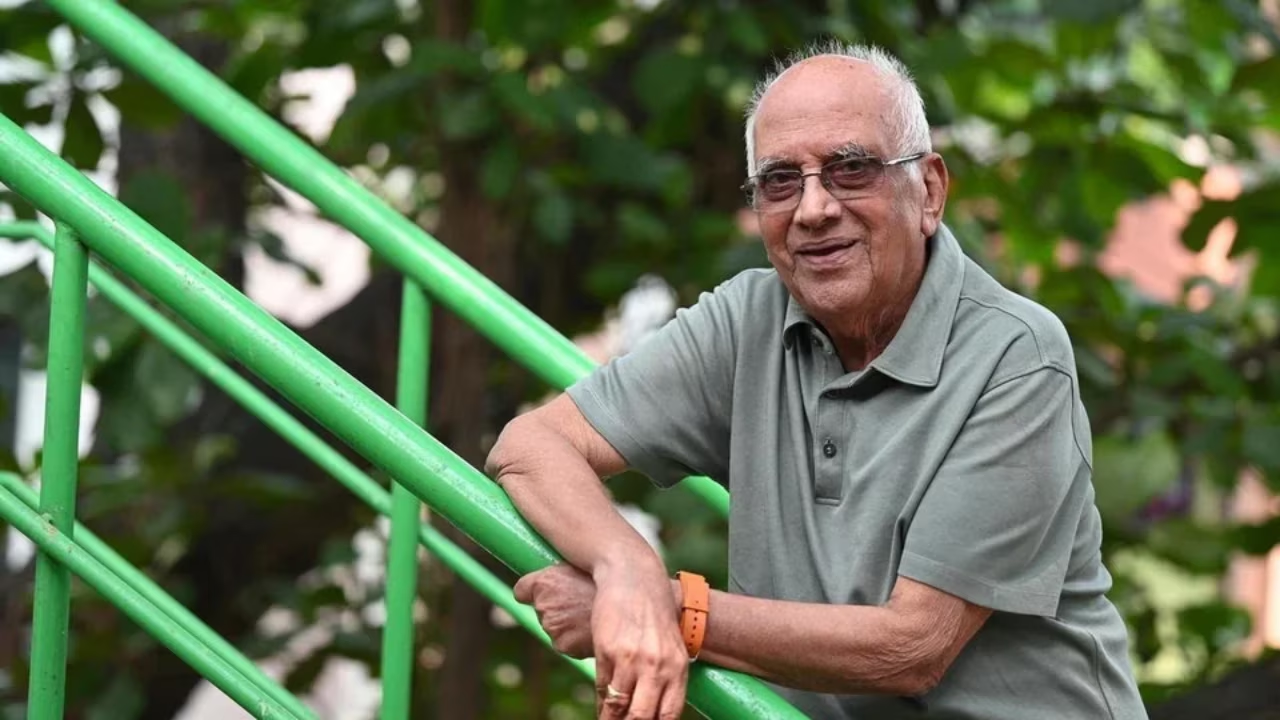
Legendary filmmaker Singeetam Srinivasa Rao dies at 94 (PC: Twitter)
Singeetam Srinivasa Rao, one of Indian cinema’s most inventive filmmakers, has died at the age of 94His name has long been associated with films that refused to follow familiar formulas and often explored unusual ideas with warmth, humour and imaginationAcross a career that stretched for more than six decades, he worked in several Indian languages and moved comfortably between comedy, drama, fantasy and science fictionFor generations of moviegoers, his work became a reminder that commercial cinema could also be experimentalFrom silent storytelling to time-travel adventures, Rao built a body of work that continues to hold a special place in Indian film history.
Singeetam Srinivasa Rao dies at 94
Singeetam Srinivasa Rao passed away on Saturday at 94The veteran filmmaker, screenwriter and composer is remembered particularly for classics such as Pushpaka Vimana, Aditya 369 and MayuriHis death has prompted tributes from across the film industry, including actor Jr NTR, who remembered him as a visionary whose films remained fresh even years after their release.
Jr NTR paid tribute to Rao on X and recalled the impact of Aditya 369, Pushpaka Vimanam and MayuriHe described the filmmaker as someone who thought far ahead of his time and created movies that continued to connect with audiences as generations changedHe also offered condolences to Rao’s family.
See Jr NTR’s tribute post here
సింగీతం శ్రీనివాసరావు గారు ఇక లేరన్న వార్త ఎంతో బాధాకరంఆదిత్య 369, పుష్పక విమానం, మయూరి… కాలానికి ముందే ఆలోచించి, తరాలు మారినా కొత్తగా అనిపించే సినిమాలు అందించిన దార్శనికుడువారి కుటుంబ సభ్యులకు నా ప్రగాఢ సానుభూతి.
ఓం శాంతి— Jr NTR (@tarak9999) October 3, 2026
How Singeetam Srinivasa Rao began his film career
Rao’s association with cinema began under the guidance of legendary filmmaker KV ReddyHe worked on the iconic Mayabazar, which was released in 1957, before eventually stepping into the director’s chair himselfOver the years, he went on to direct more than 60 films across multiple languages and genres.
His filmography showed a clear willingness to experimentComedy, fantasy, drama and science fiction all found a place in his work, while his storytelling often pushed beyond conventional filmmaking methods.
Pushpaka Vimana and Mayuri remain major milestones
One of Rao’s most celebrated films was Mayuri, released in 1985The movie was based on the life of dancer Sudha Chandran and went on to receive several honours, including multiple Nandi Awards.
He followed it with Pushpaka Vimana in 1987, a black comedy featuring Ulaganayagan Kamal HaasanThe film stood out for being made without spoken dialogue and still managed to communicate its story through performances, expressions and visual storytellingIt won the National Film Award for Best Popular Film Providing Wholesome Entertainment.
Rao and Kamal Haasan also collaborated on films including Apoorva Sagodharargal and Michael Madana Kama Rajan, adding more memorable titles to their creative association.
Aditya 369 showcased his love for experimentation
In Telugu cinema, Aditya 369 became another defining workThe science-fiction film centred on time travel at a period when the concept was still relatively uncommon in Indian mainstream cinemaIts ambitious premise and imaginative treatment helped establish Rao as a filmmaker willing to take creative risks.
Singeetam Srinivasa Rao’s family and personal life
Rao was born into a Kannada Madhwa Brahmin family in Gudur in Andhra Pradesh’s Nellore districtHis father, Ramachandra Rao, was a school headmaster, while his mother, Sakunthala Bai, was a skilled violinist who influenced his early interest in music and the arts.
In 1960, Rao married Lakshmi Kalyani. The couple shared 62 years together until her death following a prolonged illness in May 2022Lakshmi was also involved in his creative work and helped him with film scriptsRao later wrote a book titled Srikalyaneeyam in her honour.
The couple had children, including their daughter Sudha KartikSudha later translated Sreekalyaneeyam into English, with the translated edition launched by Rao’s grandson Abhinav.