
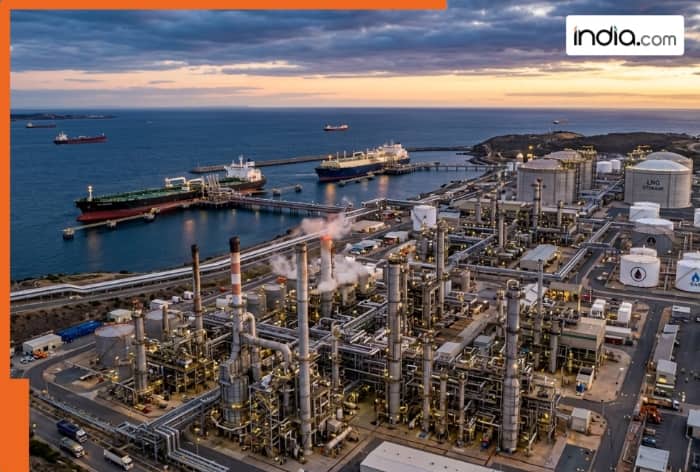
Algeria is a member of OPEC (the Organization of the Petroleum Exporting Countries) and stands as Africa’s largest gas exporter.

Published: March 22, 2026 3:38 PM IST
Why Algeria and Libya?
African nations, particularly Algeria and Libya, possess abundant reserves of oil and gas. However, experts caution that there is limited scope for an immediate increase in oil production within these countries. This is because both nations require sustained investment over several years to achieve such an increase. Algeria is a member of OPEC (the Organization of the Petroleum Exporting Countries) and stands as Africa’s largest gas exporter. While Qatar exports LNG primarily via tankers, Algeria relies predominantly on pipelines for its exports.Algeria’s Gas Resources
Algeria supplies gas to Italy and Spain via pipelines. These pipelines traverse both overland and subsea routes. A key advantage of these pipelines is that they lie beyond the reach of drones and missiles. To boost production, Algeria requires both capital and technical expertise; to this end, it is currently in talks with American energy giants, Chevron and ExxonMobil. Algeria holds proven reserves exceeding 4,500 billion cubic meters; however, its annual gas extraction capacity stands at 100 billion cubic meters—a figure that pales in comparison to Qatar, which produces 200 billion cubic meters of LNG annually.Libya’s Oil
Similarly, Libya possesses crude oil reserves amounting to approximately 48.4 billion barrels—the largest in Africa. By ramping up its production, the country could, to some extent, help bridge the supply gap left by the Gulf nations. However, political instability and security concerns remain the most significant challenges facing the country. The nation is currently divided into two factions: the capital, Tripoli, is controlled by the UN-recognized government, while the eastern region is held by the Libyan National Army, led by Khalifa Haftar.Add India.com as a Preferred Source
Who is Khalifa Haftar?
The 82-year-old Haftar is a prominent military commander and rebel leader in Libya. He was a close associate of the country’s former dictator, Colonel Gaddafi, and enjoys the support of nations such as Egypt and the UAE. Eighty per cent of the country’s oil fields are currently under his control. Although Libya’s daily crude oil production has already reached 1.4 million barrels, sustained investment over several years will be required to boost this figure to 2 million barrels.Source link

Leave a Reply