


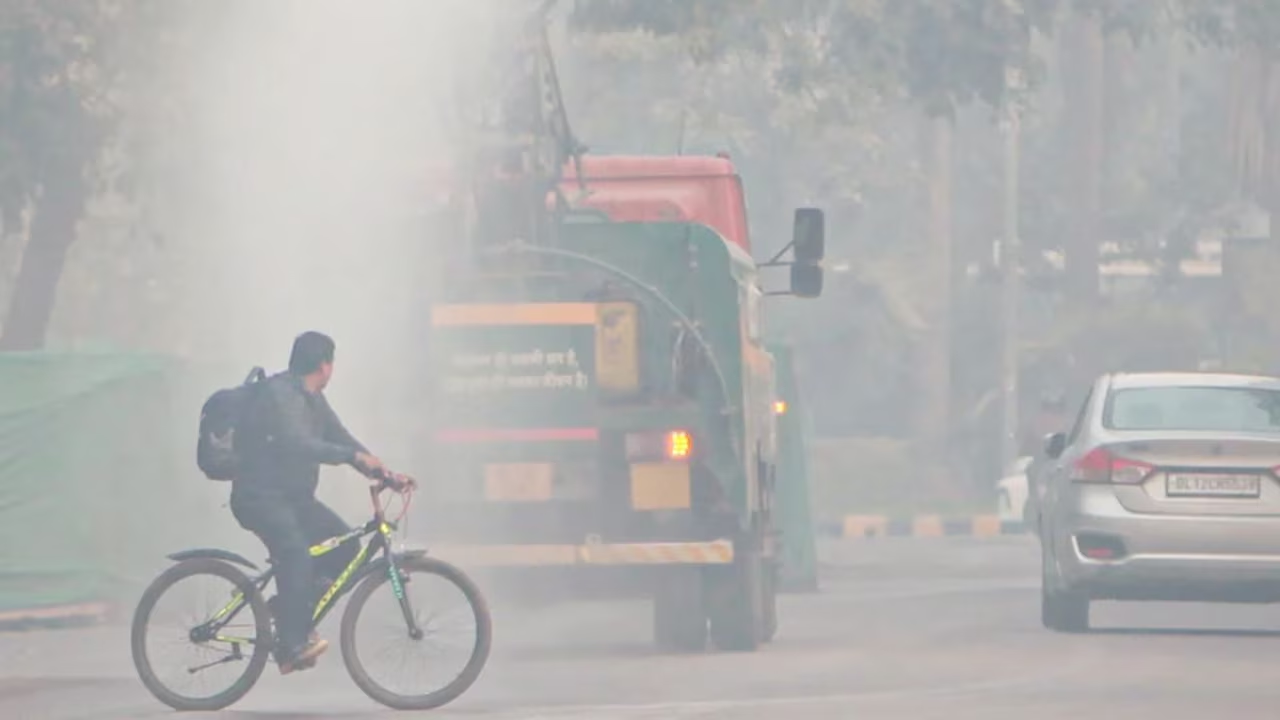
With Stage I of GRAP in force, authorities will improve coordination with neighbouring states, set up a WhatsApp group for quick updates and divert non-compliant buses at border points.
Share Article
https://www.india.com/news/india/delhi-pollution-alert-traffic-police-to-stop-non-compliant-buses-at-city-borders-from-november-check-new-grap-stage-1-rules-create-whatsapp-group-for-faster-coordination-8538424/
Delhi pollution alert: Traffic police to stop non-compliant buses at city borders from November; Check new GRAP stage 1 rules (PTI/File)
The Delhi Traffic Police is planning to tighten checks at the city’s borders to prevent buses that do not meet pollution rules from entering the national capitalThe move comes as Delhi implements Stage I of the Graded Response Action Plan (GRAP) to control rising air pollutionOfficials are also planning to improve coordination with police departments and other agencies in neighbouring statesA dedicated WhatsApp group will be created to help officials share information quickly and take action against vehicles that violate the rules.
The decision was discussed at an inter-state coordination meeting held at the Delhi Police headquarters on Thursday, according to various media reortsThe meeting was chaired by Special Commissioner of Police (Traffic) Ajay Chaudhary and attended by representatives of police departments and other agencies from neighbouring states and districts.
Officials stressed that the directions issued by the Commission for Air Quality Management (CAQM) must be followed on timeThey also discussed ways to prevent vehicles that do not meet the required emission standards from entering Delhi.
Polluting buses to be stopped at Delhi borders
One of the main priorities is to stop buses that fail to meet the prescribed pollution standards before they enter DelhiOfficials said such buses should be diverted at the border itself instead of being turned away after entering the city.
Diverting buses inside Delhi can increase traffic congestion and add to pollution, making it harder to control emissions.
Under the applicable rules, eligible electric, compressed natural gas (CNG) and BS-VI diesel buses will be allowed to enter, subject to the prescribed conditionsBuses that do not meet these requirements may be stopped or sent along alternative routes.
The CAQM has also directed that, from November 1, 2026, buses entering Delhi under different service arrangements, including tourist permits, must run on electricity, CNG or BS-VI dieselBuses registered in Delhi are exempt from this particular restrictionThe existing rules for inter-city buses travelling to Delhi-NCR will continue to apply.
The restrictions are aimed at reducing pollution caused by vehicles, especially during the winter months when air quality in Delhi often deteriorates.
New WhatsApp group for faster coordination
To ensure that the rules are enforced properly, Delhi Traffic Police will create a separate WhatsApp group for officials from the relevant departments.
The group will allow authorities to share instructions, updates and information about enforcement action in real timeThis is expected to help police and transport officials respond more quickly when vehicles violate pollution rules.
Officials also discussed forming joint inspection teams to check vehicles at Delhi’s entry pointsThese teams could help ensure that buses and other vehicles follow the prescribed requirements.
The meeting also stressed the need for better coordination between Delhi and neighbouring states so that vehicles prohibited from entering the capital are stopped before reaching the city.
Warning boards to be installed at borders
Authorities have also called for clear signboards at Delhi’s border points to inform drivers about the restrictions.
The boards will explain which vehicles are permitted to enter and which ones may be turned awayThe aim is to help drivers and transport operators understand the rules before they reach the capital.
Officials also discussed the restrictions that will apply to vehicles registered outside Delhi between November 1, 2026, and January 31, 2027These restrictions will operate subject to the notified exemptions and applicable conditions.
Vehicle owners have also been advised to keep their Pollution Under Control (PUC) certificates valid wherever required.
Why are the restrictions being tightened?
Vehicles are a major source of air pollution in Delhi-NCREmissions from buses, trucks and other vehicles add to the pollution caused by road dust, construction activities and other sources.
To tackle the problem, the CAQM has revised the GRAP schedule so that some pollution-control measures can begin at an earlier stageUnder the revised plan, restrictions on certain buses that do not meet the required emission standards are triggered at Stage I rather than waiting for a more serious pollution level.
Stage I of GRAP applies when Delhi’s Air Quality Index (AQI) falls in the ‘poor’ category, between 201 and 300The measures include controlling road dust, improving waste management and preventing open burning, alongside steps to reduce vehicle emissions.
With winter approaching, the authorities are now focusing on stronger checks and better coordination to ensure that these measures are followed.