

Conversations around the Cicada variant are gaining momentum as people question its origin and possible effects. While speculation grows online, understanding its actual risk and medical perspective becomes important for clarity.

Updated: March 26, 2026 12:50 PM IST
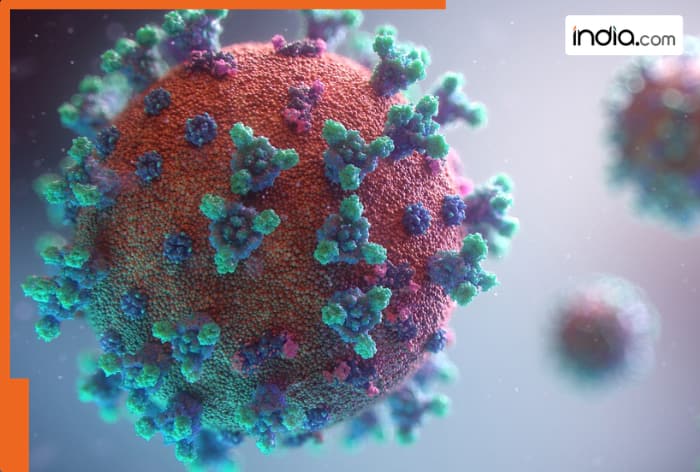
What is the Cicada variant?
Cicada refers to BA.3.2 lineage of SARS CoV 2 tracked by Centers for Disease Control and Prevention (CDC.) Variant carries around 70 to 75 mutations in spike protein which may help virus partially escape immunity from past infection or vaccination.Two sublineages BA.3.2.1 and BA.3.2.2 also identified showing ongoing evolution. First detection happened in South Africa during late 2024 followed by spread to multiple regions including the United States and parts of Europe. By early 2026 presence reported in at least 23 countries.The symptoms and spread pattern
Symptoms linked with this variant remain similar to the Omicron family. Reports mention sore throat, fatigue, fever, cough, headache, muscle pain, congestion, loss of taste, nausea, diarrhoea and shortness of breath.Add India.com as a Preferred Source
Experts including Robert H Hopkins Jr from National Foundation for Infectious Diseases (NFID) state no strong evidence suggests higher severity compared to earlier strains. Detection in United States includes nasal samples clinical cases airplane wastewater and surveillance samples across 25 states. Vaccine response and protection over this virus
Experts believe existing vaccines and antiviral treatments still protect against severe illness though effectiveness against infection may reduce slightly due to mutations. Health guidance continues to stress vaccination hygiene and early testing. Continuous surveillance remains key as scientists study long term behavior of this lineage.Social media reactions and debate around new variant
Online reactions show mix of fear sarcasm and skepticism. Some users posted “So we had the war to distract from the Epstein’s Files and now Covid to distract from the war” while others wrote “Pfizer’s sales must be down”.
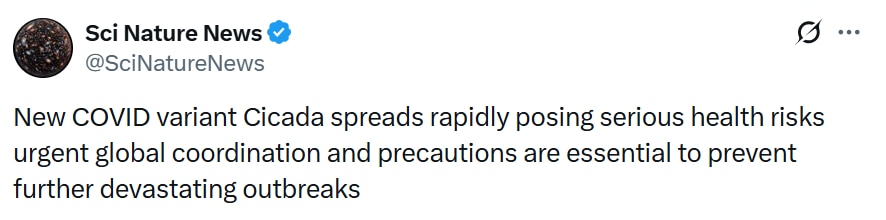
BIG QUESTION! Will Cicada Impact India?
Current data shows no major surge linked to this variant in India. Monitoring by World Health Organization classifies BA.3.2 as Variant Under Monitoring which means close observation without immediate high risk.India continues genomic tracking through INSACOG ensuring early detection if spread increases. Existing variants like JN.1 family remain more dominant concern within country. Overall risk level for India remains low at present stage.Source link

Leave a Reply