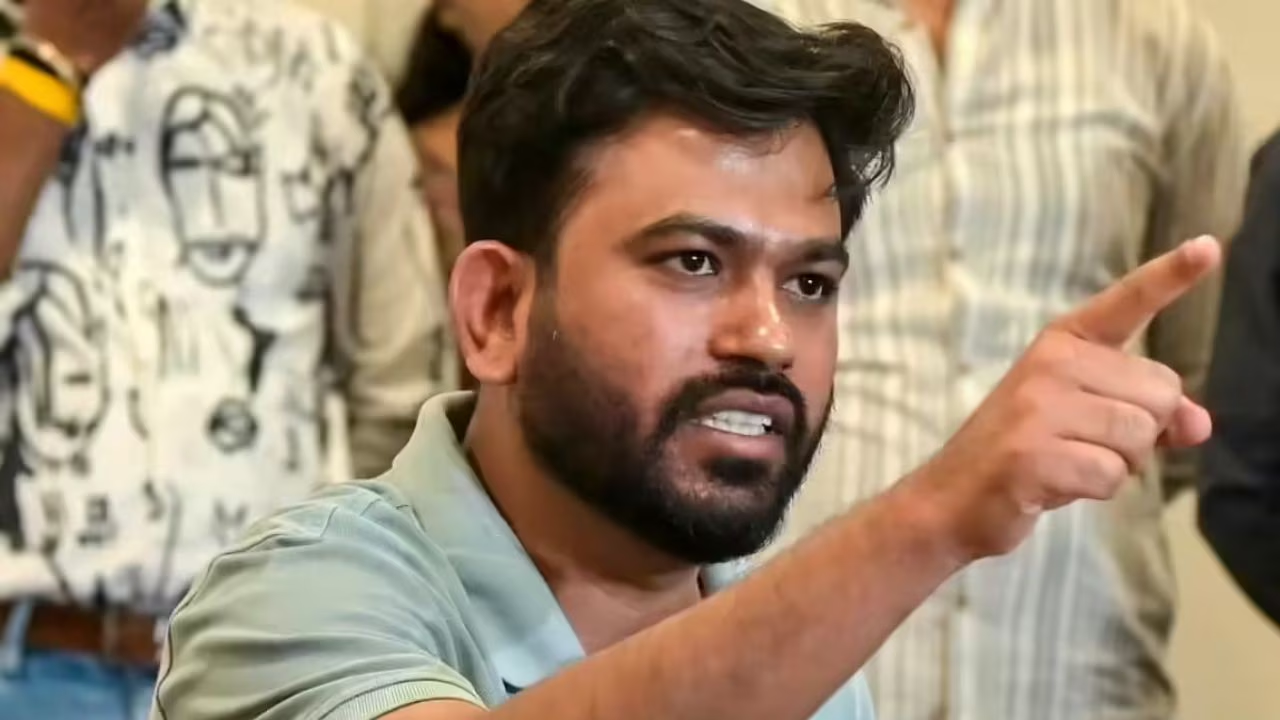


India is prioritising maritime security and artificial intelligence (AI) in its bid for a non-permanent seat in the UN Security Council for 2028-29.
Updated: October 30, 2026, 12:05 PM IST
Share Article
https://www.india.com/news/india/india-bids-for-temporary-seat-in-the-un-security-council-proposes-ai-based-maritime-security-8540669/

India bids for temporary seat in the UN Security Council, proposes AI-based maritime security (File)
India has made maritime security and artificial intelligence (AI) the focus of its bid for a non-permanent seat in the United Nations Security Council for 2028-29.
During a high-level discussion in the Security Council, India’s Permanent Representative to the UN, Ambassador Harish Parvathaneni, stressed that the focus should be on making shared maritime areas more secure rather than making them a centre of dispute.
India is contesting for a non-permanent seat on the Security Council next year, whose term begins in 2028Voting for this will take place in June next year, with India and Tajikistan competing for the lone seat in the Asia-Pacific group category.
India raised issue of AI and maritime security
India’s Permanent Representative Harish Parvathaneni said, ‘India has identified AI (Artificial Intelligence) and maritime security as key priorities for its candidature to the Security Council for 2028-2029.’
Harish Parvathaneni added, “Our objective is clear – technology should strengthen human security, not undermine itIt should expand opportunities, not exacerbate inequality, and it should make our shared maritime domains safer, not more fraught with conflict.”
Speaking against cyber threats and attacks on commercial ships, the Indian Ambassador said, ‘Developing countries need access to technology, training and institutional capacities to secure their maritime infrastructure and participate meaningfully in shaping technology governance.’
Harish Parvathaneni, speaking about recent attacks on commercial ships, said, “These attacks pose a threat to seafarers, disrupt supply chains, and have a devastating impact on developing countries in the form of increased costs and economic uncertainty.”
The discussions came as Iran’s navy reported that three oil tankers in the Strait of Hormuz had struck sea mines and caught fire, highlighting the dangers at sea.
AI will work to strengthen security
Harish Parvathaneni said, ‘With the help of AI, better understanding of the maritime domain can be achieved by analysing satellite images, radar and ship tracking data and suspicious activities can be detected.’
The Indian Ambassador further said, ‘The Information Fusion Centre-Indian Ocean Region (IFC-IOR) located near India shows how important mutual cooperation and information sharing is in strengthening maritime security.’
Parvathaneni further said, ‘Our approach is driven by the vision of SAGAR i.eSecurity and Growth for All in the Region and our broad commitment to inclusive maritime cooperation.’
The Indian Ambassador further stated, “The increasing use of autonomous systems makes it difficult to determine who caused an incident (responsibility), who bears accountability, and whether the situation is inadvertently worsenedTherefore, we must ensure that appropriate safeguards, meaningful human oversight, and clear responsibilities are in place when implementing emerging technologies.”