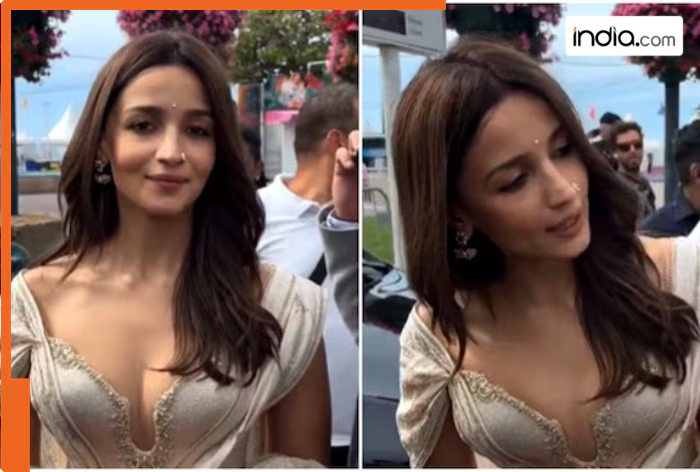
Alia Bhatt’s appearance at Cannes 2026 turned chaotic after she was surrounded by a crowd and a video capturing her reaction has now gone viral across social media platforms, sparking widespread discussion among fans.

Published: May 14, 2026 5:22 PM IST

Alia Bhatt’s appearance at the ongoing Cannes Film Festival 2026 grabbed wide attention after a video from the event surfaced online showing the actor in an uncomfortable situation. The moment took place during her visit to the Bharat Pavilion, where she was interacting with fans and posing for photographs. What began as a warm and friendly interaction soon turned chaotic as the crowd around her started growing rapidly. The sudden surge made it difficult for her to move freely and the situation quickly became overwhelming. The video has since gone viral with many users discussing how the incident unfolded in real time and how security personnel stepped in to manage the crowd.
Alia Bhatt reacts as the crowd surge turns chaotic
In the viral clip, Alia Bhatt is seen visibly uncomfortable as more people gather closely around her. She initially tries to maintain composure while acknowledging fans and posing for pictures but the increasing pressure of the crowd leads to a tense moment. At one point she is heard saying “Ho gaya abhi?” while trying to move forward through the packed space. Security staff can also be heard asking the crowd to calm down with repeated instructions saying “Relax, relax” as they try to create space around the actor. The brief exchange has now become one of the most talked-about moments from Cannes this year.
Watch Alia Bhatt’s viral clip from the event here
Alia Bhatt with fans at The 79th Cannes Film Festival today pic.twitter.com/BOzdcTfM2w
— Alia’s nation (@Aliasnation) May 13, 2026
What did Alia Bhatt wear at the event?
For her appearance at the Bharat Pavilion, Alia Bhatt wore a custom ivory silk saree-gown that featured a structured corseted bodice and a plunging neckline. The elegant outfit blended traditional inspiration with a modern red carpet silhouette. This was one of her multiple looks from the day as she attended several events across the festival schedule. The viral moment is believed to have taken place during this second appearance when photographers and fans gathered closely for photos leading to the crowd surge.

Alia Bhatt’s multiple Cannes 2026 appearances
Alia Bhatt is attending Cannes 2026 as the global ambassador for L’Oreal Paris. She made her return to the festival after her debut appearance in the previous year. On the opening days she was seen in several high profile looks including a custom Tamara Ralph couture gown featuring a structured strapless bodice and sweetheart neckline.
She also attended the L’Oreal Paris gala dinner in a floral brocade corset ensemble paired with heirloom inspired jewellery. Earlier she was spotted at a screening of La Vie d’une Femme wearing a steel blue gown which also gained attention online.
Upcoming projects of Alia Bhatt
On the professional front Alia Bhatt is preparing for her next film Alpha directed by Shiv Rawail. The film stars Sharvari, Bobby Deol and Anil Kapoor in crucial roles. It is scheduled to release in theatres on July 10. She will also be seen in Sanjay Leela Bhansali’s Love & War alongside Ranbir Kapoor and Vicky Kaushal which is now set for release on January 21 2027.