
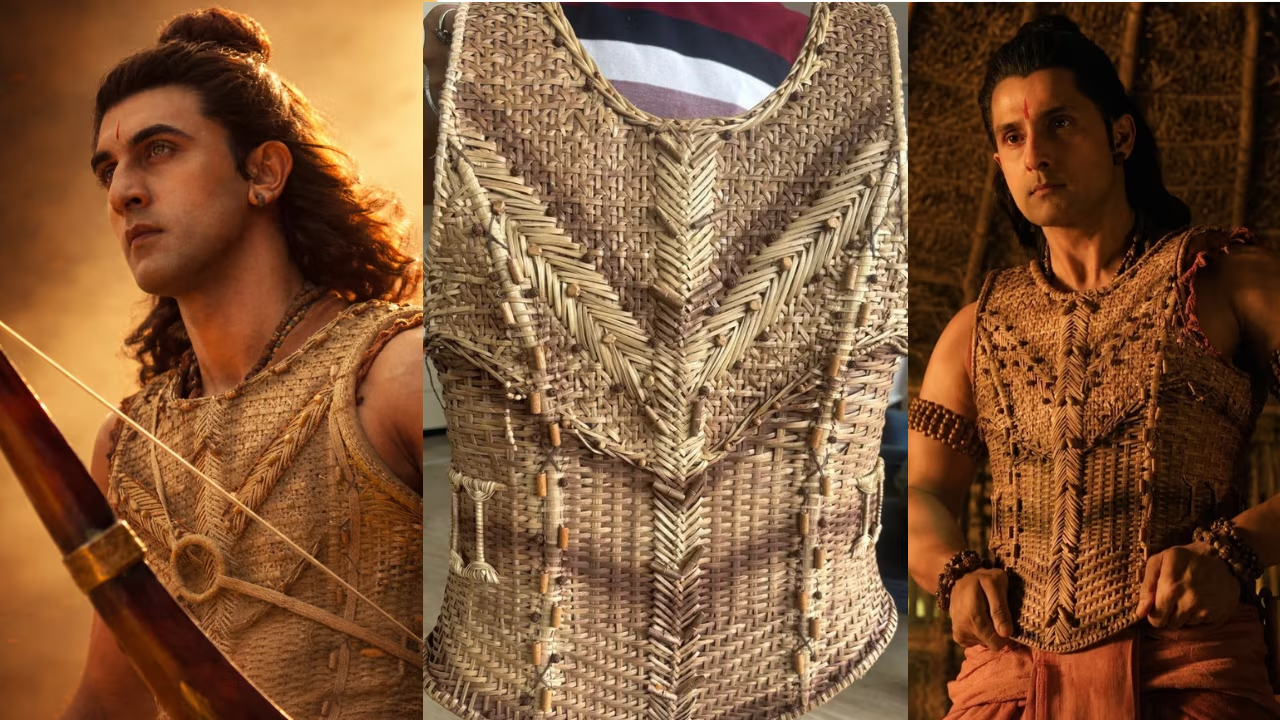
Ranbir Kapoor and Ravie Dubey’s armour in Nitesh Tiwari’s Ramayana has a special connection with AssamCostume designer Ajay Kumar worked with local artisans to bring traditional cane craftsmanship to the big screen.
Published: November 9, 2026, 3:58 PM IST
Share Article
https://www.india.com/entertainment/bollywood/ramayana-from-assams-artisans-to-big-screen-how-traditional-sarpat-cane-and-jute-craft-created-ranbir-kapoor-ravie-dubey-armour-8543422/
Assam’s cane craft was used to create Ranbir and Ravie’s armour in Ramayana (PC: Instagram)
When audiences watch a big-budget film like Ramayana, it is easy to get caught up in the grand sets, impressive costumes, and larger-than-life charactersBut sometimes, the most interesting stories are hidden in the smallest detailsOne such detail from Nitesh Tiwari’s epic – Ramayana is the armour worn by Ranbir Kapoor who played the role of Lord Ram and Ravie Dubey who played the role of LakshmanInterestingly, these costumes have a connection with the traditional artisans of AssamInstead of relying entirely on modern materials, the costume team turned to the state’s age-old cane and jute craftsmanshipHere’s how a traditional art form from a small town in Assam became part of one of Indian cinema’s biggest projects
Ramayana: How Assam’s traditional cane craft was used to create Ranbir and Ravie’s armour
The armour worn by Ranbir Kapoor and Ravie Dubey was created using Sarpat cane, jute and wood sourced from AssamCostume designer Ajay Kumar travelled to the state with his team to find artisans who could bring his vision to life. According to a report by India Today NE, the team eventually connected with Barpeta-based artisan Jaynal Abdin, who helped develop the basic structure of the armour.
The idea came while the team was working on the costumes for Ram and Lakshman during their vanvaas (exile in the forest)The designers wanted to use materials that would have been available in a forest setting during that period.
Sarpat cane became an important part of the design because of its flexibility and ability to take different shapesJute, locally known as morapaat, wooden beads and other decorative elements were later added to give the armour its final appearance. The basic structures were developed in Assam before being taken to Mumbai for further finishing and detailing.
Ajay Kumar’s challenge: Making traditional armour comfortable for actors in Ramayana
Creating the armour was not simply about making it look good on screenIt also had to be comfortable and safe for the actorsIn an interview with India Today NE, costume designer Ajay Kumar explained that the process involved more than a month of work, with several rounds of samples and fittings.
He said, “Cane can have sharp edges, and our biggest concern was ensuring that the actors would not get hurt while wearing the armourThe edges could potentially injure the neck or armsWe had to work on the finishing and ensure that there were no sharp edges.”
One of the biggest concerns was the sharp edges of the caneSince the actors had to perform action sequences involving running, jumping, and fighting, the armour needed to be designed carefully. The team worked on the finishing and added rubber padding to the inner structure to prevent discomfort or injuriesThe artisans also made changes to the designs to ensure that the armour fitted the actors properly.
Sharing a post on Instagram, he wrote, “This armour is not just a design; it is a piece of my vision, my persistence and an immense amount of hard workI personally travelled to Assam for this creation, where my team and I worked on bringing this vision to life, right there on the groundBuilt using Sarpat cane as the base, with jute embellishments and carefully incorporated wooden elements, the entire process was exceptionally challengingIt demanded time, precision, patience and an incredible amount of dedication.”
Kumar also acknowledged the contribution of the local craftsmen, saying their skills and patience helped turn the concept into reality.
Ramayana gives Assam’s traditional artisans a National platform
The project has brought attention to the traditional craftsmanship of Assam, where cane and bamboo have been used for generations to create household products, baskets, furniture and decorative items.
For the artisans involved, seeing their work become part of a major film is an important momentIt also shows how traditional Indian crafts can find a place in modern cinema. Ajay Kumar has expressed his interest in taking this craftsmanship further and showcasing cane armour through his own collection and international platforms.
For now, the contribution of Assam’s artisans remains an interesting part of Ramayana’s makingBehind the armour worn by Ram and Lakshman is a story of local skills, traditional materials and the people who helped bring a filmmaker’s vision to life.