


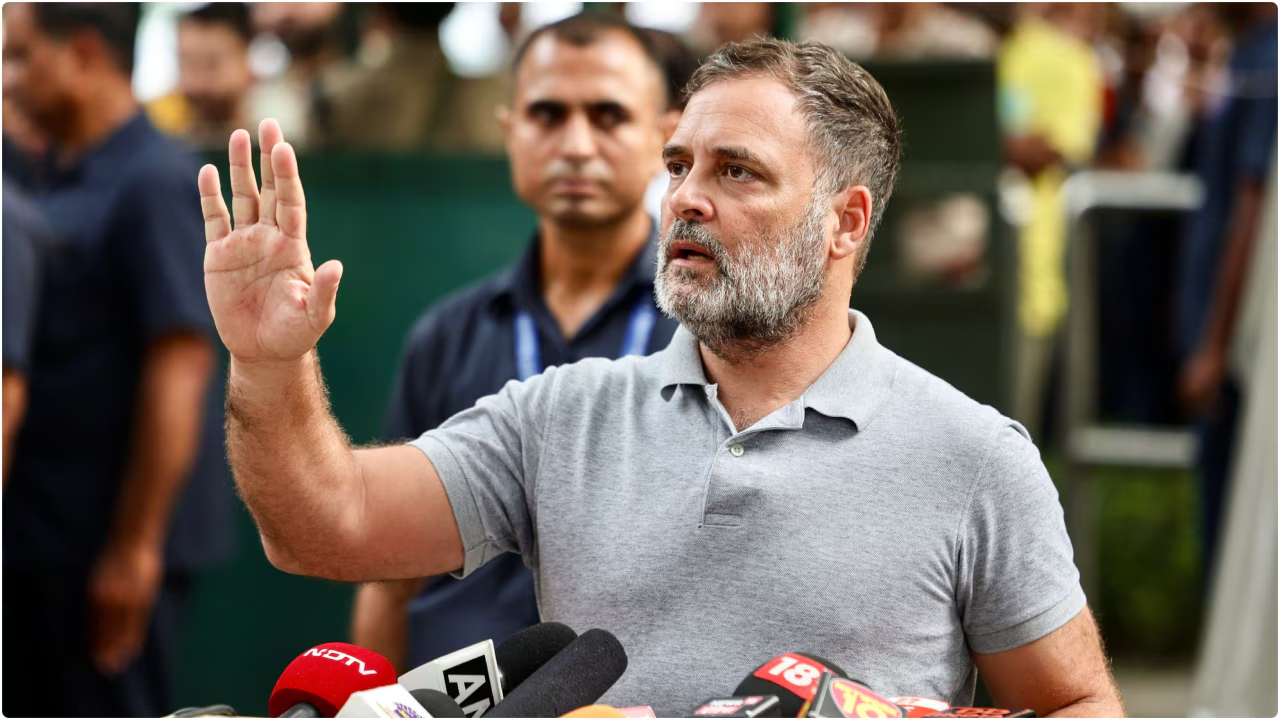
“Did MrAmit Shah give the order to shoot our children, or did he not, if he did, he should resign because he is culpable, and if he did not, he should resign because he is incompetent,” Gandhi said.
Published: August 12, 2026, 2:38 PM IST
Share Article
https://www.india.com/news/india/amit-shah-home-minister-rahul-gandhi-congress-bharatiya-janata-party-parliament-march-students-protest-jantar-mantar-narendra-modi-cockroach-janta-cjp-abhijeet-dipke-8499557/
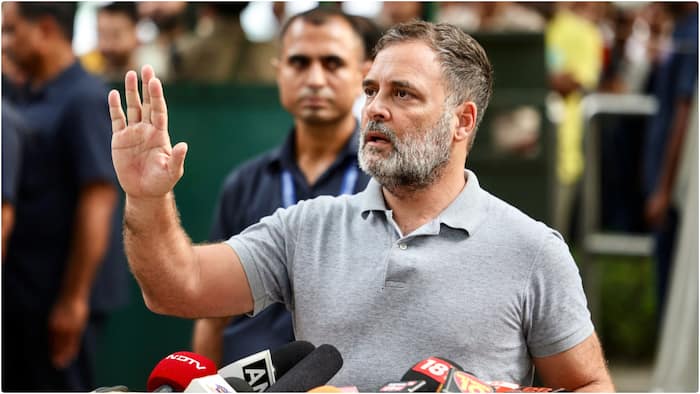
Leader of Opposition Rahul Gandhi
New Delhi: Leader of Opposition Rahul Gandhi on Wednesday described Home Minister Amit Shah’s call for having a discussion on students’ protests as a “last-minute” attempt to fill gas in the BJP leader’s image “balloon” that had burst, and asserted that the youth want to know who ordered that protesting students be shot at with pellet gunsGandhi said the opposition was not interested in listening to Shah’s imagination and lecture in Parliament.
The Leader of Opposition in the Lok Sabha said if Shah ordered that students be shot at, he is culpable, and if he did not, then he is incompetent, and in both the cases he should resignGandhi said Shah’s image “balloon” had been deflated and there was a last-ditch attempt to fill gas in it but “the balloon had burst”.
Read more:
8th Pay Commission Big Update: Report likely to be out by THIS date, Centre gives key update, says…
The Congress leader’s remarks came after Shah said the government is ready to discuss all issues in Parliament, including students’ protests.
He said if the Opposition gives it in writing before 2 pm to Lok Sabha Speaker Om Birla, discussion can start at 3 pm today till 3 pm tomorrowSpeaking with reporters, Gandhi said, “(Congress president Mallikarjun) Kharge ji and myself did a press conference and the rest of the opposition has made it clear -we are not interested in listening to MrAmit Shah’s imaginationWe are not interested in him giving us a lecture or a discussion.”
“We are interested in one simple thingWhen I say we, I mean the younger generation of this country – who shot those students, who gave the order to shoot those students, who blinded one of the students, who shot one of the students in the ear, who gave the order to beat the students with lathis and nails, who gave that order, that order was implemented by the home ministry,” the former Congress chief said.
He said the Delhi police and the Rapid Action Force (RAF) are both home ministry systems.
“Did MrAmit Shah give the order to shoot our children or did he not, if he did, he should resign because he is culpable, and if he did not, he should resign because he is incompetent,” Gandhi said.
He also hit out at journalists for interrupting him and asked whether they do the same when Shah speaks.
Gandhi also asked mediapersons what is so special about the BJP leader that the media stands before him like a “mouse”.
The students are not scared and so shouldn’t the media, he said.
“We don’t care what he has to sayFor 20 days he disappeared, he would come and sit here (in Parliament), students should know that 30 cars move around with Amit Shah, there are a thousand policemen outside his residence, so that no child appears there,” Gandhi said.
“The (image) balloon has deflated and in a last-minute, he is trying to fill gas again but the balloon has burstAmit Shah has no courage, the home minister of India has no courage, he cannot come to the House,” the Congress leader saidGandhi said he has not been silent in the student protest in Jharkhand.
“I have said clearly in my press conference that we do not appreciate any violence against our studentsI am not silent, I am saying it openly,” he saidLater sharing the video clip of his remarks on X, Gandhi said, “When a man lacks the courage to speak the truth, his silence speaks for himAmit Shah’s silence is his confession.”
(With PTI Inputs)