

Delhi’s air quality remained poor on Friday, November 20, with the average AQI recorded at 267Several areas reported ‘very poor’ air quality, while chilly morning conditions continued across the national capitalThe pollution spike comes just days after GRAP Stage III restrictions were withdrawn.
Share Article
https://www.india.com/news/india/delhi-weather-air-pollution-update-nov-20-aqi-at-267-as-winter-chill-continues-across-national-capital-several-areas-in-very-poor-category-8546443/

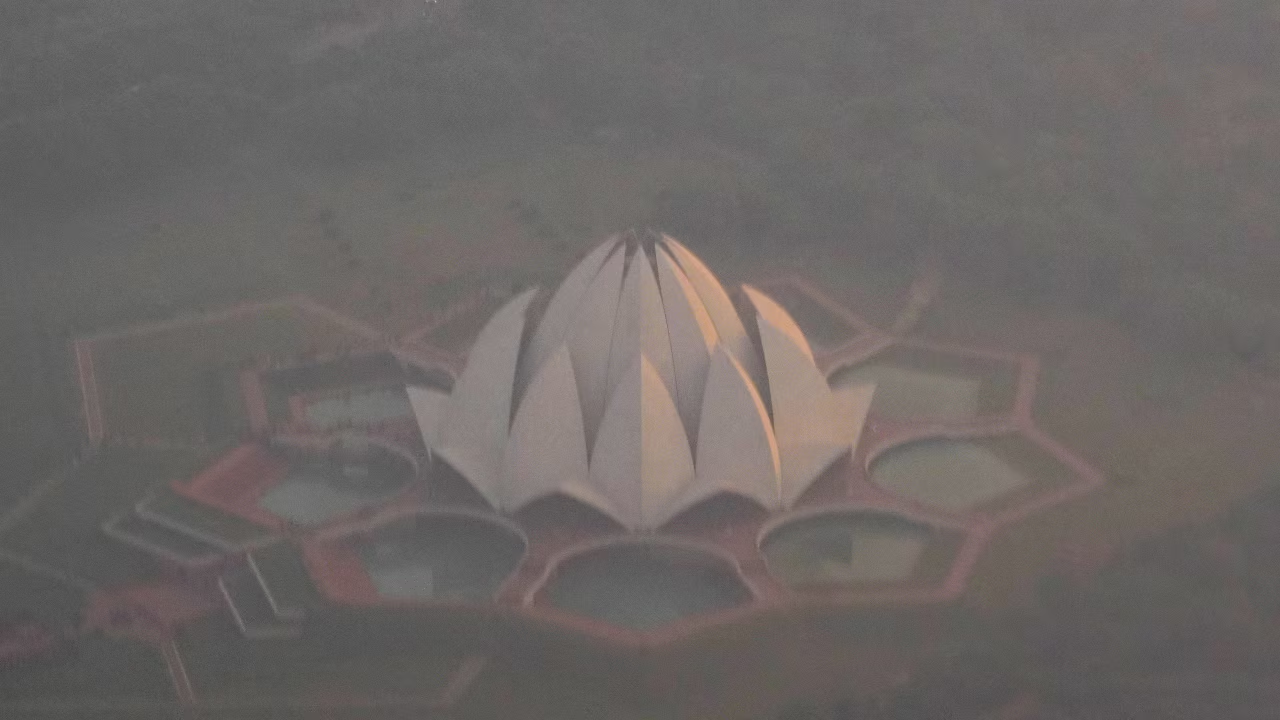
An aerial view of the Lotus Temple, as seen from an aircraft, amid deteriorating air quality, in New Delhi (Image: PTI)
Delhi continued to struggle with high pollution levels on Friday, November 20, as the city’s average Air Quality Index (AQI) remained around 267The national capital also witnessed chilly weather during the morning, with low temperatures adding to the winter conditionsSeveral parts of Delhi recorded high pollution levels, with some monitoring stations reporting AQI readings above 300, placing them in the ‘very poor’ categorySirifort recorded one of the highest AQI levels at 348Other badly affected areas included JNU (338), Pusa (337), Burari Crossing (331), Chandni Chowk (331), NSUT Jaffarpur (330), DTU (323), Ghoga (322), ITO (322), Talkatora Garden (318) and Jahangirpuri (311).
Other areas also continued to report poor air qualityThese included Anand Vihar, Rohini, Vivek Vihar, Bawana, Burari, Shadipur, Chhawla, Karala and NarelaAlthough pollution levels varied across locations, most monitoring stations remained in the poor or very poor categories.
According to data reported by Hindustan Times, Delhi’s AQI stood at 270 at 7 am on Friday, compared with 280 at 4 pm on ThursdayThe slight improvement, however, did little to change the overall pollution situationPM2.5, which refers to tiny particles that can enter deep into the lungs, was the main pollutant at 47 of the city’s 57 monitoring stations.
Delhi AQI worsens after improvement earlier this week
Delhi’s air quality took a turn for the worse on Thursday, November 19, when the average AQI increased to 280 from 232 recorded a day earlierThe rise came after pollution levels had shown some improvement earlier in the week.
According to the Central Pollution Control Board (CPCB), 16 monitoring stations recorded ‘very poor’ air quality at 4 pm on ThursdayOnly three stations were in the moderate category, while most of the remaining locations reported poor air quality.
Weak winds and unfavourable weather conditions have made it difficult for pollutants to disperseAs a result, smoke, dust and other harmful particles have continued to remain trapped close to the ground.
The situation was particularly concerning during the morning hoursAQI.in data showed that the pollution index crossed 500 on Thursday morning, reaching 502 at 8:30 am before settling at 485 at 9:31 amThe platform also reported PM10 levels of 484 during this period.
GRAP Stage III restrictions withdrawn, Stage I and II continue
The latest rise in pollution comes just days after the Commission for Air Quality Management (CAQM) withdrew restrictions under Stage III of the Graded Response Action Plan (GRAP) in Delhi-NCR.
The decision was taken on November 17 after Delhi’s AQI improved to 204However, the commission made it clear that measures under GRAP Stages I and II would continue to prevent another sharp increase in pollution levels.
The withdrawal of Stage III restrictions came as a relief for construction activities and other sectors affected by the curbsHowever, restrictions on dust-generating demolition and outdoor construction activities, issued separately by the CAQM, were scheduled to remain in force until November 20.
GRAP is a set of emergency measures introduced to control air pollution in Delhi-NCRThe restrictions become stricter as air quality deteriorates.
Delhi records lowest minimum temperature of the season
Along with rising pollution, Delhi has also started experiencing colder morningsThe minimum temperature at Safdarjung, the city’s main weather station, dropped to 10.6 degrees Celsius on Thursday.
According to the India Meteorological Department (IMD), the temperature was 1.7 degrees below the seasonal averageIt was also lower than the 11 degrees Celsius recorded on Wednesday.
The IMD forecast indicated that the minimum temperature could remain between 11 and 13 degrees Celsius on Friday, while the maximum temperature was expected to settle between 25 and 27 degrees Celsius.
The weather conditions are also likely to affect pollution levelsThe Air Quality Early Warning System for Delhi has forecast poor to very poor air quality over the next few days, with light winds and unfavourable conditions for the movement of pollutants.
How does Delhi’s AQI affect health?
An AQI reading between 201 and 300 falls under the poor category, while readings between 301 and 400 are classified as very poor under India’s air quality standards.
Prolonged exposure to poor air can cause breathing discomfort among people, particularly those suffering from asthma and other respiratory problemsVery poor air quality can also affect healthy people, especially children and older adults.
Residents have been advised to limit prolonged outdoor activities when pollution levels are highPeople with breathing difficulties should take extra precautions and follow medical advice.