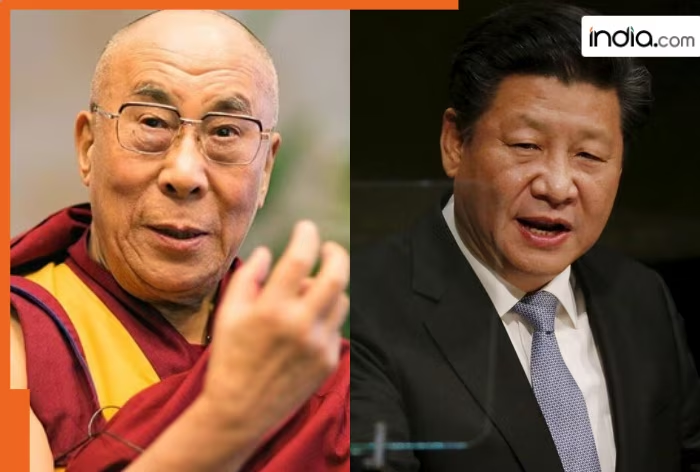
In a statement, the Dalai Lama asserted that the “sole authority” to recognize his reincarnation rests with the Gaden Phodrang Trust, and that “no one else has any such right to interfere in this matter.”

Published: May 25, 2026 6:49 PM IST
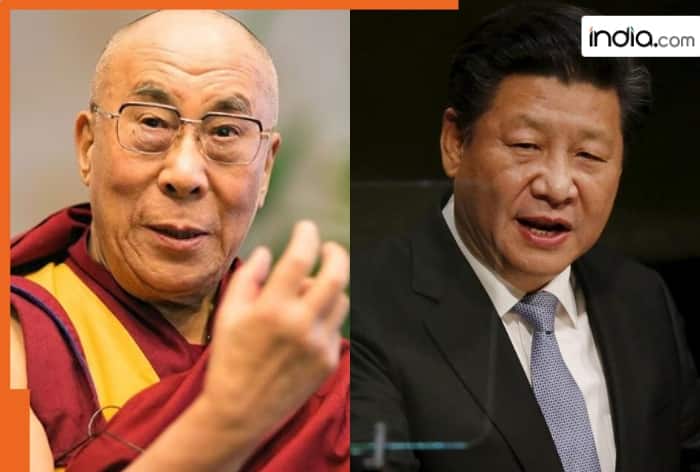
New Delhi: Issuing a warning on Saturday, 23 May, China stated that India should not interfere in the process of the Dalai Lama’s reincarnation. It has been termed the selection of the next Dalai Lama as an internal affair of China. Furthermore, China expressed the hope that India would not provide a platform for activities advocating for Tibet’s independence. Yu Jing, spokesperson for the Chinese Embassy in India, conveyed these points in a post on the social media platform X. This raises the question: why exactly is China apprehensive about the arrival of the Dalai Lama’s incarnation even before it has occurred?
What Did the Chinese Spokesperson Say?
Yu Jing posted on X: “The reincarnation of the Dalai Lama follows long-established religious rituals and historical conventions that have, for centuries, required the approval of China’s central government. It is worth noting that the 14th Dalai Lama himself was recognized through this established process. The issue of the Dalai Lama’s reincarnation is purely an internal matter of China and should not be subject to external interference. The so-called “Central Tibetan Administration” is not recognized by any sovereign country, and its leadership has neither the legitimacy to represent the Tibetan people nor the authority to make claims regarding the reincarnation process. India has made clear commitments on issues relating to Tibet. It is sincerely hoped that India will continue to honor these commitments, refrain from providing any platform for activities advocating “Tibetan independence,” and avoid interference in the reincarnation of the Dalai Lama. Such an approach would contribute positively to the overall stability and constructive development of our bilateral ties.”
The reincarnation of the Dalai Lama follows long-established religious rituals and historical conventions that have, for centuries, required the approval of China’s central government. It is worth noting that the 14th Dalai Lama himself was recognized through this established… pic.twitter.com/EHXKpWJceq
— Yu Jing (@ChinaSpox_India) May 24, 2026

Controversy Surrounding Dalai Lama’s Reincarnation?
In a statement, the Dalai Lama asserted that the “sole authority” to recognize his reincarnation rests with the Gaden Phodrang Trust, and that “no one else has any such right to interfere in this matter.” In response, China, which views the Dalai Lama as a separatist, stated that any reincarnation must receive approval from Beijing. Shortly thereafter—and for the first time—India’s Minister of Minority Affairs, Kiren Rijiju (himself a Buddhist), publicly responded to the Dalai Lama’s statement. He told PTI that those who revere the Dalai Lama believe that the decision regarding his reincarnation should be determined strictly in accordance with established customs and the Dalai Lama’s own wishes.
China Issuing Warnings to India Regarding Dalai Lama
China seeks to have the next Dalai Lama selected by Beijing to ensure that the Chinese Communist Party (CCP) maintains absolute control over Tibet and the Buddhist community. China wants a Chinese Dalai Lama.
Tibet’s government-in-exile—known as the Central Tibetan Administration—is headquartered in Dharamshala, India. China fears that, with India’s assistance, the next Dalai Lama could be chosen outside of China (for instance, in India’s Tawang region), a development that would internationally undermine China’s claims regarding Tibet.
China maintains that the reincarnation process must adhere to Chinese laws and the historically established “Golden Urn” method (drawing lots from a golden urn), a procedure that requires final approval from the central government in Beijing.
However, the current—or 14th—Dalai Lama has made it clear that his reincarnation will take place in a free country, not within Chinese-controlled Tibet. He has also indicated that the next Dalai Lama could potentially hail from India.