Amid rising tensions between the US and Iran, India’s nuclear programme has hit a major milestone with the Prototype Fast Breeder Reactor (PFBR) at Kalpakkam achieving criticality.

Updated: April 14, 2026 5:42 PM IST
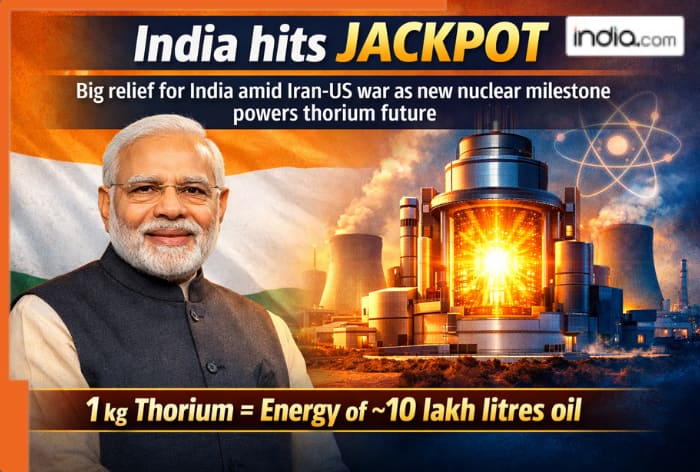
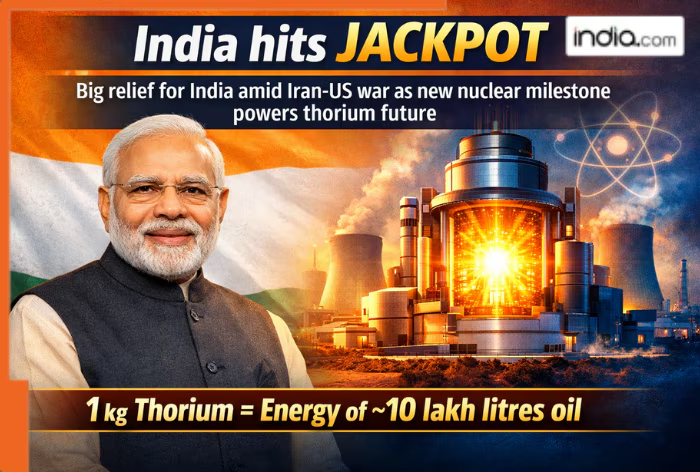
India hits JACKPOT: Amid rising tensions between the United States and Iran and growing global concern over oil and gas supplies, India is turning to a powerful but less talked-about resource-thorium. For those unversed, the country holds nearly 25% of the world’s thorium reserves, making it the largest holder globally. However, currently India has not been able to fully utilise the Thorium reserves due to research capabilities. Due to this reason, the “hidden treasure” is gaining attention as a long-term solution a time when energy security is a major challenge.
Major breakthrough for India in energy sector
A major breakthrough has come from the Kalpakkam facility in Tamil Nadu, where the Prototype Fast Breeder Reactor (PFBR) has recently achieved criticality in the second stage of India’s nuclear program. This means the reactor can now sustain a nuclear chain reaction on its own, opening the door for using thorium as fuel in the future. Once fully operational, India will become only the second country after Russia to have a commercial fast breeder reactor, marking a key step in reducing dependence on uranium.
How can India use Thorium reserves for energy requirements?
The potential that Thorium holds for a country which has very high energy needs is striking. If 1 kilogram of thorium-232 is fully used in a breeder reactor, it can generate about 24,000 megawatts of thermal energy, which equals to burning 2,000 tons of coal or using 960,000 liters of oil. In practical terms, just one kilogram could power around 1,000 homes for a year. If India successfully scales thorium-based reactors, it could significantly cut reliance on fossil fuels like oil, gas, and coal, offering a cleaner and more secure energy future.
IMF warns of global shock from Iran war
The head of the International Monetary Fund has warned that the Iran war has triggered a “large” global economic shock, disrupting energy supplies and pushing up prices worldwide, with the impact expected to linger well into next year, a report by IANS news agency said.

Kristalina Georgieva, Managing Director of the IMF, said the scale and duration of the disruption would determine the long-term fallout, but cautioned that the effects are already widespread.
“What I can tell you is that this shock is large,” Georgieva said in an interview with CBS News’ Face the Nation.
(With inputs from agencies)