The mistaken identity rule states that if a card is issued to a player when the foul was actually committed by the opposition, then the decision can be reversed and changed
Published: June 13, 2026, 4:52 PM IST
Share Article
https://www.india.com/sports/explained-what-is-mistaken-identity-rule-which-made-its-debut-in-usa-vs-paraguay-fifa-world-cup-2026-match-8445480/
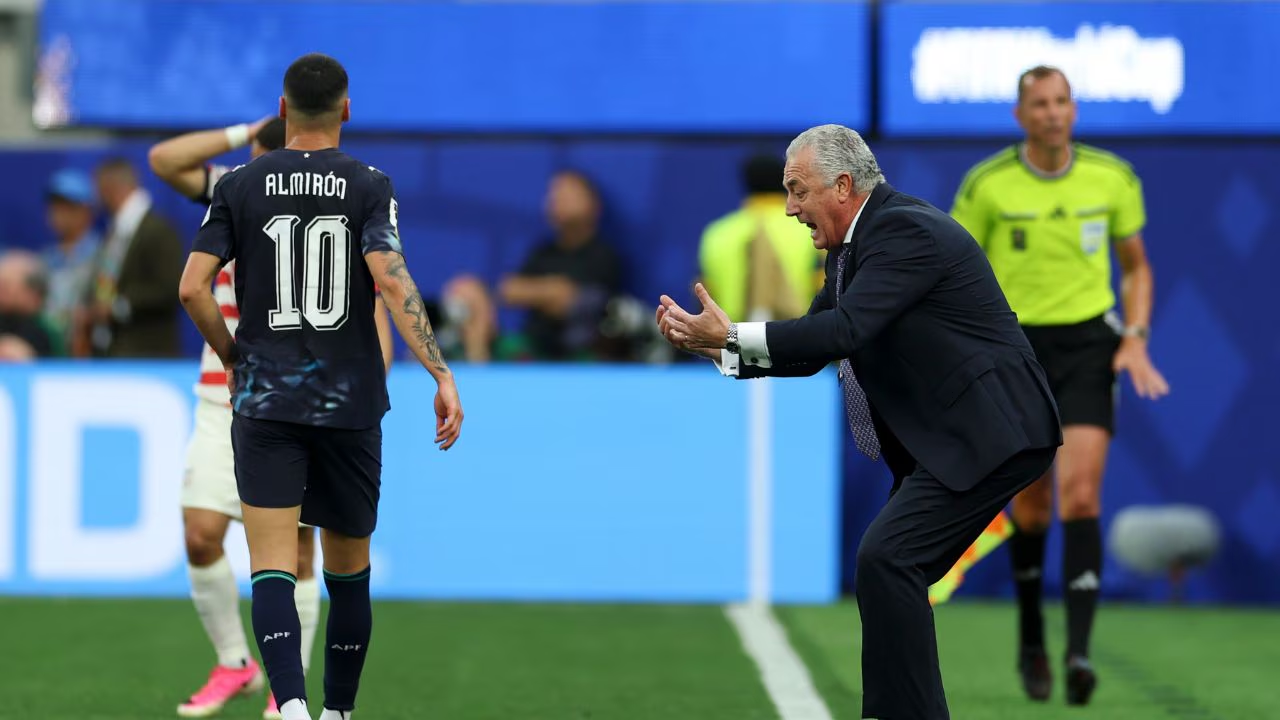
Gustavo Alfaro (R), head coach of Paraguay, gestures during the group D match between the United States and Paraguay at the 2026 FIFA World Cup at Los Angeles Stadium in Los Angeles, the United States, June 12, 2026. (Photo: Xinhua via IANS)
History was made at the SoFi Stadium during the FIFA World Cup 2026 Group D match between co-hosts the United States of America and Paraguay. USA outplayed the South American outfit completely, registering a dominating 4-1 victory to kickstart their campaign on a high.
It was head coach Mauricio Pochetinno’s first FIFA World Cup game in charge of the American national team which produced a 5-star performance in front of a sea of USA supporters in Los Angeles.
Also Read: FIFA World Cup 2026: Thomas Tuchel’s England team ROBBED, major setback before Croatia clash
An own goal from Paraguayan midfielder Damian Bodabilla opened the scoring for USA in the 7th minute and the co-hosts kept on growing more in confidence as the game proceeded. Striker Folarin Balogun scored USA’s first official goal of the tournament at the half-hour mark before virtually finishing the game with another strike at injury time to make it 3-1 before the 1st half.
Paraguay did pull one back when Mauricio found the back of the net in he 73rd minute but USA squeezed the South Americans completely to cancel their chances of staging a comeback. Giovanni Reyna added a 4th goal for the US at extra-time to seal a 4-1 victory.
Mistaken identity executed for the first time in FIFA World Cup
But it was not just USA’s victory that made the headlines. In a first at the FIFA World Cup, the new “mistaken identity” rule was executed by the referee as he reversed a yellow card and transferred it to an opposing player.
The incident unfolded early on in the 2nd half when the co-hosts were leading 3-0. Veteran center-back Tim Ream was shown a yellow card by Dutch referee Danny Makkelie after Paraguay captain Miguel Almiron went down following a challenge.
Ream and his teammates protested immediately, but the referee allowed Paraguay to quickly take the subsequent free-kick. However, in an unusual sequence that initially caused plenty of confusion across the stadium, the Video Assistant Referee (VAR) Carlos del Cerro Grande, intervened after the restart.
Makkelie was instructed to review the play on the pitch-side monitor. The replays clearly showed that Ream made no illegal contact and that Almiron had completely fabricated the foul. When the Dutch referee returned to the pitch, he cancelled Ream’s yellow card and booked Almiron instead for his acting.
Prior to this, officials could not review yellow cards or revisit a passage of play once the game has officially restarted. However, this specific rule change introduced by FIFA for the 2026 World Cup, gave the refereeing team a loophole.
The mistaken identity rule states that if a card is issued to a player when the foul was actually committed by the opposition, then the decision can be reversed and changed. It will take some time for us to get familiar with this ruling but it surely wasn’t the last time.