

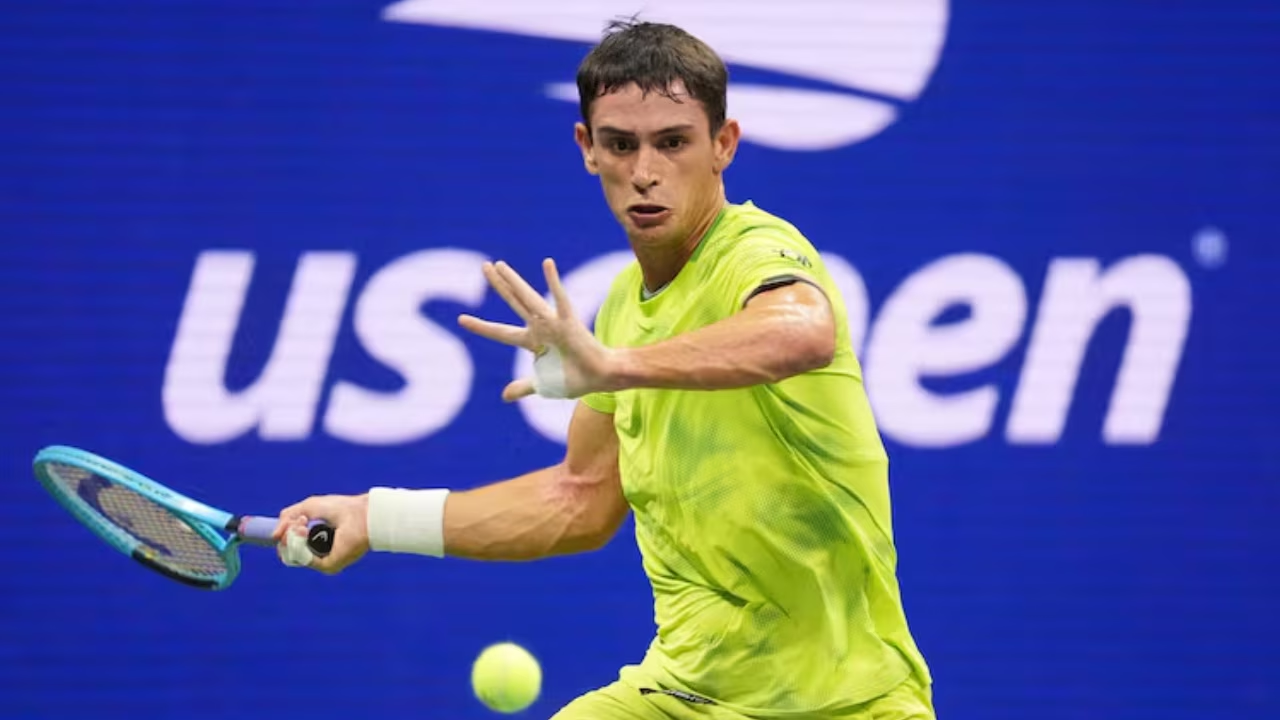
Mariano Navone has continued his stunning US Open 2026 campaign with another big win after shocking Novak Djokovic in the opening round.
Share Article
https://www.india.com/sports/others/watch-novak-djokovic-conqueror-mariano-navone-continues-dream-run-at-us-open-2026-with-win-in-second-round-over-matteo-berrettini-8516112/
Mariano Navone celebrates another big US Open 2026 win(Photo: X)
Argentine tennis player Mariano Navone is enjoying the tournament of his life at the 2026 US OpenAfter stunning the tennis world by beating Novak Djokovic in the first round, he followed it up with another impressive win over former Wimbledon finalist Matteo Berrettini.
Navone is no longer just the player who produced a major upsetHe has now reached the third round and is building a serious campaign in New York.
Read more:
WATCH: Alexander Zverev survives huge US Open scare against Lorenzo Sonego in five-set thriller
Navone backs up Djokovic upset
Beating Djokovic was already a career-defining moment for the world No49Navone had never defeated a top-10 player before this tournamentHe came from two sets to one down to beat the Serbian 7-6(5), 5-7, 4-6, 6-2, 6-1 on Arthur Ashe Stadium.
Many wondered whether that victory was a one-off against a struggling DjokovicNavone answered those questions three days later by beating Berrettini 3-6, 6-3, 6-4, 7-6(4) in a tough four-set battle that lasted three hours and 29 minutes.
Navone fights back against Berrettini
The match began poorly for Navone as Berrettini took the opening set 6-3 with his powerful serveHowever, the Argentine stayed calm, adjusted his game and gradually took control of the contest.
Navone won the second and third sets before holding his nerve in the fourth-set tiebreak to seal another impressive victory.
Another one for Mariano Navone!
He’s into Round 3 after defeating Matteo Berrettini on Court 12pic.twitter.com/stdZC865of
— US Open Tennis (@usopen) September 3, 2026
Key numbers from the match
The match statistics highlighted Navone’s ability to stay composed under pressure:
- Berrettini hit 15 aces, while Navone managed five.
- Navone landed 70% of his first serves, compared to Berrettini’s 61%.
- On second serve, Navone won 69% of points, significantly better than Berrettini’s 53%.
- Navone saved seven of nine break points, while Berrettini saved four of seven.
- Navone converted three of seven break-point chances, while Berrettini converted two of nine.
The numbers underline why Navone came out on topAlthough Berrettini produced more aces, Navone was more effective on second serve and handled pressure situations better.
Clay-court specialist makes mark on hard courts
Navone has built much of his reputation on clay and reached a career-high ranking of No29 in 2024Before this year, he had never progressed beyond the first round at the US Open.
His only previous third-round appearance at a Grand Slam came at the 2025 French OpenHis run in New York has therefore marked a major step forward, especially given his reputation as a clay-court specialist.
All-Argentine clash awaits
Navone will face fellow Argentine Tomás Martín Etcheverry in the third roundThe winner will book a place in the last 16.
Etcheverry is ranked higher at No32 and has won both of their previous meetingsHowever, those encounters came on clay several years ago, making their upcoming hard-court meeting a fresh challenge for both players.
Navone has already shown that he can handle the pressure of big occasionsHis next challenge will be dealing with the expectations that come with being one of the favourites in this run.
What started with a shock victory over Djokovic has now turned into a serious US Open campaign for Mariano Navone.