

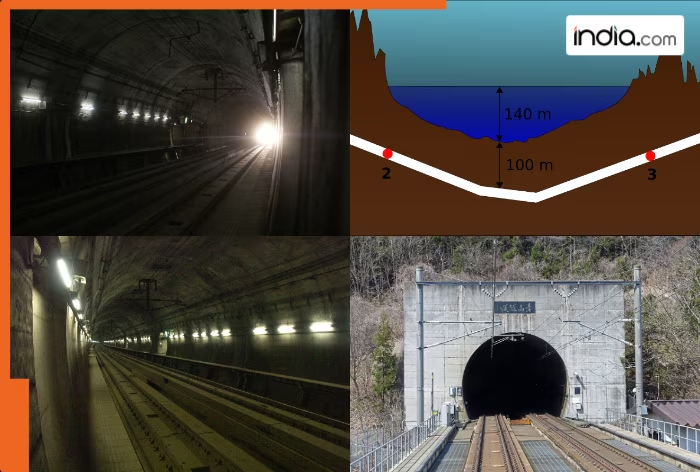
This tunnel, connecting Japan’s main island, Honshu, to the northern island, Hokkaido, passes under the Tsugaru Strait.

Published: February 15, 2026 6:29 PM IST
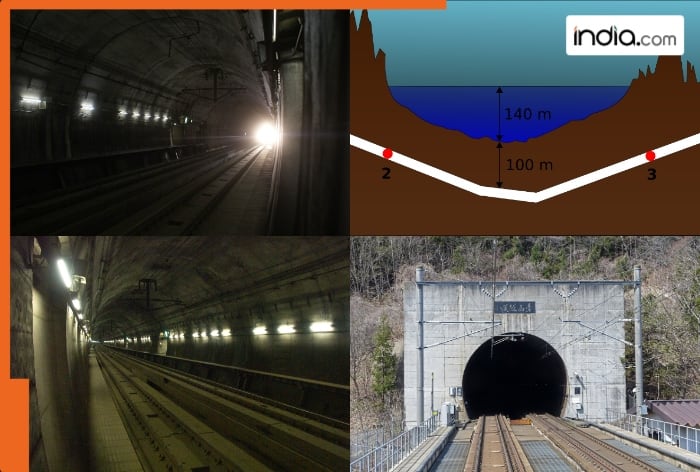
Considered backbone of Japan’s economy
The Gohpur-Numaligarh Tunnel in Assam will be the second tunnel in the world to have a railway track, but the story of the Seikan Tunnel, which occupies the first place on this list, is a tale of struggle and the triumph of modern science. This tunnel, connecting two large islands, Honshu and Hokkaido, is not only technologically advanced but also considered the backbone of Japan’s economy.Seikan Tunnel: Completed in 17 years and costed $7 billion
This tunnel, connecting Japan’s main island, Honshu, to the northern island, Hokkaido, passes under the Tsugaru Strait. Its total length is approximately 54 kilometers, of which 23.3 kilometers are entirely underwater. It is the world’s longest underwater rail section. Construction began in 1971 and was completed in 1988 after 17 years of hard work, costing a whopping $7 billion at the time.This tunnel is completely earthquake-proof
Building an underwater tunnel in an earthquake-prone country like Japan was no less challenging. It is built at a depth of 140 meters below sea level and 240 meters below the surface, where water pressure is very high. The tunnel is completely earthquake-proof so that bullet trains can pass safely even during strong tremors. There are also two underwater stations within the tunnel, named Tappi Kaitei and Yoshioka Kaitei, designed for emergency rescue operations.Add India.com as a Preferred Source
Key features of Seikan Tunnel
The journey between Honshu and Hokkaido islands, which previously took 4 hours by ship, has now been reduced to just 1 hour by train. Bullet trains (Shinkansen) can run at speeds of 240 to 320 km/h. It offers all-weather connectivity, as its services are unaffected even by snowstorms or inclement weather. This tunnel is longer than the Channel Tunnel, which connects the United Kingdom and France.Source link










Leave a Reply