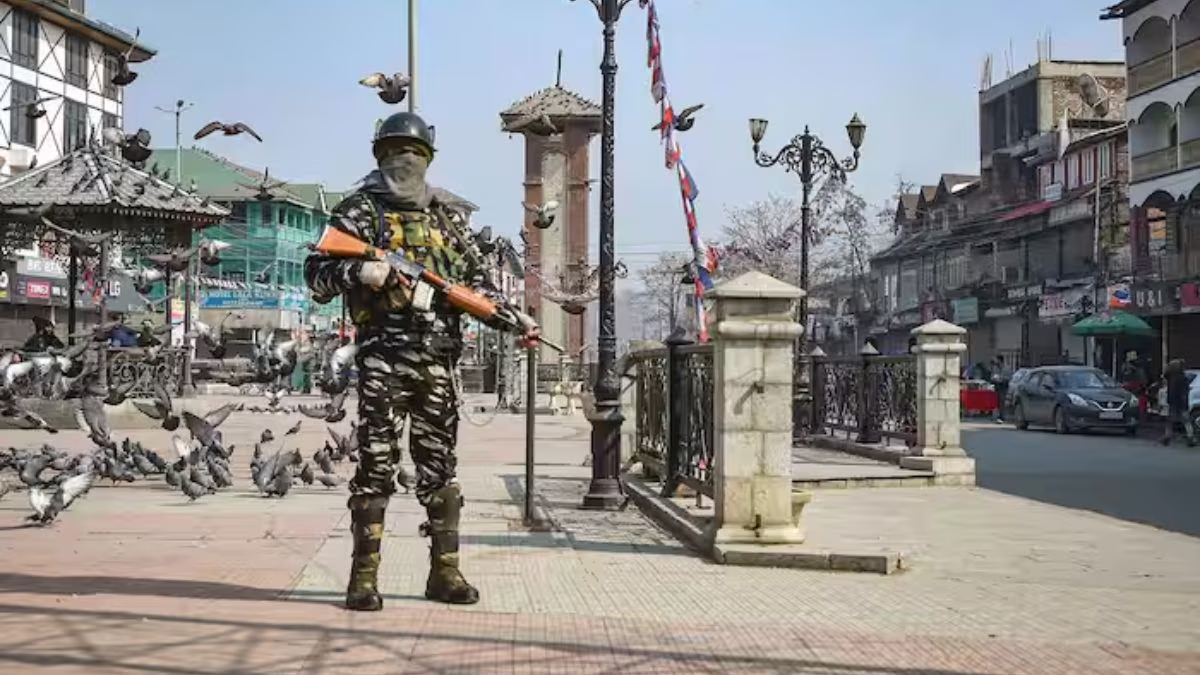
Unidentified terrorists shot dead two labourers working at a brick kiln in Jammu and Kashmir’s Kulgam district on FridayThe killings have renewed concerns over attacks on non-local workers in the regionOfficials and security analysts believe the targeting of migrants is part of a changing militant strategy that has emerged in the years following the abrogation of Article 370.
Published: August 1, 2026, 11:51 PM IST
Share Article
https://www.india.com/news/india/why-non-local-workers-remain-on-terror-groups-radar-in-jammu-and-kashmir-8490522/
Terror outfits in Jammu and Kashmir have been targeting non-locals for a long time nowRepresentational Image
Two labourers were killed in a terrorist attack in Jammu and Kashmir’s Kulgam district on FridayThey worked at a brick kiln were fired upon by unidentified terroristsThese killings have brought the focus back on terrorist groups targeting non-local labourersHowever, this strategy is part of a broader evolution in militant tactics following the abrogation of Article 370.
Lieutenant Governor Manoj Sinha and Chief Minister Omar Abdullah have strongly condemned the killing of the labourers and offered condolences to the families of the deceasedThe LG has directed the security forces to intensify operations in the area to neutralise the terrorists involved in the attack.
Let us take a closer look at why terrorist groups are targeting non-locals.
Why are terror outfits targeting non-locals?
Terror outfits in Jammu and Kashmir have been targeting non-locals for a long time nowThere are a number of reasons for this discrimination.
Opposing resettlement: Terrorist outfits target non-local workers, business owners, and minority communities primarily to resist post-Article 370 policies that allow outside residency, land ownership, and employmentBy killing vulnerable civilians, these groups attempt to instil widespread fear, prevent perceived demographic shifts, derail economic integration, and signal political defiance against central government measures meant to stabilize and integrate the region.
Economic sabotage: Terrorist outfits target non-local workers and traders to disrupt key economic sectors like construction, agriculture, and retailBecause Kashmir relies heavily on migrant labor, driving them away stalls development projects, paralyses local businesses, and creates chaosThis economic sabotage aims to derail integration, challenge central claims of post-2019 stability, and project continued instability in the region.
Demographic resistance: Terrorist outfits target non-local workers and residents to resist post-Article 370 laws that allow outsiders to acquire land, residency, and employmentBy launching targeted attacks on vulnerable civilians, these groups aim to instill widespread fear, deter outside settlement, and block perceived demographic changes, maintaining political defiance against central efforts to integrate Jammu and Kashmir into India.
Creating fear: Non-local workers and civilians are used to generate widespread terror with minimal riskBecause security forces have crippled major militant operations, targeting defenseless individuals offers high visibilityInstilling this fear deters outside labor and investment, paralyses daily life, signals defiance against central authorities, and attempts to project an illusion of strength and continued instability.
Shift in terror tactics
There has been a shift in the tactics used by terrorists in recent yearsFrom using targeted killing to hybrid militancy, here’s a look at their techniques.
Hybrid militancy: Several terrorist organisations use ‘hybrid militants’, namely un-indexed, part-time operatives using concealed small arms, to target non-local civilians without alerting security networksThese un-profiled individuals carry out surprise attacks and immediately melt back into civilian lifeThis tactic allows terror groups to bypass heavy intelligence surveillance, instill widespread panic, and create fear among non-local workers.
Targeted killings: Targeted killings are used against non-local workers and minorities as a low-cost, high-visibility tacticBecause heavy security grids make large-scale ambushes difficult, hit-and-run attacks on soft, undefended civilians allow militants to operate with minimal riskThis strategy instills widespread panic, drives out essential migrant labor, deters outside integration, and projects an illusion of operational strength.
Urban and guerrilla warfare: Terrorist outfits utilise urban and guerrilla tactics, such as hit-and-run ambushes, close-range pistol attacks, and quick dispersal into dense civilian areas, to target vulnerable non-localsBy exploiting crowded urban settings and asymmetric warfare, militants inflict panic while avoiding direct confrontation with security forces, ensuring high-visibility fear, driving away essential migrant labor, and frustrating intelligence networks.
Psychological warfare: Terrorist outfits employ psychological warfare by executing selective, high-impact killings of non-local workers to maximize collective panicBy targeting defenseless individuals, these groups amplify fear far beyond the immediate scene through social media and word-of-mouthThis calculated dread aims to trigger mass exoduses of labor, disrupt daily economic life, and project state inability to ensure civilian safety.
How are government, security forces responding?
The security forces have been responding with measured stepsFirstly, security forces have launched specific search and termination campaigns, such as Operation Mahadev, to track and eliminate terrorists involved in civilian killingsMeanwhile, the government has adopted a proactive doctrine, which includes conducting precision strikes on terror training camps across the border, such as Operation Sindoor.
Authorities are using the Unlawful Activities (Prevention) Act (UAPA) to arrest Over Ground Workers (OGWs), seize properties of terror sympathisers, and cancel government contracts for those supporting militantsA comprehensive security strategy involving area domination, multi-level deployment, and the use of advanced surveillance technology like drones and sensors is being implemented to destroy the terror networkThe administration provides immediate relief through ex-gratia payments (such as Rs 16 lakh for the Kulgam victim’s family) and directs security forces to intensify operations following any attack.