


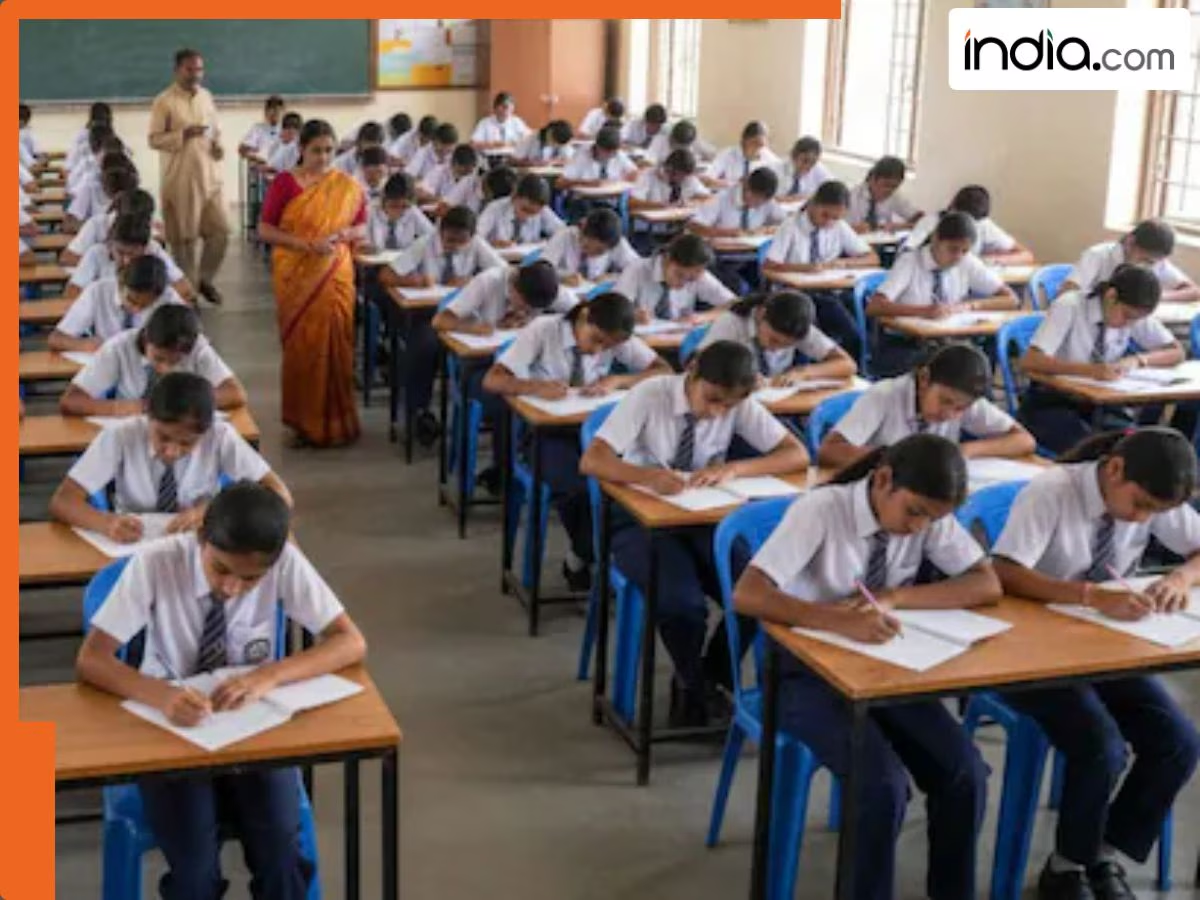
CBSE Class 10th Social Science board exam 2026 in less than 24 hours; Check preparatory tips, important topics, teacher’s suggestions for final revision
- Competency-Based Questions: There is an increase in application-based (competency) questions.
- History (India and the Contemporary World)
- Important topics: French Revolution, the spread of Nationalism, the unification of Italy and Germany.
- Unifications of Italy and Germany.
- Italy/Germany and the Unification of Britain.
- Unification process: Personalities: Important figures like Mazzini and Bismarck.
- Tips: Remember timeline; practice locating Italy and Germany on a map.
- Key Topics: Non-Cooperation and Civil Disobedience movement
- Similarities and differences between Non-Cooperation and Civil Disobedience movements
- Gandhiji movements
- Tips: Learn to write the features, causes, and impacts of movements. This chapter frequently appears in Case Studies.
- Key Topics: Subtopics 1 to 1.3 (Pre-modern world to Conquest, Disease, and Trade).
- World Wars reason and Impact
- Use a mind map while writing answers
- Note: Chapters 1, 2, and 3 in total will consist of 20 mark questions.
- Practice locating the Calcutta session and the Lahore session in map
- Focus on industrial growth and the life of workers;
- Expect case studies.
- Chapter 5 Print Culture and modern world
- Focus on the Printing Press and its impact; memorize short points for MCQs.
Geography (Contemporary India – II)
Resources & Development: Focus on types of resources, land use, and conservation. Practice maps given in the chapter.
Chapter 2 Forest & Wildlife:
Understand categories (Endangered, Vulnerable, etc.), importance, and conservation methods.
Chapter 3: Water Resources: Focus on Multipurpose projects and its needs. Practice writing Rainwater Harvesting importance
Map Dams: Salal, Bhakra Nangal, Sardar Sarovar, Hirakund, Nagarjun Sagar, Rana Pratap Sagar, and Tungabhadra.
Agriculture: Analyze challenges faced by farmers and the role of agriculture in the economy. and society.
Analyse the challenges faced by the farming community in India
Various aspects of agriculture, crop conditions (temperature, rainfall).
Map work is important
Chapter 5 Minerals and Energy Resources
Impact of manufacturing industries on environment
Sustainable development
Types of resources+ conversation of resources
Renewable and non- renewable resources
Topics
Source link












Leave a Reply