

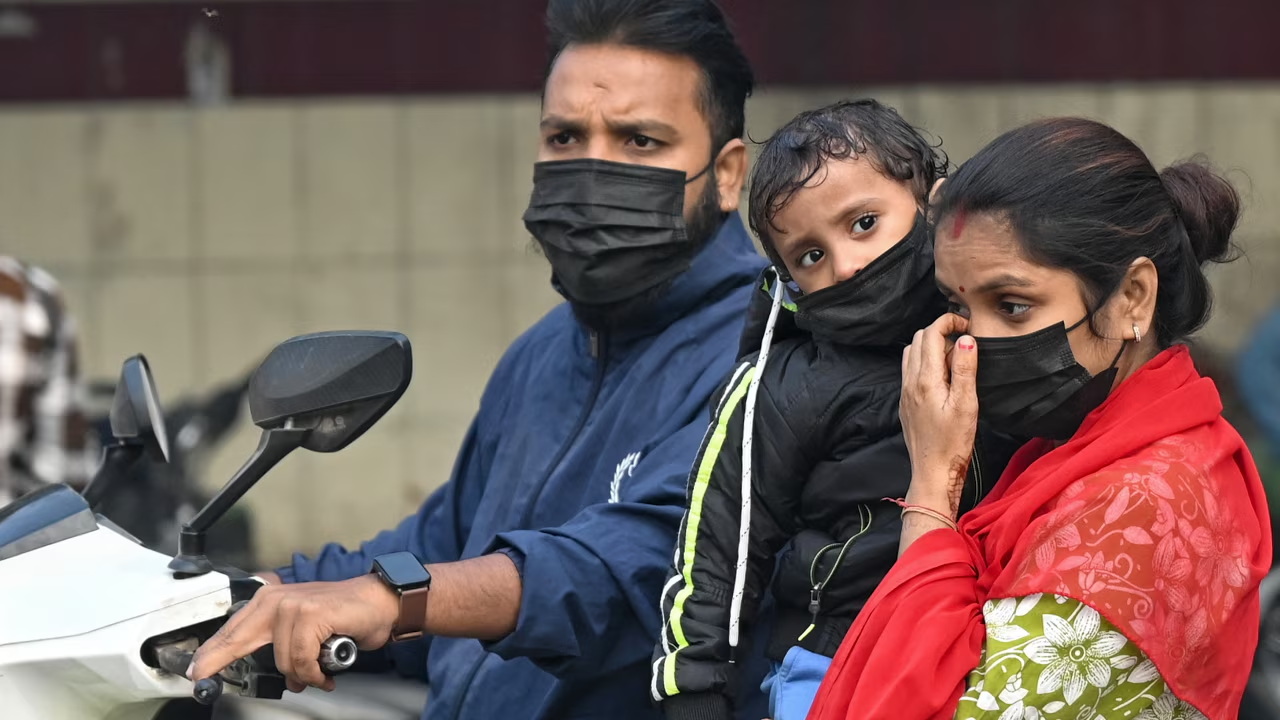
Delhi’s air quality remained in the “very poor” category on Saturday, with biomass burning emerging as the largest contributor to the city’s pollution.
Share Article
https://www.india.com/news/india/delhi-pollution-update-national-capital-chokes-as-air-quality-remains-very-poor-rain-expected-to-bring-relief-8544984/
Delhi Air Pollution
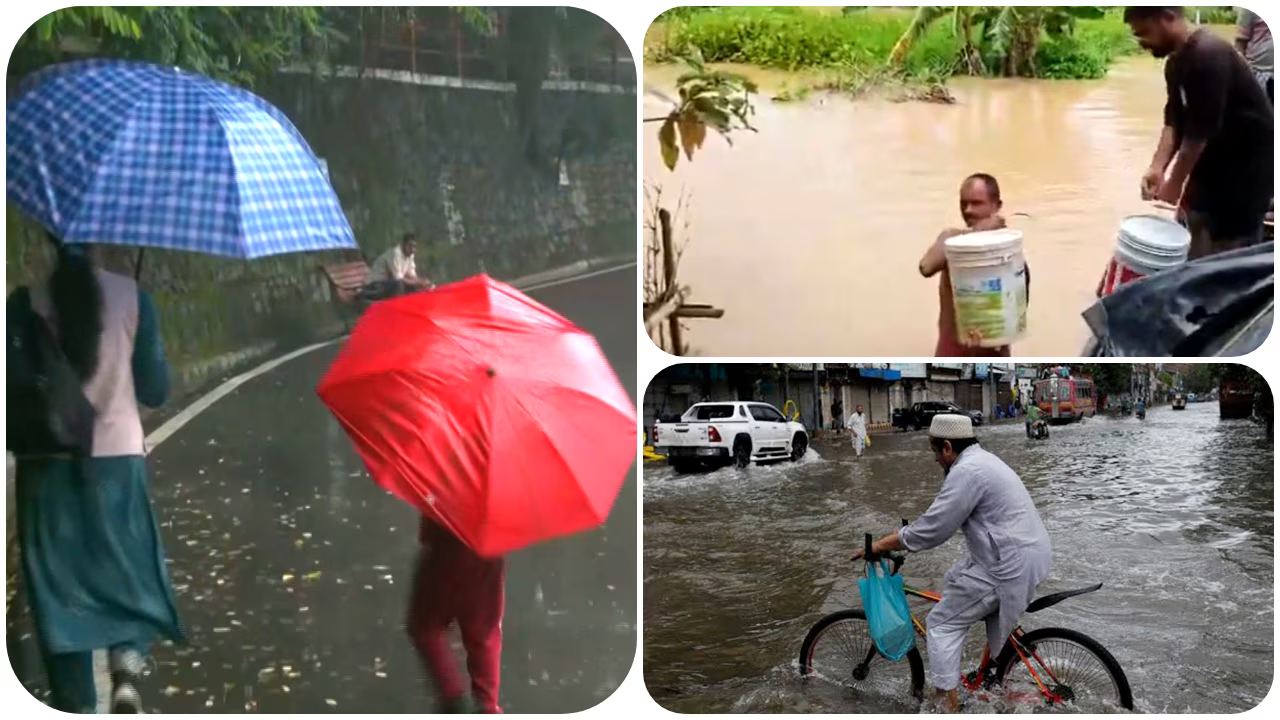
New Delhi: In a concerning development, there appears to be no immediate relief from pollution in DelhiThe air quality in the national capital continued to remain in the ‘very poor’ category on SaturdayHowever, according to the India Meteorological Department (IMD), air quality may improve marginally over the next two days due to the possibility of rainfall.
The Air Quality Early Warning System has also forecast a decline in the levels of PM2.5 and PM10 particles in the air over the next two days.
Read more:
AQI crosses 400 in many areas of Delhi, Noida’s Sector 62 records highest pollution level
Here are some of the key details:
- According to data released by the CPCB, Delhi’s 24-hour average Air Quality Index (AQI) stood at 367 on Saturday, compared to 373 on Friday.
- This represents a marginal improvement of six points in a single day.
- Pollution levels continue to remain in the ‘very poor’ category in the national capital
- On Saturday, out of the 59 monitoring stations in Delhi that recorded data, 17 reported air quality in the ‘severe’ category.
- 38 stations recorded ‘very poor’ air quality, three reported ‘poor’ air quality, and one station recorded ‘moderate’ air quality.
- This indicates that despite a marginal improvement in the average AQI, pollution levels remain a major concern across large parts of the national capital.
Transport Sector Emerges as the Biggest Contributor to Pollution
PM10 was the predominant pollutant in Delhi on SaturdayAccording to an assessment by the Decision Support System (DSS), the transport sector accounted for the largest share of pollution, contributing 20.5 per centPollutant levels are expected to decline somewhat over the next two days due to rainfallHowever, the extent of relief will become clearer only after the weather conditions change.
Delhi’s Pollution Situation on Saturday
- Delhi’s average AQI: 367
- Friday’s AQI: 373
- Monitoring stations in the severe category: 17
- Monitoring stations in the very poor category: 38
- Monitoring stations in the poor category: 3
- Monitoring stations in the moderate category: 1
- Predominant pollutant: PM10
- Transport sector’s contribution: 20.5%
Delhi air still ‘very poor’; biomass burning top pollutant
According to the AQEWS, after biomass, the highest pollutant was secondary organic aerosols at 23.6 per cent, followed by vehicular emissionMixed combustion contributed 12.6 per cent, while secondary inorganic aerosols accounted for 10.7 per cent of the pollutionWaste burning, including municipal waste and plastic- and rubber-containing waste, contributed 6.8 per cent to total pollution, while mineral dust and ash accounted for 1.5 per cent.
Firecrackers contributed 1.4 per cent and industrial emissions 0.7 per centSatellite data showed 537 residue-burning incidents across six states on SaturdayOf these, 214 incidents were reported in Punjab, 11 in Haryana, 33 in Uttar Pradesh, 33 in Rajasthan and 246 in Madhya Pradesh.
A total of 11,342 farm-fire incidents have been detected across these states between September 15 and November 13.
The data was provided by the Consortium for Research on Agroecosystem Monitoring and Modelling from Space (CREAMS) Laboratory of the Indian Agricultural Research Institute in its bulletin.