

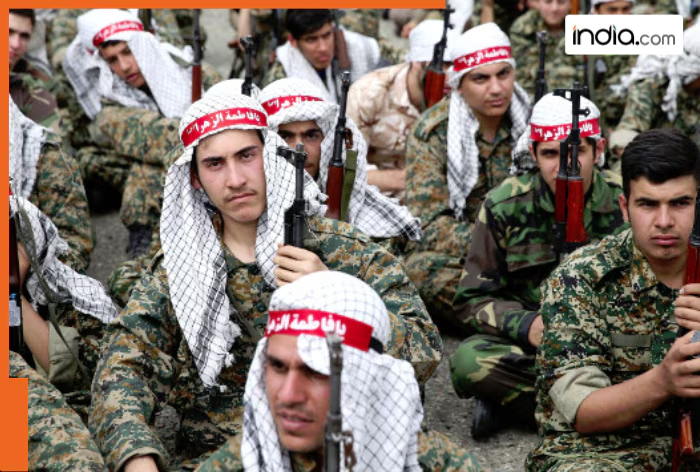
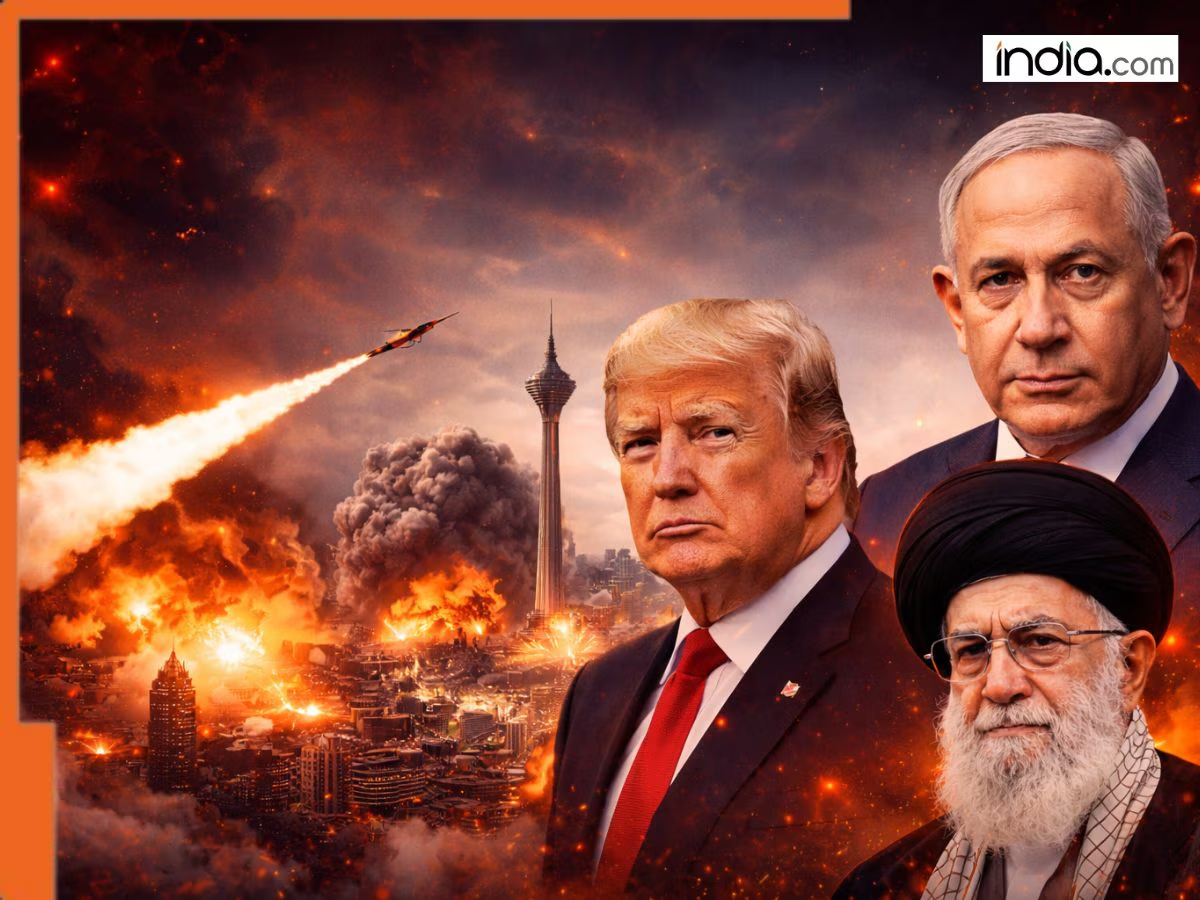
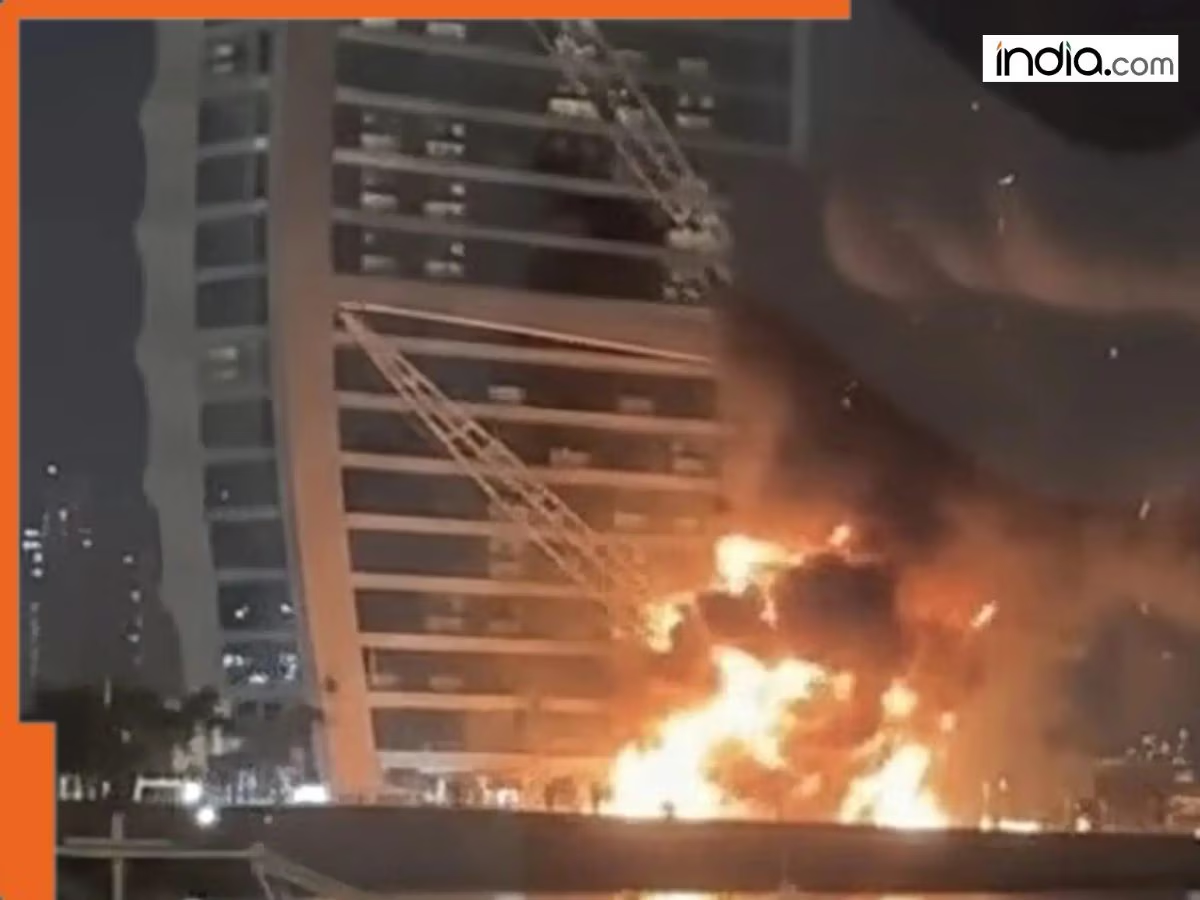
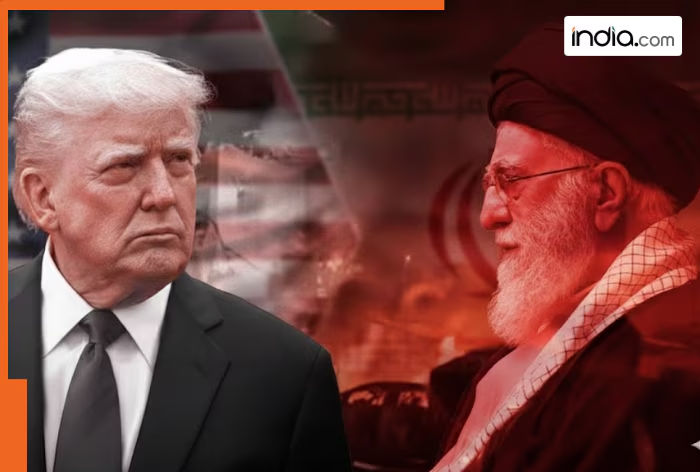
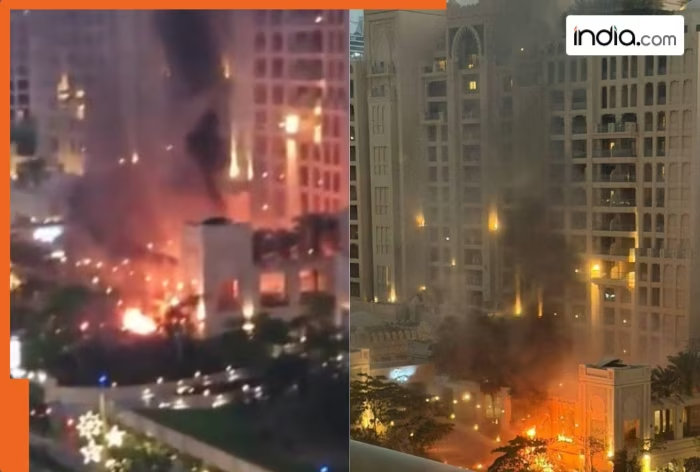
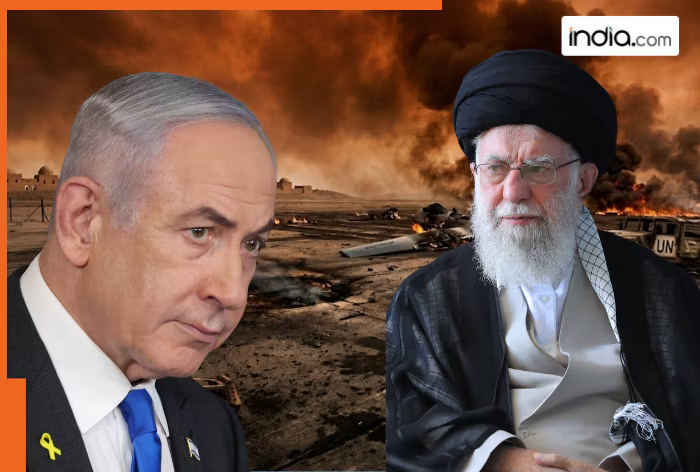
Khamenei’s Basij militia in the spotlight: Iran is witnessing a major blow and political turmoil after the death of its supreme leader, Ayatollah Ali Khamenei. The targeted airstrikes by Israel and

Published: March 1, 2026 1:48 PM IST
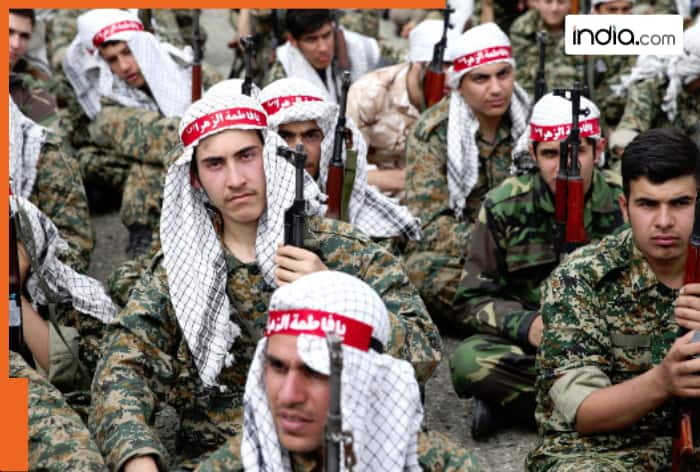
Origins And Structure Of The Basij
The IRGC is now the strongest section of the Middle Eastern country’s armed forces. It is also best-equipped force of the country, extending its influence through the worlds of politics and business.The IRGC, a very highly institutionalised, work as a parallel force beside Iran’s regular armed forces. The force has its special ground forces which are based across the country’s 31 provinces.The Basij Militia, also known as Organisation for the Mobilisation of the Oppressed, was created on the orders of Ayatollah Ruhollah Khomeini in 1980. AThe Ayatollahcalled for ’20 million riflemen’ in order to continue and defend the revolution. In simple terms, Basij is a volunteer paramilitary force that functions under the IRGC. The militia is directly loyal to Ayatollah Ali.Add India.com as a Preferred Source
Notably, the role of the militia is not restricted to being a subsidiary of the IRGC, rather, it plays a crucial role in central mechanism for suppressing dissent and achieving regime objectives.It means that the Basij not only operates in the Middle Eastern countries but also supports allied groups abroad. It also plays a crucial role in regional conflicts. Talking about the controversies related to the militia, it is often accused of involvement in violent crackdowns during the 2009 presidential election protests and November 2019 unrest. Functions And Influence Of Basij Militia
- As per United States Institute of Peace, Basij functions as an auxiliary force with a vast list of responsibilities, which includes – internal security, law enforcement, moral policing and organising religious events.
- It has units in almost every city and town across the middle east country. Because of this, the Supreme Leader used to control and maintain a strong presence in society.
- The militia’s role grew significantly after 2009 presidential election when Khamenei deployed it to confront ‘domestic’ threats.
- Over time, the expanded role strengthened the militia’s political and economic influence.
- Despite the growing power, the force faced criticism for its protest handling. Budget limitations had also affected its operations.
- In 2008, Basij was integrated into the IRGC Ground Forces. This had restructured its command and operations.
Basij’s Role in Today’s Iran and Beyond
During the recent protest in Iran, Basij volunteers were involved in both maintaining security and supporting the public. Not only that, during the Israel-Iran conflict in June last year, Revolutionary Guards Commander-in-Chief Mohammad Pakpour stated that Basij volunteers were participating in security and support roles.If we talk about Iran’s complex power system, Basij is a force that continues to act as its “eyes and ears.” It serves as a crucial force for internal control and regional operations. However, after the supreme leader’s death, the Basij’s role is in question.Source link



Leave a Reply