

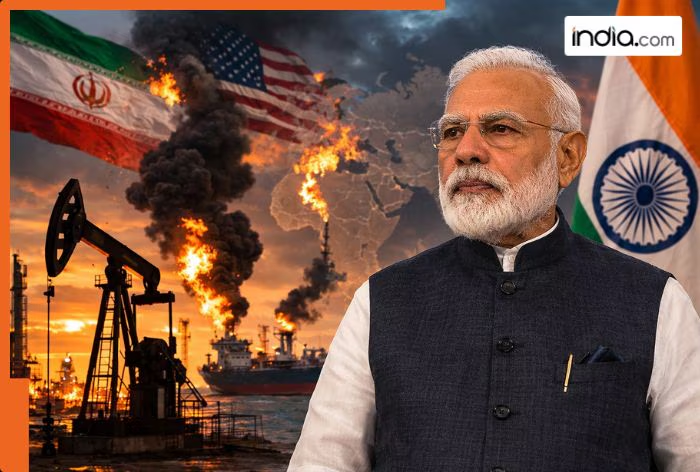
India has recently signed new energy supply arrangements with the US and the UAE to ensure stable long-term energy availability.

Published: March 9, 2026 7:07 AM IST
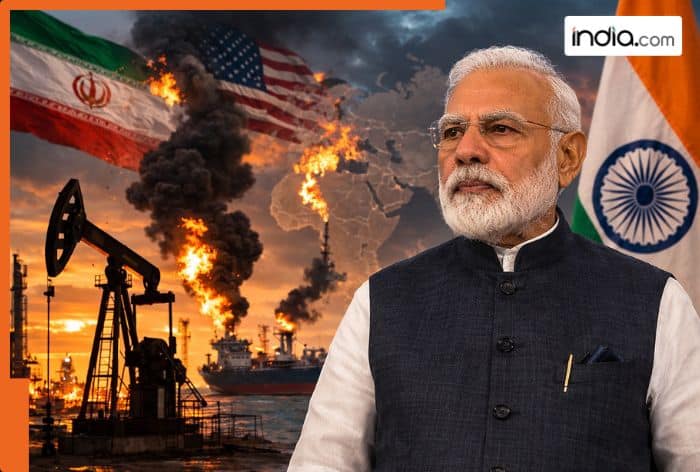
India’s energy supply is secured:
Indian officials have made it clear that the ongoing tensions between Iran, the United States, and Israel, as well as disruptions around the Strait of Hormuz, have not affected India’s energy supply. Most importantly, India is today not dependent on a single corridor but rather has multiple routes for crude oil imports.About 40 percent of India’s oil imports pass through the Strait of Hormuz, while the remaining 60 percent come through other supply routes, which have not been affected by the current crisis.Add India.com as a Preferred Source
India now has multiple options
India’s energy strategy has changed significantly, and any disruption in a single corridor will not create a supply emergency. Even during global disruptions, crude supplies from Russia, West Africa, the United States, Central Asia, and non-Gulf Middle Eastern routes have helped India easily manage sourcing adjustments.Countries including Australia and Canada have also offered additional gas supplies, as India continues to expand its energy partnerships. This means that besides its traditional partner Russia, India now has several alternative energy supply routes.According to officials, India’s crude purchasing strategy is guided by national interest and the principle of sourcing oil “wherever supply is available.”Here are some of the key details:
- India has recently signed new energy supply arrangements with the US and the UAE to ensure stable long-term energy availability.
- Over the past decade, India has significantly expanded its energy supplier base—from 27 countries across six continents to 40 countries.
- India’s energy security is no longer dependent on a single maritime chokepoint.
- India currently has a total inventory cover of about eight weeks for crude oil and petroleum products, including strategic reserves.
- This includes around 25 days of crude oil stock and about 25 days of petrol and diesel inventory.
India has never violated any rules
India’s energy transactions have remained within international regulations, the officials said. They further informed that India has operated fully within international law throughout the period.“Every transaction used compliant shipping, audited channels, and legal traders. India did not break any rules. Instead, it helped stabilize the market. The record of global crude oil prices during the period when India was actively purchasing is the clearest proof of this,” officials said.India’s position compared with other countries
Sources also noted that fuel prices in India have remained relatively stable compared with several other countries. During the same period, petrol prices rose by about 55 percent in Pakistan, 22 percent in Germany, 19 percent in France, and 11.54 percent in the United States. In contrast, petrol prices in India increased by less than 1 percent.Source link








Leave a Reply