

Two Iranian ballistic missiles evaded Israel’s air defenses and landed in residential areas of Dimona and the nearby city of Arad.

Published: March 23, 2026 7:28 PM IST
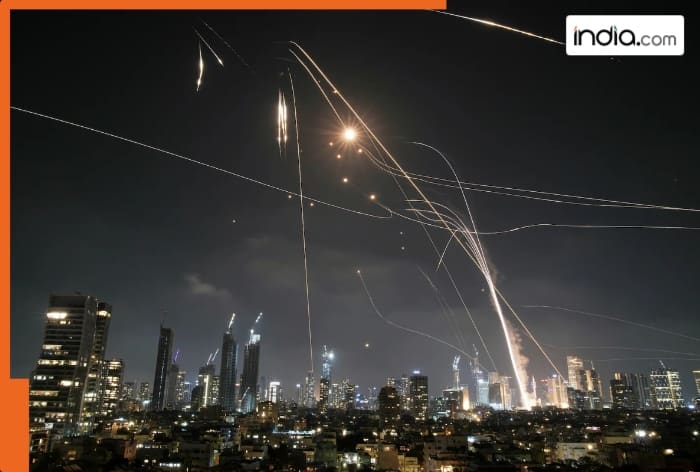
Two Iranian Ballistic Missiles Fired
However, a startling incident occurred on Saturday night. Two Iranian ballistic missiles evaded Israel’s air defenses and landed in residential areas of Dimona and the nearby city of Arad. According to reports, the missiles travelled a distance of over 1,500 kilometers to reach their targets.These two attacks occurred approximately three hours apart. The Iron Dome, David’s Sling, Arrow-3, and the U.S. defense system THAAD all failed to intercept these two attacks. According to Israel’s Ministry of Health, 180 people were injured in the attack, with some reported to be in critical condition.Israel Admits Failure to Intercept Iranian Missiles
The Shimon Peres Negev Nuclear Research Center, located in Dimona, is commonly referred to as the “Dimona Reactor.” It is widely believed that Israel’s nuclear weapons are housed here, although Israel has never officially acknowledged this.Add India.com as a Preferred Source
This site is considered one of the most secure areas in the country. The most concerning aspect of the incident is that the Israeli military itself admitted to having attempted to intercept these missiles but failed to do so. Consequently, the attack has sparked fear among residents living in the surrounding areas. 368 Iranian Missiles Intercepted So Far: Israel
Israel asserts that it successfully intercepts the majority of incoming missiles. According to the Israeli Air Force, since the joint US-Israeli strike on February 28, Iran has fired 400 missiles, 92 per cent of which were intercepted in mid-air.However, the incident on Saturday night demonstrates that no security system is 100 per cent foolproof. An investigation is now underway to determine how these missiles managed to breach Israel’s air defense system.Israel’s Air Defense Systems
Israel possesses a diverse array of air defense systems. The Iron Dome is designed to intercept short-range rockets, while David’s Sling is utilized for medium-range missiles. The most advanced system is Arrow-3, which possesses the capability to destroy missiles in near-space. Additionally, the US-made THAAD system is also deployed in the region.Despite these defenses, the missiles penetrated deep into Israeli territory. This has raised questions regarding where the failure occurred. Some experts suggest that this may have been an operational failure—meaning the system itself was sound, but there was an error in its execution.Source link

Leave a Reply