

The concept of imposing tolls on the Strait of Hormuz has long been championed by Iran’s Islamic Revolutionary Guard Corps.

Published: March 20, 2026 6:49 PM IST
Iranian lawmakers give their assent due to war
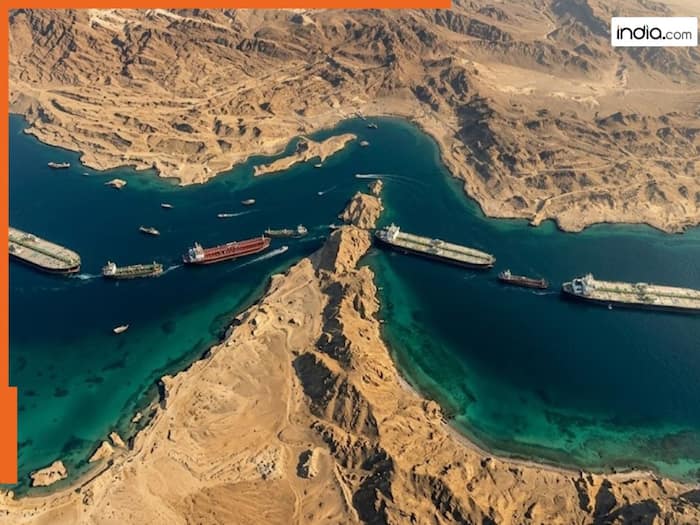
The concept of imposing tolls on the Strait of Hormuz has long been championed by Iran’s Islamic Revolutionary Guard Corps (IRGC). However, under the pressure of international law and in an effort to cultivate better diplomatic ties globally, the Iranian government had previously refrained from pursuing this course of action. Now, however—given the state of war—Iranian lawmakers have given their assent to this initiative. IRGC personnel are currently engaged in preparations to establish a designated “safe corridor” through the strait. This arrangement is intended for vessels that are either aligned with the government in Tehran or are willing to pay the requisite tax to secure safe passage. According to reports, at least one vessel transiting the strait recently was compelled to pay $2 million, while negotiations regarding similar arrangements for the safe passage of several other vessels are currently in progress.Iran enjoys power in Strait of Hormuz
For Tehran, the Strait of Hormuz represents a significant strategic advantage. It needs just a single drone, costing a few thousand dollars, to attack any tanker passing through this route. It has also laid naval mines in the region, posing a significant threat to the ships. The presence of its proxy organizations in the vicinity also gives it an advantage. Against this backdrop, Iran is framing this “toll tax” mechanism as a security measure. Although Iranian officials have indicated that “safe passage” could be negotiated for countries not directly involved in the conflict, the legal basis for such tolls remains dubious, and the procedural details remain unclear. All of this is unfolding amidst ongoing diplomatic and naval negotiations, rather than within the framework of an internationally recognized legal regime.Can Iran charge toll tax on Strait of Hormuz?
From the perspective of international law, no single nation is permitted to unilaterally impose a tax on a waterway such as the Strait of Hormuz. The legal foundation for this lies in the United Nations Convention on the Law of the Sea (UNCLOS), which enshrines the principle of “transit passage.” Under this principle, vessels and aircraft of all nations possess the right to navigate through such waterways without obstruction. According to this doctrine—regardless of a vessel’s flag state, its ownership, or the nature of the cargo it is transporting—it cannot be detained, nor can taxes be levied upon it. The neighbouring nations exercise jurisdiction over their respective coastlines and territorial waters, but they do not possess the authority to levy taxes on the entire Strait of Hormuz.Add India.com as a Preferred Source
Source link

Leave a Reply