

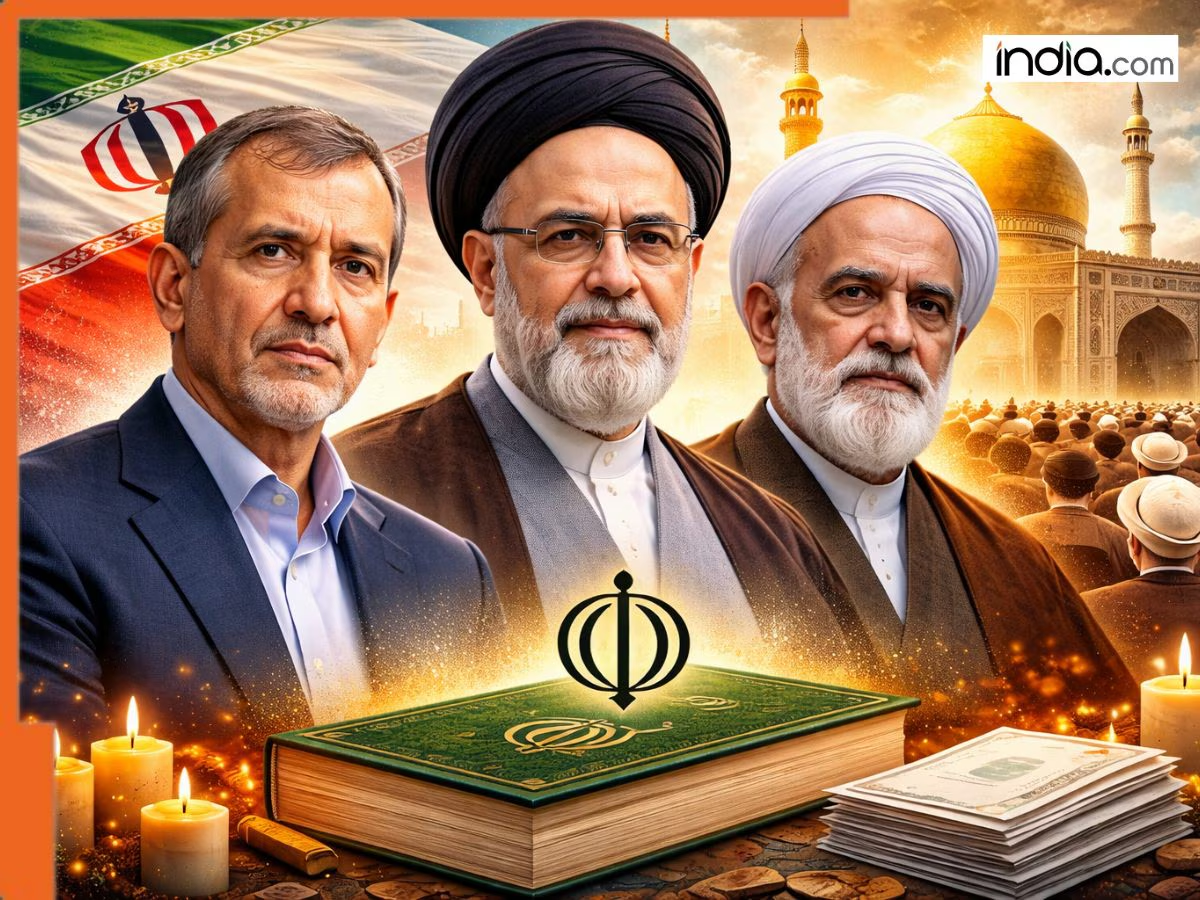
Iran may form a three-member interim council including President Masoud Pezeshkian, Ali Reza Arafi, and Chief Justice Gholam Mohseni Ejei to oversee leadership transition and select the next Supreme Leader.

Published: March 2, 2026 1:30 PM IST
Why Does Iran Have an Interim Council?
In Iran, the Supreme Leader is considered to have command over the armed forces, judiciary, Islamic Republic of Iran Broadcasting, and state policies on key issues such as nuclear technology and science. His death or incapacity to lead would trigger the formation of an interim council consisting of three powerful officials. Article 111 of Iran’s Constitution states that the Supreme Leader can be replaced with a leadership council. The council will serve as the head of state until the next leader is chosen.Add India.com as a Preferred Source
Iran has never had a three-member governing council as its Supreme Leader Ayatollah Ali Khamenei is still serving in office. But the Constitution allows for the formation of the interim council should anything happen to Iran’s Supreme Leader.
Also read: Who is Ayatollah Alireza Arafi? Iran’s interim successor after Ayatollah Khamenei’s death in US-Israeli airstrike
Who Will Be Part of the Three-Man Council?
- President Masoud Pezeshkian
- Ali Reza Arafi
- Chief Justice Gholamhossein Ejei
- President Masoud Pezeshkian of Iran serves as the executive branch representative. The president was elected into office by the people of Iran and will serve on the council to provide civilian oversight.
- Ali Reza Arafi is a senior Shiite cleric well respected in religious circles. His presence on the council will represent the interests of the Shia clerics.
- Gholamhossein Ejei is the current Chief Justice of Iran. His office would be represented on the council.
Meetings of the 88-member council of clerics
The Grand Council of Clerics is known as the Assembly of Experts. The Assembly is made up of 88 clerics who are elected by the people but only allowed to serve if approved by the council of clerics. The role of the Assembly includes:- Electing the Supreme Leader
- Overseeing the Leader
- Removing the Leader from power.
- Islamic knowledge
- Management skills
- Political knowledge
- Sense of justice
- Leadership qualities
Steps in the Selection Process
Step 1: Assembly meeting The Assembly of Experts meets in Tehran, Iran. The members will conduct a series of meetings that’ll be held behind closed doors. Step 2: Consider Candidates Potential candidates are considered Step 3: Vote and Decide The Members of Assembly vote and decide on who’ll take the position as the Supreme Leader. The chosen candidate, whether an individual or council, then assumes power.Reasons Why It’s Important
Iran’s Supreme Leader has command over key institutions such as:- Iran’s Armed Forces
- Iran’s Revolutionary Guards
- National Intelligence Organization (NII)
- Iran Judiciary
- Iran Islamic Broadcasting
- Chief Policy Director
A History of Leadership Since 1989: From Khomeini to Khamenei
When Supreme Leader Ayatollah Ruhollah Khomeini died in 1989, the Assembly of Experts elected Ayatollah Ali Khamenei as the new leader. Ali Khamenei was in power since 1989. He was currently the second-longest-serving head of state in the Middle East.What happens if Iran’s Supreme Leader dies?
In case of death or incapacitation, Iran has an interim leadership council that will take charge until a new leader is elected. The Leader can also be removed from power by the Assembly of Experts.Can Iran’s president run the country if the Leader dies?
The president cannot run the country alone if the Supreme Leader dies. The country will be led by an interim council consisting of three top officials in Iran.Can the Supreme Leader be removed from power?
Yes. According to Article 107 of Iran’s Constitution, the Assembly of Experts can remove Iran’s Leader from power.What to Expect?
As of right now, we do not know if Iran will take steps to form this council. We do know that the constitution allows for it and the steps above are how Iran will choose their next leader. If Iran does decide to form this temporary council, the 3 members listed above will lead Iran until the Council of Experts chooses a new leader. Iranian citizens will not get to choose their new leader. The clerics that run Iran will decide.Source link









Leave a Reply