

Business Wire India
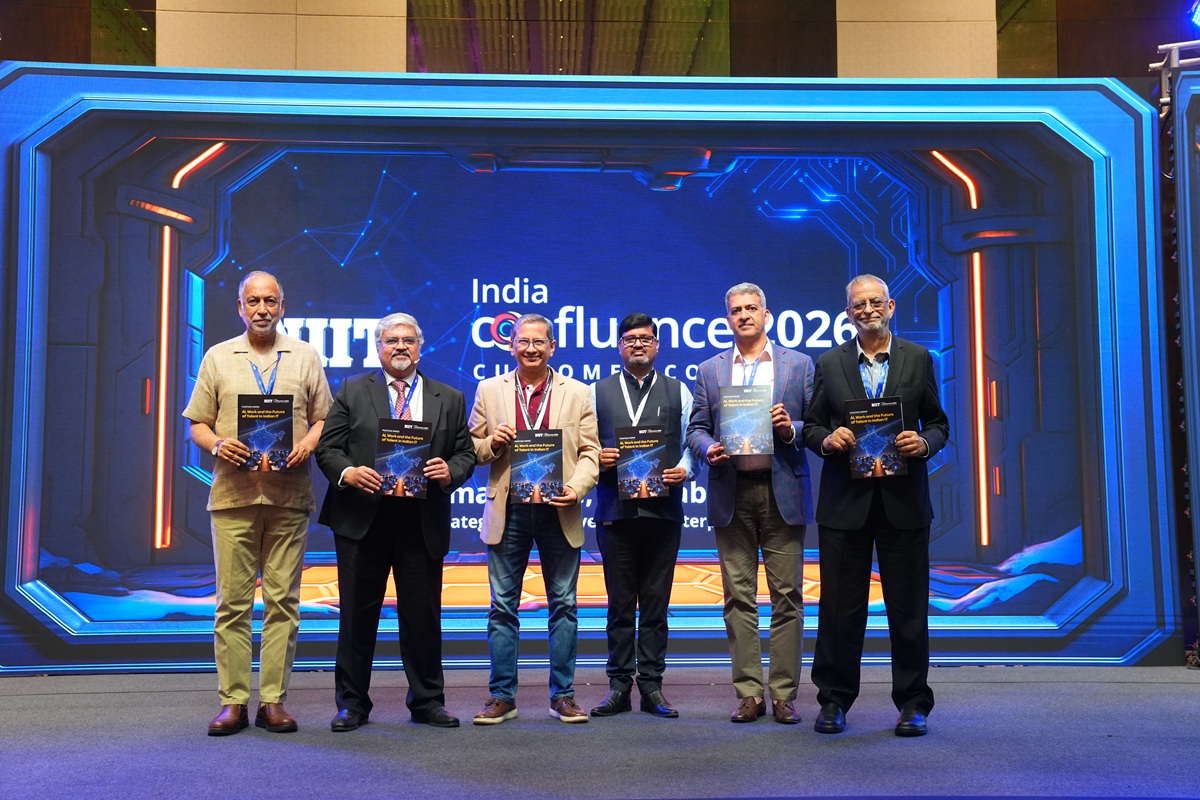
NIIT Limited, a leading Skills & Talent development corporation, today released a new position paper titled “AI, Work and the Future of Talent in Indian IT” at Confluence 2026, presenting a new analytical framework to understand how Artificial Intelligence is reshaping India’s IT workforce.
The paper introduces a new analytical lens describing AI as a “talent redistribution engine” not merely automating tasks but redistributing where enterprise value resides. According to NIIT’s analysis, repetitive, execution-heavy layers within traditional pyramid-based IT models are facing structural compression, while intelligence-intensive roles across AI engineering, orchestration, product architecture, and governance are expanding.For over three decades, Indian IT scaled through execution depth and labor leverage. The report argues that AI is altering the economic logic of traditional IT models – reducing reliance on rules-based tasks and increasing the premium on system-level design, contextual judgment, and governance capability. The shift, it notes, is from scaling headcount to scaling capability density, the integrated strength of human expertise and AI-embedded systems.According to available industry research, there is a tightening of entry-level hiring alongside rising demand for AI and governance roles, reinforcing this structural redistribution. The paper cautions that without redesigning apprenticeship models and transition pathways, compression in execution-heavy layers could impact long-term capability pipelines.The paper also uses the concept of “Agentic Capital” – autonomous and semi-autonomous AI systems embedded into enterprise workflows – to frame governance, validation, and auditability as core infrastructure rather than compliance overlays.Pankaj Jathar, CEO, NIIT Ltd., said, “AI represents a deeper architectural shift for India’s IT industry. Competitive advantage will depend on how consciously enterprises redesign talent structures, build intelligence capacity, and institutionalize governance as a foundational capability.”The paper positions ‘Intelligence Capacity’ as the combined capability of humans and AI systems as the new scaling logic for Indian IT, replacing the headcount‑driven model. Further, the paper calls on enterprises to redesign role structures, rebuild entry pathways, and embed governance frameworks to avoid reactive contraction and instead leverage structural expansion opportunities.Dr Yogesh Kumar Bhatt, Executive Vice President and Head – New Technologies, NIIT Ltd., said, “AI is not merely automating tasks – it is redistributing enterprise value within IT organizations. Those that respond tactically risk structural compression. Those that respond architecturally can redesign talent structures, strengthen intelligence capacity, and enable strategic expansion.”
The position paper outlines four priorities for Indian IT leaders: deliberate role redesign, scaling intelligence capacity beyond headcount growth, embedding governance frameworks, and rebuilding entry pathways to sustain long-term talent formation.
To access the full position paper: Link
Source link













Leave a Reply