COLUMBIA, Md., March 3, 2026 /PRNewswire/ — More than 75% of Americans are unsure when or how often to get a colonoscopy. That’s according to new survey results just released by MedStar Health.One thousand U.S. adults participated in the national survey, which revealed colorectal cancer misconceptions:
MedStar Health reports that one in three Americans are not sure when or how often to get checked for colorectal cancer.
More than 36% of those eligible say they’ve skipped colorectal screening. Doctors recommend starting at age 45.
Four in ten think screening after 45 requires a family history of the disease. That’s not true, according to doctors.
One-third mistakenly thinks testing starts before age 45.
Almost half say you should screen every five years. Doctors say it can be every ten years.
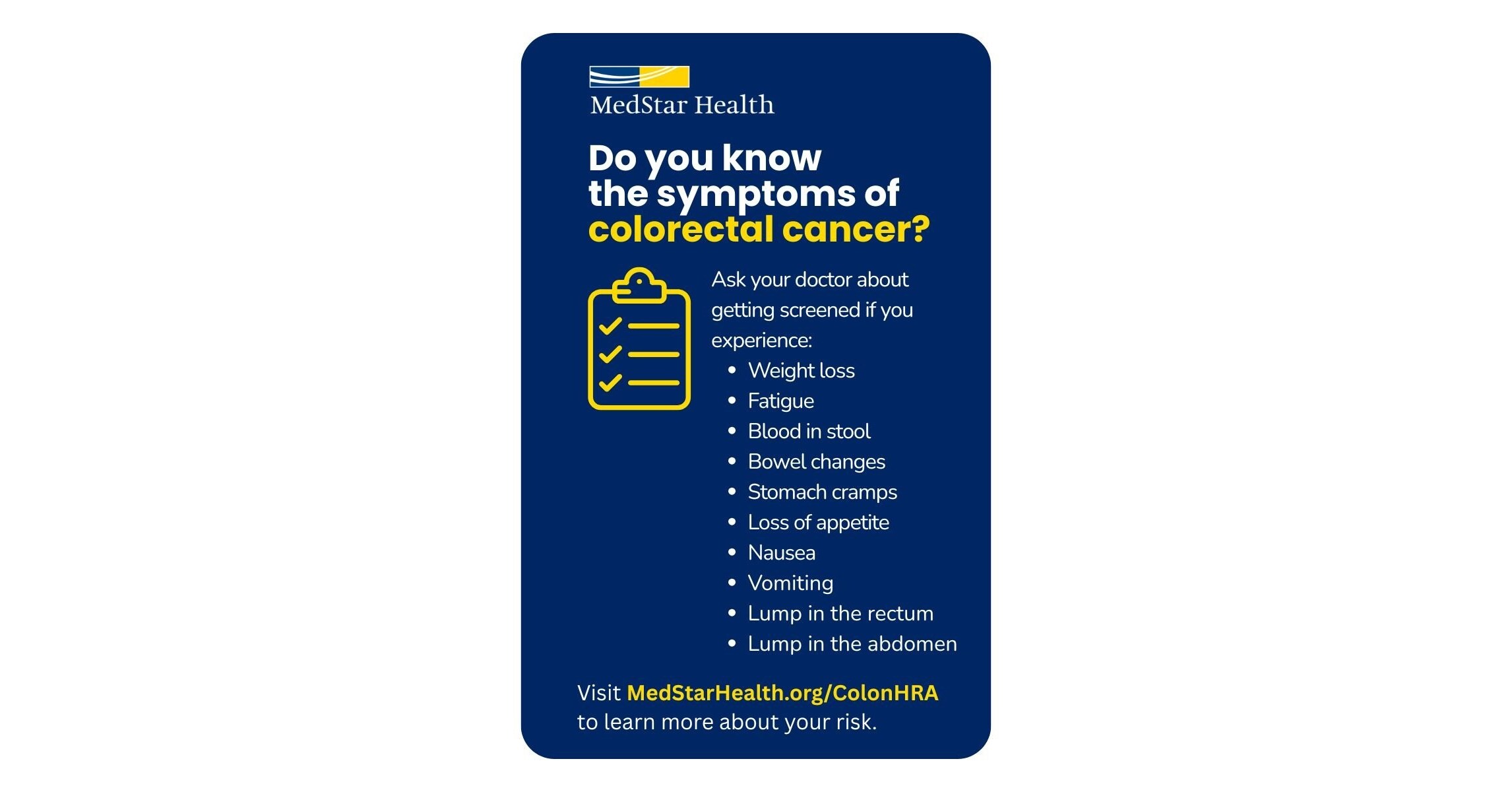
Click here for MedStar Health’s full survey results.“Detecting colorectal cancer early can save your life,” said MedStar Health gastroenterologist Nikiya Asamoah, MD. “Make sure to ask your doctor when to start screening and how often to follow up.”In 2018, the screening age dropped from 50 to 45 for those with average risk. That change came as more young patients were diagnosed. Now, survey results show one in ten people know a colon cancer patient under age 45.Doctors found Allison Solomon’s cancer at age 37.“Colonoscopies aren’t fun but important to stay on top of if you’re eligible,” Solomon said. “My symptoms were severe, so I listened to my body and got screened early.”Solomon says she had blood in her stool, bowel changes, stomach cramps, and loss of appetite.Only 13% of respondents could identify all colorectal cancer symptoms, which also include:
Weight loss
Fatigue
Lump in rectum
Nausea
Lump in abdomen
Vomiting
“Having these symptoms doesn’t mean you have cancer,” said MedStar Health gastroenterologist Dana Sloane, MD. “Colorectal cancer does not always cause symptoms. Appropriate screening is critical for early detection. Your doctor can check and help give you peace of mind.”To learn more about your own risk, visit www.MedStarHealth.org/ColonHRASOURCE MedStar Health


















Leave a Reply