


As INS Taragiri joins the Eastern Fleet on the Eastern seaboard, the ship carries forward the proud legacy of her predecessor, honouring a name that has served the nation for decades.

Published: April 4, 2026 12:30 AM IST
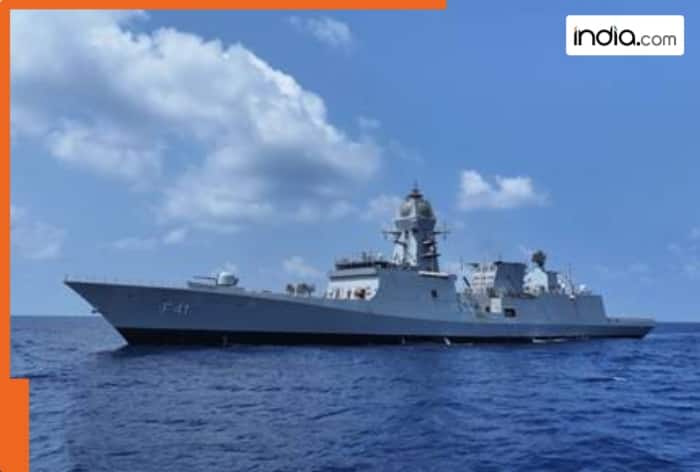
New Delhi: INS Taragiri, the fourth potent platform of the Project 17A class, was commissioned into the Indian Navy in the presence of Defence Minister Rajnath Singh at Visakhapatnam, Andhra Pradesh on April 03, 2026. A masterclass in modern naval shipbuilding, this latest stealth frigate, with a displacement of approximately 6,670 tonnes, has been designed by the Warship Design Bureau and built by Mazagon Dock Shipbuilders Limited, with the support of MSMEs, for multi-role operations. It utilises advanced stealth technology to achieve a significantly reduced radar signature, providing a lethal edge in contested environments.
Over 75% Indigenous Content
With over 75% indigenous content and built in significantly reduced timelines, INS Taragiri exemplifies India’s shipbuilding prowess and strong public-private collaboration. The Defence Minister, in his address, described INS Taragiri as not merely a warship but a symbol of India’s growing technological prowess, self-reliance, and formidable naval power.
Rajnath Singh on INS Taragiri
“This ship is capable of high-speed transit and can remain deployed at sea for extended periods. It is equipped with systems designed to monitor enemy movements, ensure its own security, and, if necessary, deliver an immediate response. It features modern radar, sonar, and missile systems, such as BrahMos and surface-to-air missiles, which further augment its operational prowess. From high-intensity combat to maritime security, anti-piracy operations, coastal surveillance, and humanitarian missions, it fits perfectly into every role, making it a unique naval platform,” said Rajnath Singh.
Rajnath Singh on Indian Navy
Highlighting the immense significance of the maritime domain in the evolving security landscape, Rajnath Singh stated that the Indian Navy maintains a round-the-clock presence across the Indian Ocean region amidst the global uncertainties. “The vast expanse of the ocean contains numerous sensitive points, where our Navy has consistently maintained an active presence to ensure the smooth flow of goods. Whenever tensions flare, the Indian Navy steps in to guarantee the security of commercial vessels and oil tankers. It is not only safeguarding India’s national interests, but is also prepared to take every necessary measure to protect our citizens and trade routes across the globe. It is this capability that firmly establishes India as a responsible and formidable maritime power,” he said.

About INS Taragiri
This Frigate represents a generational leap over earlier designs, offering a sleeker form and a significantly reduced Radar Cross-Section that allows it to operate with lethal stealth. With indigenous content exceeding 75 per cent, the ship highlights the maturity of a domestic industrial ecosystem that now spans over 200 Micro, Small and Medium Enterprises (MSMEs), contributing to the Government’s Aatmanirbharta initiative, supporting thousands of Indian jobs.
Beneath its sleek, modular exterior lies a powerhouse driven by a Combined Diesel or Gas propulsion engine and managed by a state-of-the-art Integrated Platform Management System. This technological sophistication ensures the vessel remains a versatile asset, capable of carrying out any mission assigned to the ship, anywhere and at any time.
The ship’s combat punch is world-class, featuring a lethal array of supersonic Surface-to-Surface missiles, Medium Range Surface-to-Air missiles, and an advanced indigenous Anti-Submarine suite. In an evolving Indo-Pacific security landscape, this commissioning sends an important geopolitical signal: India is now a premier builder of complex warships, capable of maintaining a credible posture to deter potential adversaries and contribute to collective regional stability under the vision of MAHASAGAR.
As INS Taragiri joins the Eastern Fleet on the Eastern seaboard, the ship carries forward the proud legacy of her predecessor, honouring a name that has served the nation for decades. The message delivered on the deck today was unmistakable: India’s oceans are guarded by ships designed by Indians, built by Indians, and operated by Indians.