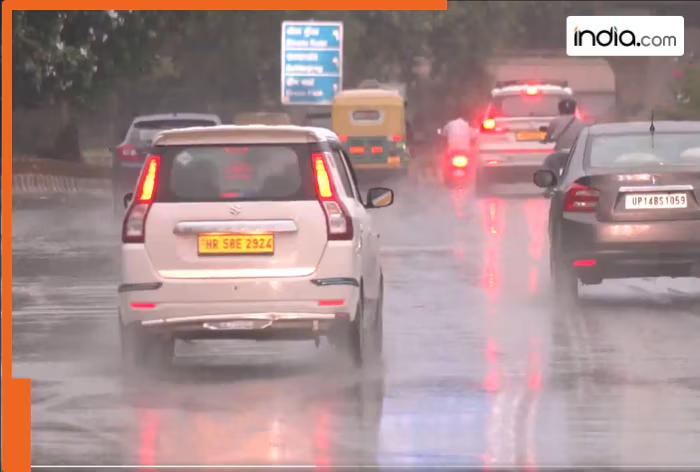
India may face added economic pressure as the IMD forecasts a below-normal monsoon for 2026, with rainfall likely around 92% of the long-period average, potentially impacting agriculture, inflation and growth.

Published: April 13, 2026 10:09 PM IST
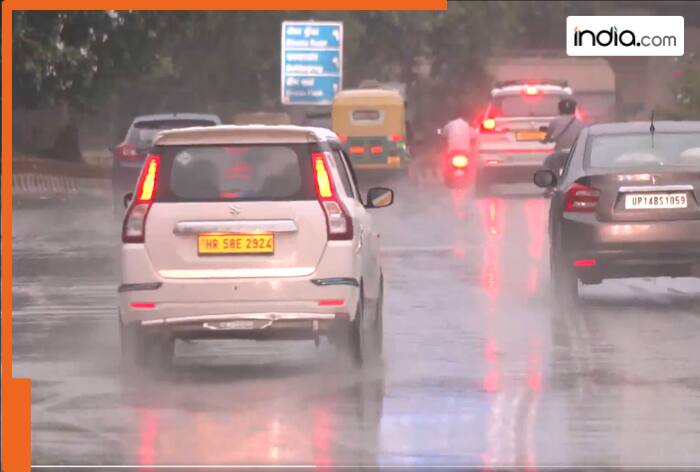
IMD Monsoon update: In a significant update for the Indian economy amid the Iran-US war, India Meteorological Department (IMD) has made a big update on the Indian Monsoon rainfall. According to the IMD, India’s 2026 southwest monsoon is expected to be weaker than usual, raising concerns about overall rainfall during the crucial June- September season. Here are all the details you need to know about the announcement made by India Meteorological Department (IMD) regarding Indian Monsoon.
Will India receive sufficient rainfall in Monsoon?
In its Long Range Forecast released on April 13, the IMD stated that seasonal rainfall across the country is likely to be below normal, estimated at about 92% of the Long Period Average (LPA), with a possible variation of ±5%. This places the expected range broadly between 90% and 95% of the LPA. The department noted that the LPA, calculated using data from 1971 to 2020, stands at 87 cm for the season.
What has IMD predicted on Indian Monsoon?
The IMD said that it will issue the updated forecasts for monsoon season rainfall in the last week of May. On Sea Surface Temperature (SST) conditions, the IMD said that, at present, weak La Nina–like conditions are transitioning to ENSO-neutral conditions over the equatorial Pacific. “Atmospheric circulation features across the tropical Pacific remain consistent with weak La Nina–like conditions.
The Monsoon Mission Climate Forecast System (MMCFS) suggests the development of El Nino conditions during the SW Monsoon season,” it said.

What are El Nino and La Nina?
El Nino and La Nina are opposite phases of the El Nino-Southern Oscillation (ENSO) cycle, representing periodic fluctuations in sea surface temperatures and trade winds in the tropical Pacific Ocean that alter global weather, a report by IANS news agency said.
El Nino (warm phase) features weakening trade winds and warmer waters, causing wetter conditions in the US and droughts in Asia, while La Nina (cool phase) brings stronger winds and cooler waters.
The IMD said, at present, neutral Indian Ocean Dipole (IOD) conditions are present over the Indian Ocean, and the latest climate models forecast indicates that the positive IOD conditions are likely to develop towards the end of the southwest monsoon season.
As sea surface temperature (SST) conditions over the Pacific and the Indian Oceans are known to have a strong influence on the Indian monsoon, IMD is carefully monitoring the evolution of sea surface conditions over these Ocean basins, said the statement.
(With inputs from agencies)