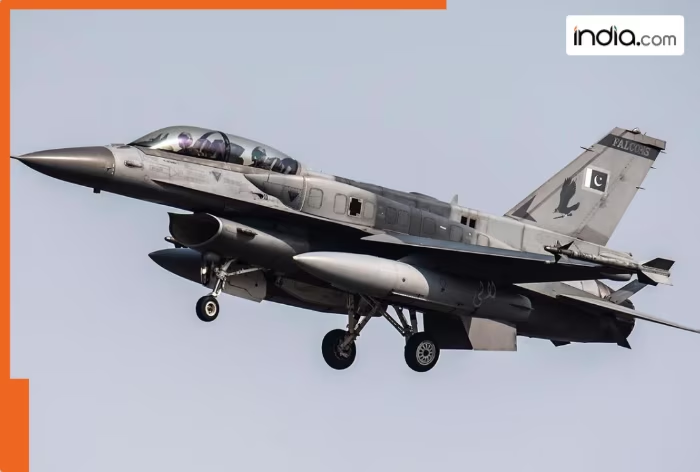
According to a report, the United States Air Force (USAF) has awarded a $488 million contract to Northrop Grumman to provide long-term engineering and technical support for F-16 radar systems.

Published: May 2, 2026 3:52 PM IST
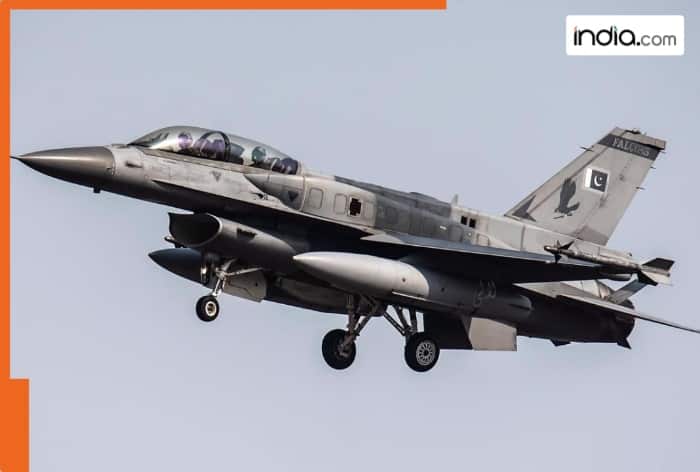
New Delhi: The United States has decided to extend maintenance contracts for F-16 fighter jets belonging to several nations, including Pakistan. Under this arrangement, radar systems worth $488 million will be installed in the F-16 combat aircraft. According to reports, this approval was granted within the framework of a major ‘Indefinite Delivery/Indefinite Quantity’ (IDIQ) engineering support structure. According to Dawn, the United States Air Force (USAF) has awarded a $488 million contract to Northrop Grumman to provide long-term engineering and technical support for F-16 radar systems. Pakistan is among the nations covered under this programme.
Pakistan Has Employed F-16 Against India
Although US officials have consistently maintained that Pakistan cannot utilize these assets against India, the reality is that Pakistan has, in fact, employed them against India in the past; furthermore, an F-16 was allegedly shot down during ‘Operation Sindoor.’ On April 27, 2026, the US officially awarded this $488 million contract to Northrop Grumman Systems. The IDIQ designation signifies that the cost is fixed and the agreement is intended to span a long duration. According to Dawn, the work stipulated under this contract is expected to be completed by March 31, 2036.
Also Read: Big setback to Iran-US talks: Trump cancels US negotiators’ trip to Pakistan
Why is the Radar System Installed in F-16s So Significant?
Indian defense experts view this radar sustainment package as a ‘hidden force multiplier’ that significantly enhances Pakistan’s situational awareness, electronic resilience, and multi-target engagement capabilities.

This upgrade will endow Pakistan’s F-16 fighter jets with the ability to track Indian aircraft from extended ranges. It will also provide the capacity to simultaneously monitor multiple targets and ensure effective operational capability even in the face of electronic jamming. However, the United States has not provided its most advanced radar system, the APG-83 SABR. By withholding AESA radars from Pakistan, the U.S. intends to signal to India that it is not granting Pakistan an “offensive” advantage that would jeopardize the Indian Air Force (IAF).
US Has Upgrade And Maintenance Of Older Radar Systems
The U.S. has authorized only the upgrade and maintenance of Pakistan’s older radar systems (the AN/APG-66 and AN/APG-68). These are “mechanically scanned” radars—meaning they incorporate moving parts. While this constitutes older technology, their software is now set to be updated.
The Indian Air Force possesses “jammers” capable of blinding enemy radars—systems that were notably employed during Operation Sindoor. However, following these upgrades, the capabilities of the F-16s’ new radars against such jamming systems will be significantly enhanced.
Part of Network-Centric Warfare
A particularly significant aspect is that, under a $686 million deal concluded in 2025, Pakistan’s fleet was integrated into the Link-16 network. This implies that these radars will no longer operate in isolation; instead, they will be able to share “real-time data” with other aircraft airborne at the time, ground-based radar stations, and command and control centers. This process is known as “sensor fusion”—a technology increasingly utilized in modern aerial warfare. In practical terms, if a single aircraft detects an enemy target, the entire force will instantly gain access to its precise location.
Pakistan Currently Has 85 F-16 Fighter Jets
Citing a 2020 report by the Foreign Policy Research Institute, the BBC notes that Pakistan currently possesses a fleet of 85 F-16 fighter jets. Of these, 66 are older Block 15 models, while 19 are newer Block 52 variants. Following these recent upgrades, these F-16 fighter jets are expected to remain operational within the Pakistan Air Force’s fleet until at least 2040.
Nevertheless, the fact that the U.S. is withholding AESA radars indicates that it does not wish to antagonize India beyond a certain threshold. However, following this upgrade, these aircraft will once again become formidable for the next 10 to 15 years. It will now be more difficult than before for Indian Sukhoi Su-30MKI, Dassault Rafale, Mirage 2000, and other aircraft to ‘jam’ or evade these updated F-16s.