Petroleum Minister Hardeep Singh Puri himself tweeted on Sunday, 10th May, that oil marketing companies are losing up to Rs 1,000 crore every single day.

Updated: May 13, 2026 9:30 AM IST
New Delhi: Uday Kotak, the well-known billionaire banker and founder of Kotak Mahindra Bank, has given a serious warning to the country. Speaking at an industry event in New Delhi on Tuesday, 12th May, he said that all of us in India should mentally and practically prepare ourselves for difficult days ahead. The reason is simple but worrying — the ongoing war in West Asia is slowly pushing global oil prices higher, and its full effect on our pockets has not yet arrived.
In his own words, “We should stay prepared for the worst situations. It is better to be mentally and practically ready for difficult times instead of waiting for a sudden shock to affect us.” What he means is straightforward — if we expect difficulty in advance, we can plan, save, and adjust. But if trouble comes suddenly, it shakes us badly. He also hoped that such hard times either never come or do not stay for long.
For the last two months, India has somehow been protected from the full heat of this oil crisis. But Kotak warns that “the impact is on the way, and it could be very serious.” This is exactly why our Prime Minister Narendra Modi, just one or two days earlier, requested citizens to cut down oil and gold use, because the war is putting heavy pressure on our economy.
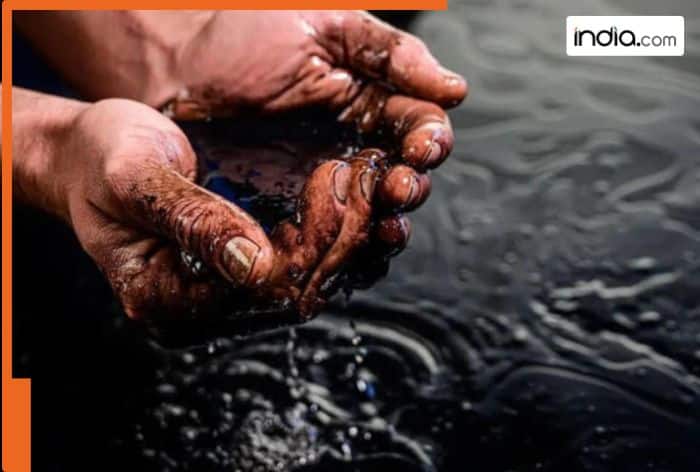
Now, here is something interesting to notice. Petrol in New Delhi cost ₹94.77 per litre on 12 May, and surprisingly, this price has hardly changed since 30 October 2024, when it was raised by just 5 paise. For 18 long months, fuel prices have stayed almost frozen for the public. Why? Because the government and oil marketing companies have been quietly absorbing the loss themselves. Globally, crude oil has shot up to $120 per barrel after the Strait of Hormuz — a very important sea route for oil ships — was closed.

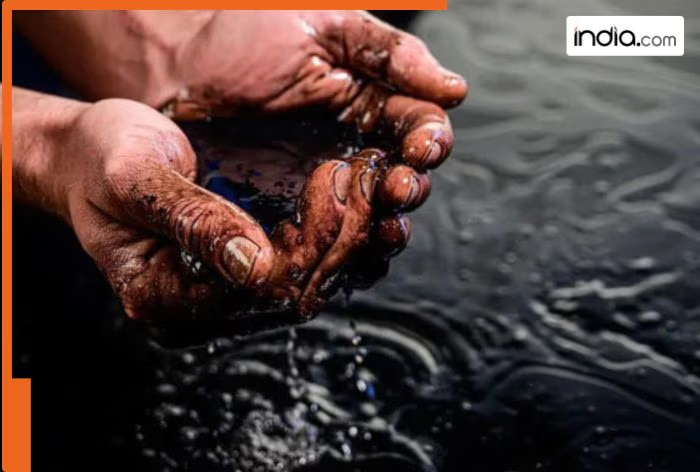
Petroleum Minister Hardeep Singh Puri himself tweeted on Sunday, 10th May, that oil marketing companies are losing up to Rs 1,000 crore every single day. That is a huge daily loss, and obviously, this cannot continue forever. Sooner or later, petrol and diesel prices for the public will have to go up.
To save the country’s foreign exchange reserves, Modi made some humble requests on 10th and 11th May. He asked everyone to reduce unnecessary imports, avoid foreign holidays for now, restart work-from-home wherever possible, use fuel carefully, and avoid buying gold — whether as jewellery or investment — for at least one year. These are voluntary steps, meaning nobody is forcing us, but each small effort adds up to help the nation.
Mint reported on 11 May that India’s current account deficit (CAD) may rise sharply this year. In simple language, CAD means our country is spending more dollars on imports than it is earning from exports — just like a household spending more than its income. Economists feel that voluntary saving by citizens will help, but only up to a limited point.
Kotak worries especially about families with smaller incomes. When fuel becomes costly, transport becomes costly, and then vegetables, groceries, medicines — almost everything daily — becomes costly. The good news is that India still has enough stock for about 60 days of crude oil, 60 days of natural gas, and 45 days of LPG cooking gas. We are not in panic mode, but we must be alert.
Remember, India imports nearly 85–90% of its oil, making us the world’s third-largest oil importer. Our oil import bill jumped to about ₹16.2 lakh crore in FY26 from ₹12.7 lakh crore in FY25. That is a massive jump.
Kotak also shared a deeper thought. He said that before 1945, countries used to behave in a “tribal” manner — each nation thinking only about itself, its power, and its survival. Sadly, this same selfish mindset is returning in today’s world politics. Countries are again fighting for control over land, resources, and money. At the same time, Artificial Intelligence is rapidly changing how we work, study, and live.
His final lesson is golden — don’t be too dreamy nor too fearful. Stay practical, plan smartly, save consistently, and build financial strength. A strong India will be one that earns well from its resources and supports strong companies, just like the United States benefits from giants like Microsoft and Apple. Time to be wise, simple, and prepared.
(Girish Linganna is an award-winning science communicator and a Defence, Aerospace & Geopolitical Analyst. He is the Managing Director of ADD Engineering Components India Pvt. Ltd., a subsidiary of ADD Engineering GmbH, Germany.)