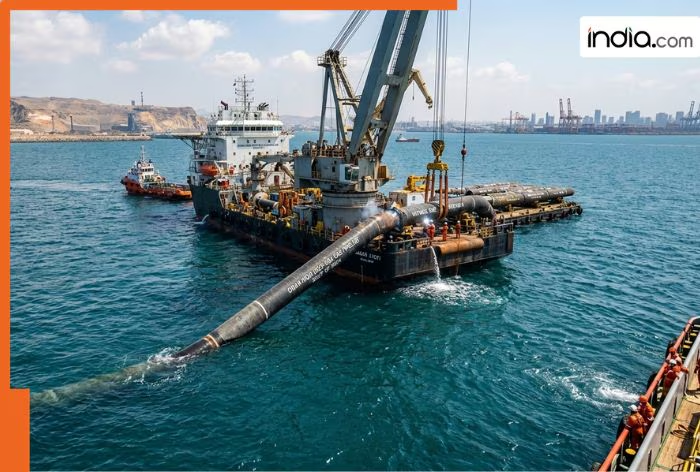
India-Oman Gas Pipeline: India is now working on a mega-project. If this approximately ₹40,000 crore project is successful, India will face no gas shortages for decades to come.

Updated: May 14, 2026 10:37 AM IST
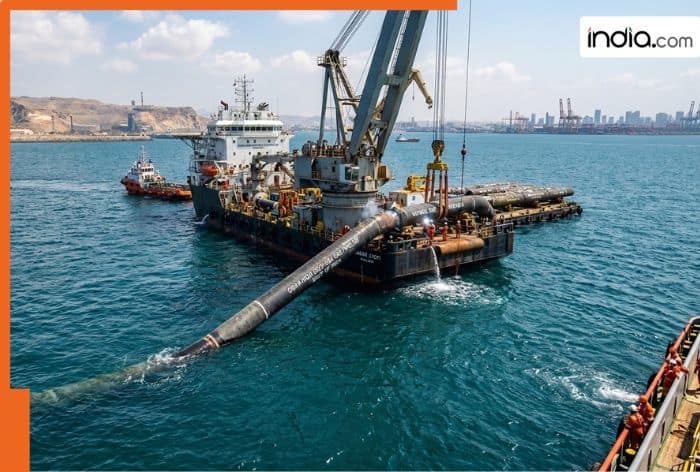
LPG crisis: After the Iran war disrupted oil and gas supplies through the Strait of Hormuz, known as an energy corridor, India is now working on a mega-project worth approximately ₹40,000 crore, is successful, India will experience no gas shortages for decades to come. Tensions in West Asia have caused serious disruptions to the energy supply chain from Asia to Europe, impacting India as well. New Delhi is an energy-dependent country, importing most of its oil and gas from Gulf countries. Consequently, the turmoil in West Asia caused by the Iran war is also impacting India. Along with alternative energy sources, alternatives to the Strait of Hormuz are also being seriously explored.
In fact, the Indian government is rapidly advancing a plan to lay a deep-sea gas pipeline directly from Oman to ensure uninterrupted gas supplies from the Gulf region. Following the Strait of Hormuz crisis, the Indian government is rapidly advancing a plan to build a deep-sea gas pipeline directly from Oman to ensure uninterrupted gas supplies from the Gulf region.
The central government is pursuing this ambitious project with utmost priority. The project, estimated to cost ₹40,000 crore (approximately $4.7-4.8 billion), is expected to take five to seven years to complete if approved. According to senior officials in the Petroleum Ministry, the government may soon direct public sector companies Gas Authority of India Limited (GAIL), Engineers India Limited (EIL), and Indian Oil Corporation (IOC) to prepare a detailed report. This initiative is being pursued based on a pre-feasibility study submitted by the New Delhi-based private sector consortium, South Asia Gas Enterprise (SAGE).

What is India’s plan?
According to a report in the Economic Times, officials say India is now seeking to break away from its excessive dependence on spot LNG markets. A senior official stated that a direct pipeline from West Asia could provide India with stable and relatively affordable gas, while reducing dependence on a transit country or sea route. Demand for natural gas in India is steadily increasing. Amid efforts to meet energy needs and increase gas’s share in the energy mix, current consumption is approximately 190-195 million standard cubic meters per day (mmscmd), which is projected to increase to approximately 290-300 mmscmd by 2030. LNG imports could reach 180-200 mmscmd by the same period.
Directly from Oman to Gujarat
The proposed Middle East-India Deep-Water Pipeline (MEIDP) will be approximately 2,000 kilometers long and will connect Oman directly to the Gujarat coast, passing under the Arabian Sea. The pipeline will enable the supply of approximately 31 mmscmd of natural gas per day. The project route will be designed to pass through Oman and the UAE, bypassing geopolitically sensitive areas. This pipeline will provide India access to the vast gas reserves of countries such as Oman, the UAE, Saudi Arabia, Iran, Turkmenistan, and Qatar. These countries together have approximately 2,500 trillion cubic feet of gas reserves.
Pipe laying is planned at a depth of 3450 meters
The pipeline is expected to be laid to a depth of approximately 3,450 meters below sea level, making it one of the world’s deepest undersea pipeline projects. Recent technical studies have shown the project to be feasible due to advances in deep-sea pipelaying and repair techniques. SAGE, in its government filings, claims that approximately 3,000 meters of test pipeline has already been laid along the proposed route to study seabed conditions.
Alternatives to the Strait of Hormuz
In fact, the recent Hormuz crisis is considered a major reason for moving this project forward. Nearly two-thirds of India’s LNG imports through the Strait of Hormuz in 2025 came through the Strait of Hormuz. In February, Iran effectively blocked this route amid tensions with the US and Israel, causing global LNG supplies to fall by more than 20 percent, leading to a sharp surge in gas prices in the international market.