It is to be noted that the Delhi Hyatt Regency Hotel at Bhikaji Cama Place obtained a loan through six different banks.
Published: June 8, 2026, 4:12 PM IST
Share Article
https://www.india.com/news/india/supreme-court-issues-major-order-in-hyatt-regency-case-seeks-ots-and-valuation-reports-from-narcl-heres-what-we-know-so-far-8440074/
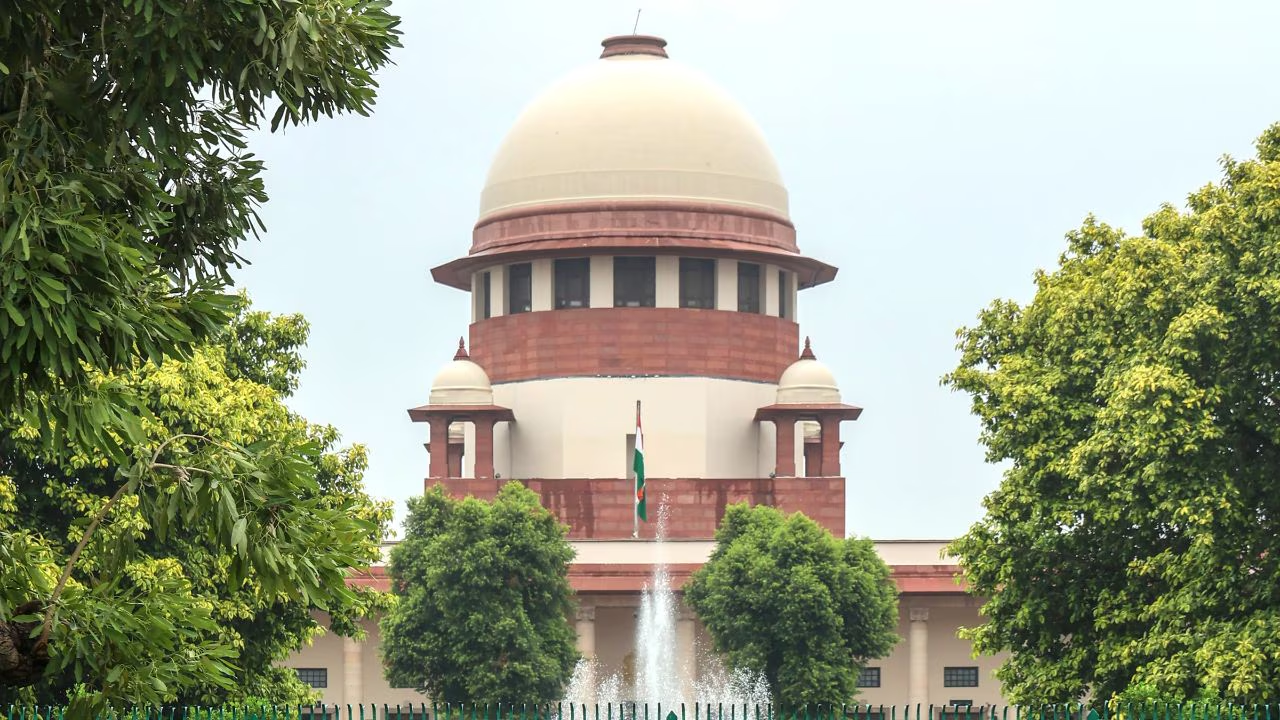
Supreme Court issues major order in Hyatt Regency Case, seeks OTS and valuation reports from NARCL; Here’s what we know so far(Photo Credit: IANS)
Reported by Parivesh Vatsyayan
The Supreme Court of India(SC)’s intervention in the one-time settlement (OTS) case linked to Delhi’s Hyatt Regency hotel has once again highlighted concerns over the resolution of large corporate debts, especially those involving public money.
Recently, the apex court asked for documentation and details regarding the settlement of a loan for the Hyatt Regency Hotel. They asked for details such as the valuation report, original bank records, and outstanding dues related to this loan. The move has raised renewed focus on the monitoring of large corporate debt settlements and raised concerns about the level of scrutiny applied in similar cases.
What is the latest update in Hyatt Regency loan settlement case?
Zee Media Special Investigations Team reporter Parivesh Vatsyayan reported that the Hyatt Regency hotel was valued at nearly Ra 2,600 crore in 2021. By the time a one-time settlement was reached in 2025, the property’s assessed value had reportedly been reduced to a range of Rs 750 crore to Rs 865 crore.
It is to be noted that the Delhi Hyatt Regency Hotel at Bhikaji Cama Place obtained a loan through six different banks. Later, it found it difficult to pay back its loans after defaulting for a long time. The company entered into a single payment option with the lenders due to its inability to repay its debts. According to documents cited in the case, there were two independent valuations performed on the property in 2021, which estimated the property’s value at approximately Rs 2,600 crores and Rs 2,651.39 crores.
Earlier in the OTS process, the hotel’s estimated worth at this point was between Rs 750 crores and Rs 865 crores as opposed to its previous valuation. The Supreme Court has now reviewed this and is attempting to determine if the determined value for settlement has was justified and whether or not the correct process had been followed before the finalisation of any debt resolution.
Why are questions being raised over the debt recovery and settlement process?
The court’s examination of the matter has been compared to another high-value settlement involving a government-owned corporation, the National Asset Reconstruction Company Limited (NARCL). In that instance, the NARCL was given the job of recovering about Rs 2,172 crore from AGSON Global Private Ltd., a company promoted by entrepreneur Apres Garg.
The debt was, however, settled at Rs 579 crore. The settlement has raised eyebrows among analysts who claim there should be greater scrutiny of the difference between the outstanding amount from the lender and the total value paid out because of the involvement of public entities in the process.
A principal issue raised is that NARCL should have considered a competitive bidding process or price discovery process prior to agreeing to the settlement. Many finance experts agree that an open bidding process provides a way to maximise recoveries due to multiple interested bidders providing their best offer.
Critics believe that had there been a process implemented, then recovery values would have been greater. Conversely, proponents of this settlement would say that there are other influences that drive both the reconstruction of assets as well as the recovery of debts. The other factors include asset quality and market conditions and the likelihood of recovery.
The differing approaches to large debt settlements have raised concerns about transparency and accountability with regard to these settlements. The Supreme Court’s review of the Hyatt Regency case’s valuation and process raises the question of whether similar scrutiny should also apply to other large settlements involving public funds and stressed assets.