AI-171 Boeing 787 crash: In a significant national development, the Federation of Indian Pilots (FIP) has called for a transparent judicial enquiry into the Air India AI-171 Boeing 787 crash that clai
Share Article
https://www.india.com/news/india/they-do-not-fly-to-kill-people-what-pilots-body-said-on-preliminary-findings-in-ai-171-crash-that-killed-260-people-8451286/
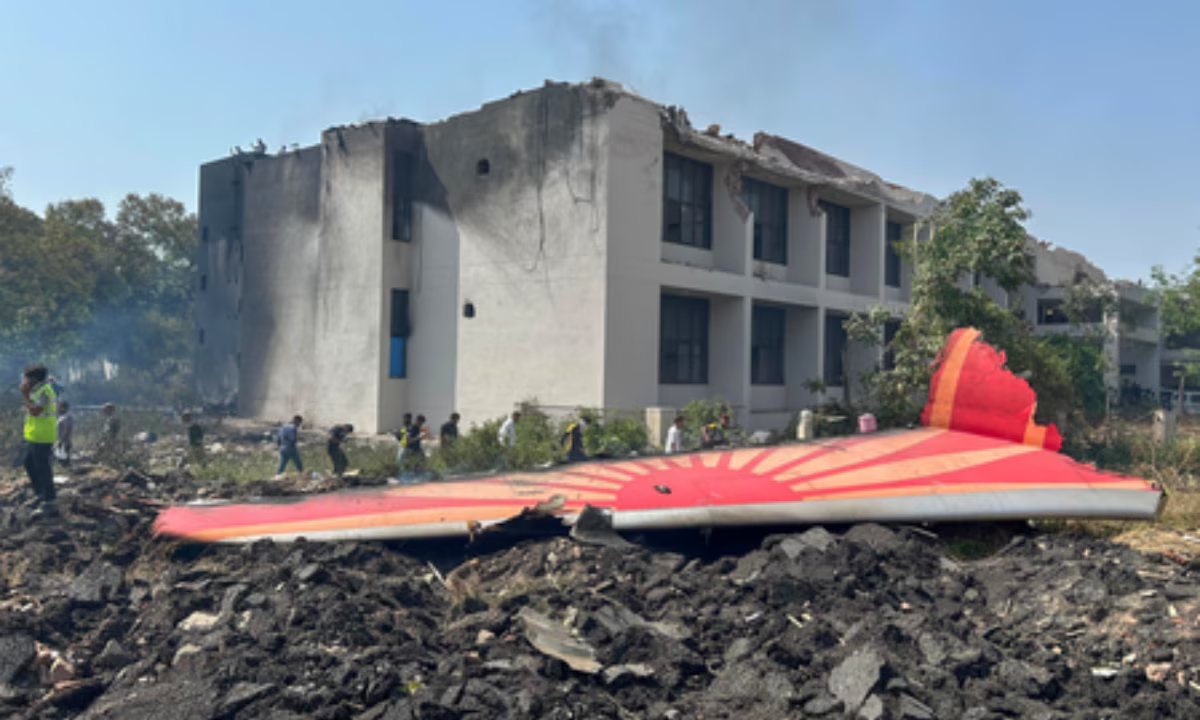
Air India crash- File image
AI-171 Boeing 787 crash: In a significant national development, the Federation of Indian Pilots (FIP) has called for a transparent judicial enquiry into the Air India AI-171 Boeing 787 crash that claimed over 260 lives. In the latest development, the pilot body has argued that pilots do not fly to kill people and independent technical evidence raises significant questions about the theory that pilot actions caused the disaster. Here are all the details you need to know about the latest developments in AI-171 Boeing 787 crash.
How has
Read more:
‘Significant progress made’: Crash investigator AAIB states a year after Air India flight crash
Speaking at a press conference in Mumbai, FIP President Captain C.S. Randhawa said the organisation had approached the Supreme Court of India seeking an independent investigation and maintained that all possible technical, electrical and systems-related causes must be examined before any conclusions are reached about the role of the flight crew.
“Justice must be ensured for all passengers, crew members and families affected by the crash,” the pilot body said. It raised concern about the current investigation process and objected to what it described as “premature attempts” to attribute responsibility to the deceased pilots. Central to the FIP’s position is its challenge to the timeline outlined in the preliminary investigation report.
The organisation said, “Certified simulator testing conducted under the supervision of attorney Mike Andrews of Beasley Allen Law Firm had produced results that did not align with the sequence described in the report.”
According to FIP, the preliminary report indicates that the aircraft’s hydraulic system became active approximately four seconds after the engine shutdown sequence at 08:08:43. However, the federation said 10 independent test runs carried out on a certified Boeing 787 Level D six-axis simulator certified by the European Union Aviation Safety Agency showed that the Ram Air Turbine (RAT) would require about 18 seconds to deploy and generate hydraulic pressure. ”
The process involved approximately 12 seconds for the high-bypass turbofan engines to spool down below flight idle and a further six seconds for the RAT deployment mechanism, citing Hamilton Sundstrand technical training documents,” the FIP asserted. The organisation argued that the discrepancy warranted a transparent simulator validation exercise by investigators.
The federation also disputed suggestions that the pilots intentionally moved the aircraft’s fuel control switches to the cut-off position. It noted that the preliminary report stated that the switches had “transitioned” rather than explicitly concluding that they had been physically moved by the crew.