Several videos have been posted by netizens on social media platforms claiming that ethanol-blended petrol (E20), a blend containing 20 per cent ethanol and 80 per cent petrol, is harmful for vehicles
Published: July 5, 2026, 2:21 PM IST
Share Article
https://www.india.com/news/india/is-india-ready-for-nationwide-e20-petrol-rollout-vehicle-compatibility-fuel-infrastructure-ethanol-availability-explained-8465927/
Several videos have been posted by netizens on social media platforms claiming that ethanol-blended petrol (E20), a blend containing 20 per cent ethanol and 80 per cent petrol, is harmful for vehicles, causes higher pollution, and leads to water wastage in the production of crops for ethanol. However, the Ministry of Petroleum & Natural Gas on Thursday dismissed as false and misleading information. The Ministry said that it “categorically assures all vehicle owners that these fear-mongering claims are false, baseless, scientifically unfounded and inconsistent with extensive technical studies conducted by leading automotive research institutions”.
Will E20 Affect Your Vehicle’s Life❓
✅Fact: Scientific assessments have found no adverse impact on vehicle longevity in vehicles running on #E20 petrol. pic.twitter.com/MjdfeZnSCz
— PIB India (@PIB_India) July 4, 2026
Is India ready for nationwide E20 petrol rollout?
The Centre has been promoting higher ethanol blending as part of its strategy to reduce crude oil imports, cut carbon emissions, and support domestic sugarcane and grain-based ethanol production. Despite the rumours, several question arises in a common man’s mind. Is India prepared for the nationwide rollout of E20 petrol?
In an interview with news agency ANI, former Indian Oil Corporation Ltd (IOCL) Chairman B Ashok stated that India’s ethanol blending programme has greatly strengthened the country’s energy security, increased farmers’ incomes and reduced carbon emissions, while scientific studies have found no evidence that E20 fuel damages vehicle engines or significantly affects mileage. I would say that there are three major primary objectives, all of them have had a tremendous impact on the country,” Ashok told ANI. Just like E20 petrol, E85 is also trending.
What is E85?
E85 is a high-ethanol blended fuel comprising 80–85 per cent ethanol and 14–19 per cent petrol, specifically designed for use in flex-fuel vehicles. The initiative aims to facilitate the adoption of Flex-Fuel Vehicles (FFVs), which are capable of operating on ethanol blends from E20 to E100, without restricting consumers to a single blend.
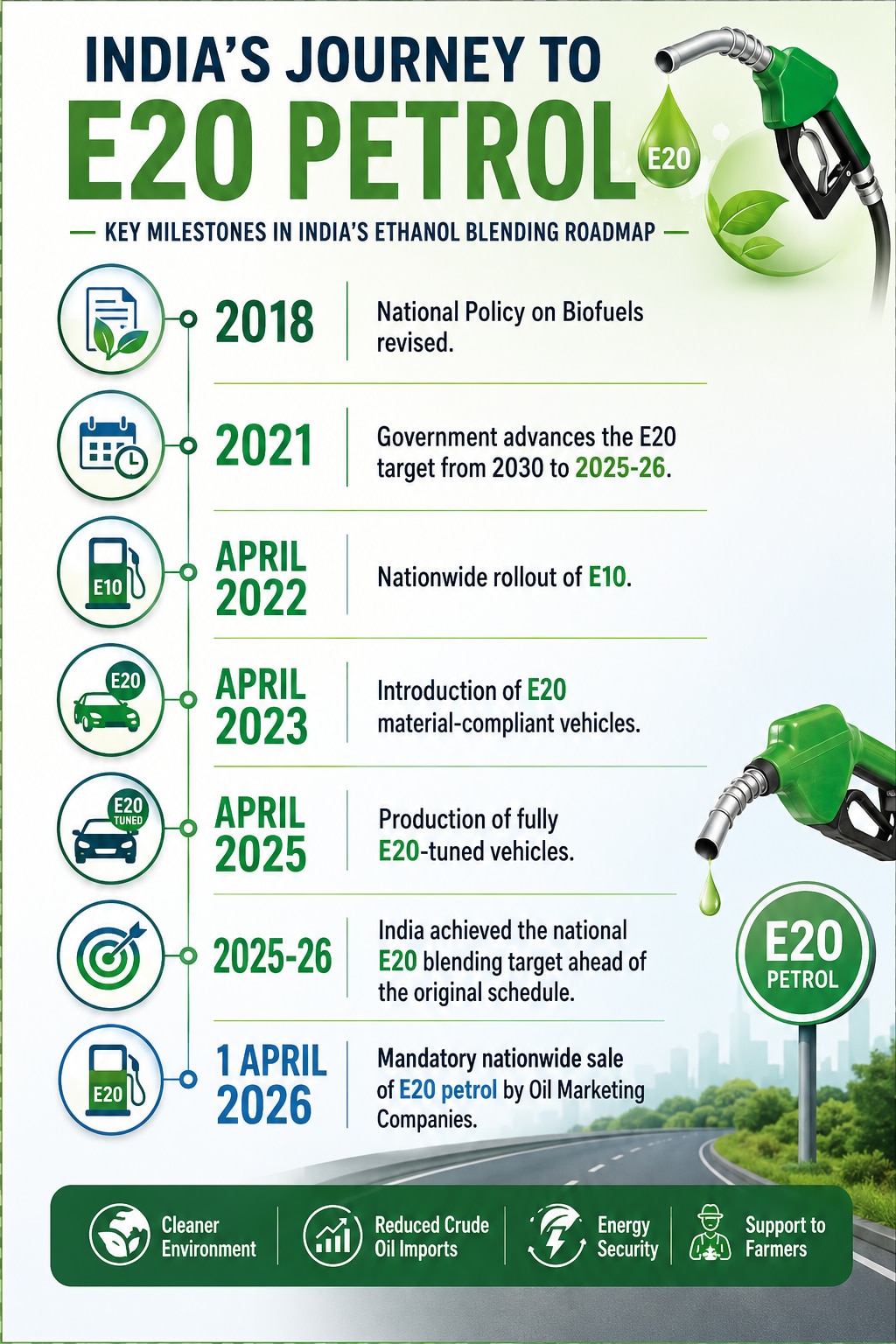
Implementation of Timeline
According to the press release made by the Ministry of Petroleum & Natural Gas, E85 is priced nearly ₹20 per litre lower than conventional petrol to ensure that the economic benefits of domestically produced ethanol are passed on to consumers. Flex-fuel vehicles operating on E85 can reduce lifecycle greenhouse gas emissions by around 61 per cent compared to conventional petrol vehicles.
Which countries have implemented Ethanol blending?
Ethanol blending is a globally accepted practice and is successfully implemented in several countries, including the United States, Brazil, and Japan. Brazil has long adopted higher ethanol blending levels, with E27 serving as the standard petrol blend.
It is important to note that the Ethanol Blending Programme has helped save the country over ₹1.4 lakh crore in foreign exchange through reduced crude oil imports. The programme has also created sustained demand for agricultural feedstocks used in ethanol production, thereby supporting farmers’ incomes and strengthening the rural economy.
Ethanol blending plays an important role in enhancing India’s energy security, reducing carbon emissions and advancing the country’s transition towards cleaner mobility. The Government remains committed to implementing the programme in a safe, transparent and consumer-centric manner, guided by scientific evidence and continuous stakeholder engagement.
According to a press release published by the Ministry of Petroleum & Natural Gas on July 4, Dr. Reji Mathai, Director of ARAI, alongside senior ARAI officials, addressed key queries surrounding E20 fuel readiness, vehicle durability, and consumer performance expectations. The panel reiterated that all E20-compatible vehicles undergo stringent, structured validation and verification procedures before being introduced to the commercial market. These processes meet international standards as well as the customized testing standards of Original Equipment Manufacturers (OEMs)
“Validation and verification of E20 fuel for vehicles are subjected to extensive durability, performance, and reliability tests under various operating conditions to ensure seamless performance and long-term engine health,” the panel emphasized. “These evaluations assess the impact of ethanol blending on critical vehicle systems, including the engine, fuel lines, and other components, ensuring compliance with quality and safety standards.