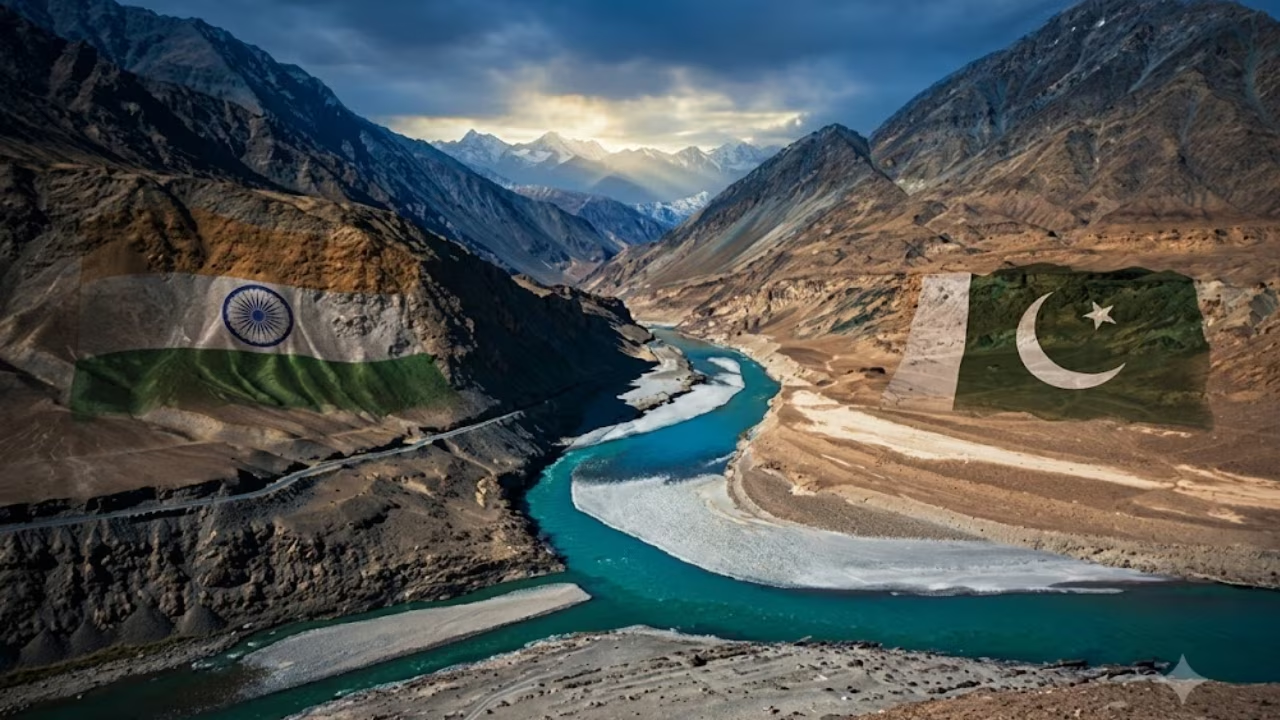
The Indian government is moving ahead with hydroelectric projects on the Chenab and Jhelum rivers despite Pakistan’s objections. However, according to Pakistan, some project designs violate the Treaty.
Share Article
https://www.india.com/news/india/what-india-can-and-cannot-build-under-indus-waters-treaty-why-pakistan-objects-to-chenab-jhelum-hydro-projects-explained-8467738/
What India can and cannot build under Indus Waters Treaty, why Pakistan objects to Chenab, Jhelum hydro projects? – Explained | Images: AI
Indus Waters Treaty: The Indian government, which had decided to freeze the Indus Waters Treaty after the Pahalgam terror attack in April last year, has now accelerated the construction of hydroelectric power projects on the Indus basin’s western rivers. The country has already started preparations to build an 8.7 km-long water-diversion tunnel, known as the Chenab–Beas link tunnel project. It will be constructed in the Pir Panjal range in the Lahaul and Spiti district, connecting the Chandra River, a headwater tributary of the Chenab (western river), to the Beas River (eastern river).
India Drives Hydropower Push On Western Rivers Despite Pak’s Objections
The Indian government is moving ahead with hydroelectric projects on the Chenab and Jhelum rivers despite Pakistan’s objections. However, according to Pakistan, some project designs violate the Treaty.
Read more:
Pakistan issues warning to India over the Indus Water Treaty, says ‘We will go to war against…’
On the other hand, the Indian government stated that the project is permitted under the provisions for run-of-the-river hydropower. However, the issue has made headlines all over due to ongoing tensions in bilateral ties, while India continues to keep the treaty in abeyance after the Pahalgam terror attack.
What The 1960 Indus Waters Treaty Permits India To Build
Under the 1960 Indus Waters Treaty, the waters of Indus, Jhelum and Chenab rivers (Western Rivers) are allocated to Pakistan. However, the treaty permits India to build physical infrastructure and utilise these waters. Notably, India is also restricted to permanently store or divert the water away from Pakistan.
Indus Waters Treaty: India Is Allowed To Build And Maintain The Following On The Western Rivers
- Run-of-the-River Hydroelectric Projects
The treaty allows India to construct run-of-the-river hydroelectric power plants in order to generate electricity. These projects do not require massive conventional reservoirs. The project uses natural kinetic energy of flowing water to turn it into electricity.
- Limited Water Storage Capacity
While India is not permitted to build massive dams to permanently block or turn the flow, but the treaty allows India to build infrastructure that holds back a total of up to 3.6 million acre-feet (MAF) of water.
- Non-Consumptive Use Structures
Under the treaty, the country is permitted to build facilities for electricity generation, but not to consume water or reduce its volume down the river channel. For example, India cannot use water for domestic usage (drinking and municipal water supply), navigation channels and locks, timber-floating and fish culture.
Recent News and Geopolitical Developments
Historically, all these rights and how India applies them led to legal battles over technical designs, water storage levels and silt-clearing gates.
As per several reports, Pakistan has frequently raised objections over the technical specifications of projects like Ratle and Kishanganga.
Following the geopolitical tensions following the 2025 Pahalgam terror attack, New Delhi put the treaty in abeyance and has intensified physical infrastructure on the Western rivers to maximise its permissible share. These projects include – Chenab–Beas link tunnel project to divert water internally between basins.