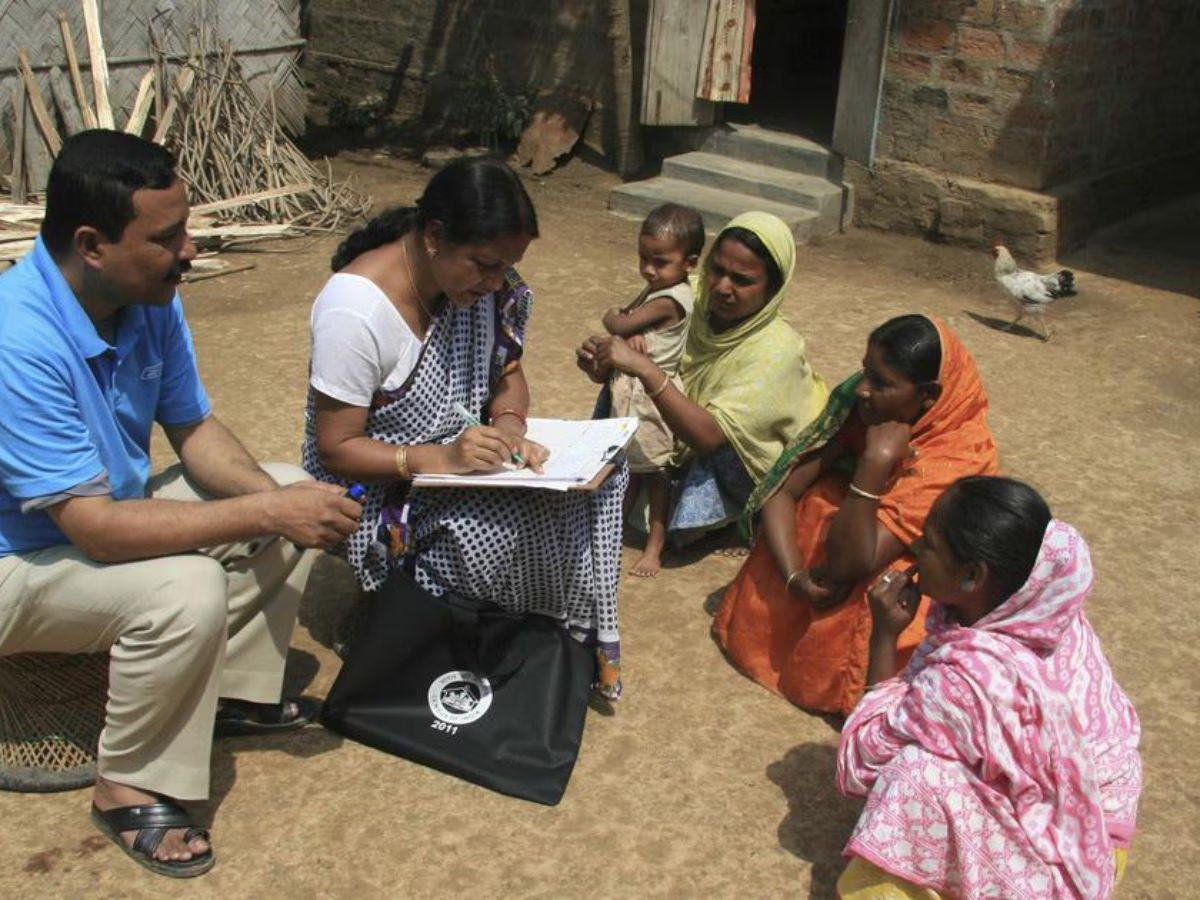
Caste Census News: The government is facing a major question regarding the caste census. Deliberations are ongoing on how people’s castes will be recorded.
Published: July 22, 2026, 11:28 AM IST
Share Article
https://www.india.com/news/india/rss-expresses-concerns-over-caste-census-process-links-to-the-british-era-what-is-the-whole-matter-8480544/
RSS expresses concerns over caste census process, links to the British era, What is the whole matter? (File)
Preparations have now begun for the caste census, which has been a long-standing demand and debate in the country. But even before the census begins, a major question has arisen. How will people’s caste be recorded? Will each person self-report their caste, or will the government provide the option to choose from a pre-prepared list? This is the issue that is being debated within the government. Interestingly, the Rashtriya Swayamsevak Sangh (RSS) has also expressed concern about this process. The Sangh believes that if the census is conducted based on a pre-prepared caste list, it could further strengthen the caste system established during British rule.
Where is the matter stuck after all?
According to a report in the Indian Express, the Registrar General of India (RGI) currently faces two major options. The first is to require individuals to self-report their caste, meaning census officials will record only what the individual declares. The second is to have the census app or form include a list of pre-recognized castes, and individuals can select their caste from that list. Both options have their own challenges. Therefore, the government is considering every aspect before reaching a decision.
Why the fear of repeating the mistake of 2011?
The open entry option seems easy at first glance. But the government is troubled by the 2011 experience. At that time, people were allowed to self-report their caste in the Socio-Economic and Caste Census (SECC). The result was that approximately 4.67 million different castes were recorded across the country. This included different names, spellings, and local identities for the same caste. The data was so fragmented that it became nearly impossible to organize. Ultimately, the government was unable to publicly access that caste data. This is why the government wants to avoid such a situation this time.
What is a model with a drop-down list?
Another option is to create a comprehensive database by combining the lists of recognized castes from the central and state censuses. Census officials will select the relevant caste from that list. This could largely eliminate the problem of different names being recorded for the same caste. The government already has a notified list of Scheduled Castes (SC) and Scheduled Tribes (ST). In the current census system, separate identification is recorded for these two categories. All others are placed in the “other” category. The new system is considering including other castes, including Other Backward Classes (OBCs), in the list. To achieve this, a large database could be created by combining the separate lists of the central and state censuses.
Why does RSS object to this model?
This is where the controversy begins. According to the Indian Express, the RSS believes that the caste lists used by the government today were largely founded during British rule. The RSS argues that caste identities existed in India before, but the British transformed them into permanent and legal categories through censuses and administrative systems. This further strengthened caste identities in society. The RSS says that if today’s census is based on the same lists, it will further entrench the structure developed by the British during their rule. The RSS believes that this could further establish caste identities in society at the administrative level.
What is the biggest challenge facing the government?
The most difficult task for the government is to choose a method that is both technically successful and creates less political controversy. If open entry is chosen, the chaos of 2011 could resurface. If a fixed list is adopted, questions may arise about which castes will be included in the list and which will not. Many states have different OBC lists than the central one. Therefore, creating a uniform system for the entire country will be difficult. The government has already made it clear that caste-related information will be collected during the upcoming census. The second phase of the census is expected to begin early next year, and caste-related questions will also be asked during that time. However, before that, the government will have to decide on the final method of recording information.
Political issue
The caste census is not just an administrative exercise. It can also have a direct impact on social and political discourse. Based on the census data, new debates could be sparked in the future regarding reservations, welfare schemes, and social representation. This is why the government does not want any technical or administrative flaws in this entire process. For this reason, the Registrar General of India is considering various models. The aim is to ensure reliable data, minimize controversy, and prevent a recurrence of the 2011 situation.