


Delhi Police has implemented a multi-layered security plan mobilizing 15,000 officers and 200 paramilitary companies across key locations, venues and transit routes for the upcoming BRICS Summit.
Published: September 10, 2026, 5:10 PM IST
Share Article
https://www.india.com/news/india/brics-summit-delhi-security-tightened-across-capital-as-15000-police-personnel-200-companies-of-paramilitary-forces-deployed-8521329/
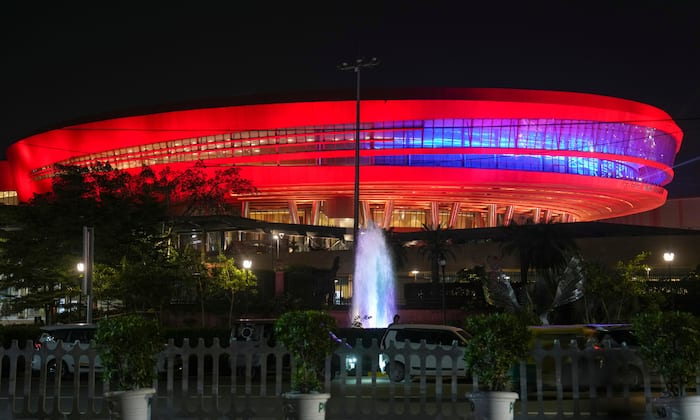
Bharat Mandapam illuminated with decorative lights as part of preparations ahead of the BRICS Summit, in New Delhi (PTI)
BRICS Summit Delhi: As the national capital prepares to host the 18th BRICS Summit in New Delhi on September 12 and 13, the Delhi Police along with other state and national authorities is planning an elaborate security arrangements for smooth functioning of the programmeIn order to strengthen security of the region, 15,000 police personnel and 200 companies of paramilitary forces have been deployedMoreover, advisories have also been issued for general public about various routes.
How is Delhi Police preparing for 18th BRICS Summit?
Addressing a press conference, Special Commissioner of Police, Protective Security Division (PSD), Manish Kumar Agrawal said: “While ensuring the safety of Heads of State, Heads of Government, foreign delegations, and ministers, our goal is to ensure a safe, secure, and seamless event that causes minimal inconvenience to the publicUnder our multi-layered security framework, comprehensive security measures have been deployed across summit venues, airports receiving dignitaries, hotels where they are staying, and locations where scheduled or unscheduled meetings may occur.”
“For these entire security arrangements, approximately 15,000 personnel from Delhi Police have been mobilised, and around 200 companies of paramilitary forces have been provided to us for deployment,” he emphasisedFurther, the senior police officer cautioned that use of any “unauthorised sub-conventional aerial platform” during the event is strictly prohibited.
BRICS Summit Delhi: Key traffic points
22 diversion points: Traffic will be regulated at 22 identified diversion points during the motorcade rehearsal and VIP movements.
35+ roads affected: Major roads likely to see restrictions include Mathura Road, Sardar Patel Marg, Shanti Path, Janpath, Ashoka Road, Barakhamba Road, Tolstoy Marg, Africa Avenue Road, Niti Marg, Panchsheel Marg and APJ Abdul Kalam Road, a report by PTI said.
Noida-east Delhi impact: Commuters travelling from Noida and east Delhi towards Pragati Maidan, central Delhi and other parts of the city could face delays due to restrictions around key connecting roads.
Dwarka-Dhaula Kuan route: Commuters from Dwarka and west Delhi heading towards Dhaula Kuan, the airport and central Delhi are also likely to encounter congestion and diversions during VVIP movements.
South Delhi concern: The movement of the Egyptian delegation between its hotel in Saket and central Delhi could put additional pressure on already congested stretches of south Delhi, particularly during peak hoursTraffic police had earlier flagged the issue and suggested shifting the delegation’s accommodation to central Delhi.
Airport and railway passengers: People travelling to airports, railway stations and inter-state bus terminals have been advised to leave early and factor in additional travel timeThe Metro has been recommended wherever possible.
Cab aggregators alerted: Meetings have also been held with online cab aggregators and they have been advised not to keep pick-up and drop-off points in restricted or controlled areas during VVIP movements.
(With inputs from agencies)