The Experiential Learning Conclave 1.0 was held at iLEAD for the first time celebrating the 4 foundational skills of NEP 2020. The 4C’s, also known as the Learning skills are – Creativity, Critical Thinking, Collaboration and Communication.
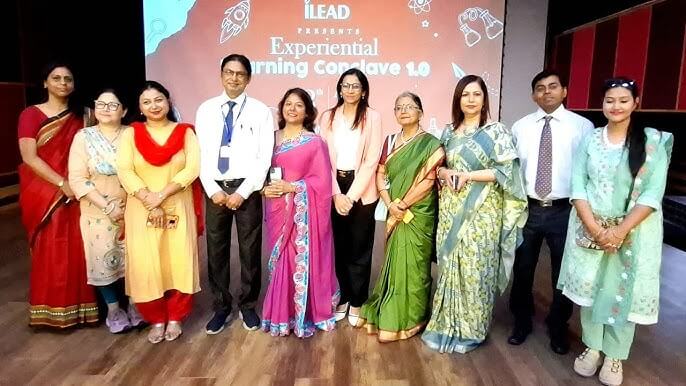
The basic mantra of this first-time conclave involving K-12 schools in a college, was prioritization of “Learning by Doing”. We’ve been teaching students for exams. The world is testing them for life. While classrooms still focus on marks, NEP 2020 is pushing a clear shift towards experiential learning- And iLEAD is bringing that shift to the ground.
For the first time in Kolkata, iLEAD College has hosted such a conclave with 7 leading schools of the city. The participating schools were – St. Augustine’s Day School, St. Joseph School, Birla High School Mukundapur, Garden High School, P.B. Academy, Hartleys School and Vidyanjali International School.
The exhibition cut across all 3 major Education Boards, Madhyamik Board, ICSE and CBSE, with a whopping number of 110 models exhibited by more than 120 students, who were accompanied by their teachers and, in some cases, parents. Its very important to mention here that this event was a showcasing of projects built through hands-on learning, curiosity and real exploration. This was not a competition. Rather, it was a celebration of ideas in action. The college students flocked to the exhibition in-between classes in large numbers, and spent a long time listening to these young creators as they explained earnestly the process and method behind their innovations and the practical aspects and workability of their models. All participating students were given Certificates of Appreciation by our Executive Director Ms Pragya Chopra.
The entire exhibition was the first of its kind, hosted by a college for over 200 school students ranging from Classes 2 to 12, forming a bridge between young learners and graduate students. It was in conclusion, a competency-based exhibition, prioritizing 21st Century skills and celebrating “learning by doing” and discovery-oriented methods over rote memorization and textual knowledge.