Millions of passengers travel to their destinations via trains across the country every day, yet the drinking water and sanitation facilities at railway stations are exposing them to serious health risksA report tabled in Parliament by the Comptroller and Auditor General (CAG) has exposed the reality behind Indian Railways’ claims regarding passenger amenities.
Published: August 16, 2026, 6:58 PM IST
Share Article
https://www.india.com/news/india/rail-passengers-health-at-risk-cag-report-reveals-toxic-bacteria-drinking-water-railway-stations-indian-railways-total-coliform-e-coli-railway-board-csmt-kalyan-lonavala-coimbatore-tamil-nadu-kerala-8503077/
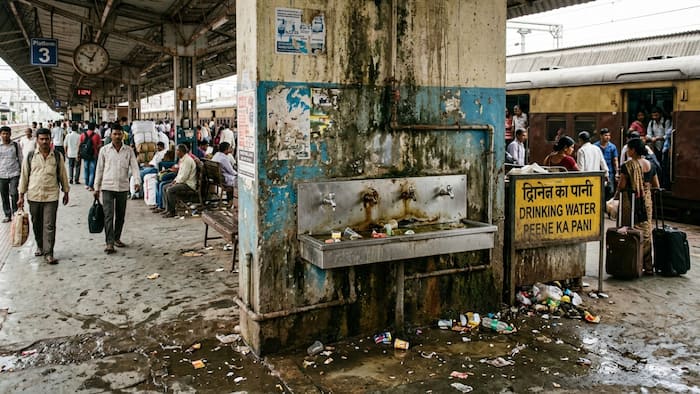
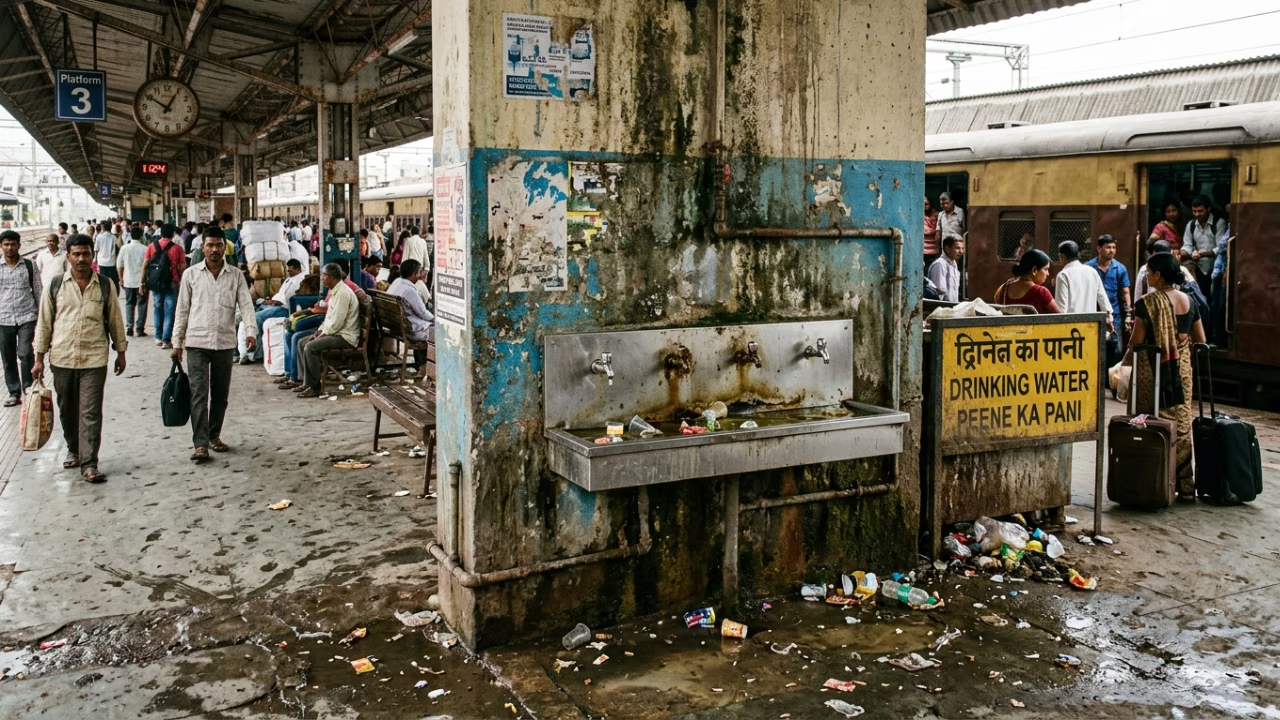
(Representational image/AI generated)
New Delhi: Millions of passengers travel to their destinations via trains across the country every day, yet the drinking water and sanitation facilities at railway stations are exposing them to serious health risksA report tabled in Parliament by the Comptroller and Auditor General (CAG) has exposed the reality behind Indian Railways’ claims regarding passenger amenities.
According to the report titled ‘Passenger Amenities and Sanitation at Non-Suburban Railway Stations in Indian Railways,’ water from coolers and taps at several major railway stations was found to contain ‘Total Coliform’ and ‘Ecoli’ bacteria—the latter being extremely hazardous to human health.
Read more:
Modi government allocates additional coaches for Bengaluru-Ernakulam Vande Bharat, BJP calls it…
‘Blatant disregard for Railway Board norms’
This CAG report is based on an intensive audit of 512 non-suburban stations across the country conducted between 2019-20 and 2023-24The report notes that while the Railway Board had established strict rules and guidelines for basic passenger amenities, regional railway zones completely failed to adhere to them.
The situation was such that bacteriological testing of drinking water was not even conducted at 59 stations across six different zones.
Contaminated water at major stations, including Mumbai’s CSMT
The results of the water samples sent for testing during the CAG audit were alarmingThe report confirmed the presence of Ecoli bacteria in water coolers at busy stations such as Mumbai’s historic Chhatrapati Shivaji Maharaj Terminus (CSMT), Kalyan, Lonavala, and Bhiwandi Road.
Meanwhile, water coolers at Coimbatore (Tamil Nadu) and Palakkad Junction (Kerala) under Southern Railway were found to be dispensing contaminated waterIn the South Central Railway zone, Ecoli was detected in the drinking water at Hyderabad station.
Regarding Eastern Railway, the water at Madhupur station also failed quality testsFurthermore, ‘Total Coliform’ bacteria were detected in water from platform taps at 49 stations across 8 zones in 2022-23 and at 56 stations across 9 zones in 2023-24These bacteria are direct causes of serious infectious diseases affecting the digestive system and stomach.
Dilapidated Toilets and a Lack of Basic Amenities
The report highlights not only water quality issues but also the deplorable state of station washrooms and toiletsPassengers avoid using these facilities due to filth and poor maintenanceAccording to data from the CAG’s Passenger Amenities Management System (PAMS), there is a severe shortage of water taps across 2,035 stations.
– 403 stations lack adequate urinal facilities.
– At 201 stations, the number of toilets falls significantly short of prescribed standards.
89% of Stations Lack Even Minimum Amenities
In April 2018, the Railway Board directed that essential amenities—such as drinking water, seating, shelters, toilets, fans, foot-over-bridges, and information boards—be mandatorily provided at all stations across the country by August 2018However, the CAG audit revealed that out of 512 stations surveyed, 458 lacked these basic amenities entirely or fell far below the required standards.
The situation was particularly alarming at major ‘NSG-1’ category stations—such as New Delhi, Howrah, Sealdah, Mumbai Central, and CSMT—where amenities for passengers (including seating, fans, water coolers, dustbins, and train information display boards) were either missing or in a state of disrepair.
CAG’s Strict Directive to Railway Administration
Concerned about the risks to the health and safety of millions of passengers, the CAG has recommended that the Ministry of Railways and the railway administration take immediate steps to rectify the situationThe CAG has stated that the water supply systems and water quality at railway stations should undergo regular and rigorous inspections under a uniform drinking water quality protocol, so that the general public can access pure drinking water and a clean environment.